2021-2022 Audi Coolant Mixing Guidelines TSB 2025303
This Audi Technical Service Bulletin (TSB 2025303) provides crucial information for identifying and correctly mixing factory-fill engine coolants across various 2021-2022 Audi models. Learn about G11, G12, G13, and G12evo coolants and their compatibility.
 Ahmet Topcu2021 Audi e-tron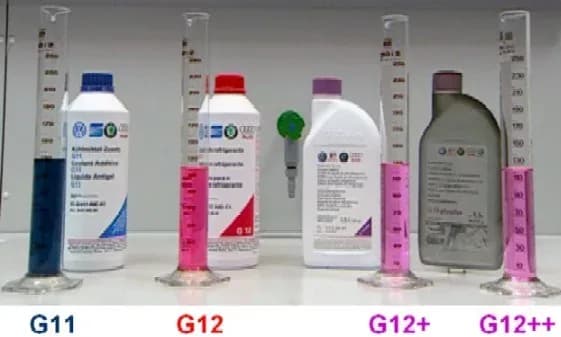
Si applica anche a
- Audi A3
- 2022
- Audi A4
- 2021–2022
- Audi A4 allroad
- 2021
- Audi A5
- 2021–2022
- Audi A6
- 2021–2022
- Audi A6 allroad
- 2021
- Audi A8 L e
- 2021
- Audi e-tron
- 2022
- Audi e-tron GT
- 2022
- Audi Q3
- 2021–2022
- Audi Q5
- 2021
- Audi Q7
- 2021–2022
- Audi Q8
- 2021–2022
- Audi R8
- 2021–2022
- Audi RS 5
- 2021–2022
- Audi RS e-tron GT
- 2022
- Audi RS Q8
- 2021–2022
- Audi S3
- 2022
- Audi S4
- 2021–2022
- Audi S5
- 2021–2022
- Audi S6
- 2021–2022
- Audi S8
- 2021
- Audi SQ5
- 2021–2022
- Audi SQ7
- 2021–2022
- Audi SQ8
- 2021–2022
- Audi TT
- 2021–2022
- Audi TT RS
- 2021–2022
- Audi TTS
- 2021–2022
▸ Mostra altri 22▾ Mostra meno
This Technical Service Bulletin (TSB 2025303/12) addresses the critical topic of identifying and correctly mixing factory-fill engine coolants in 2021-2022 Audi vehicles, including the Audi e-tron coolant mixing. Issued on January 10, 2022, this bulletin supersedes an earlier version (Group 19 number 20-04, dated June 25, 2020) to provide updated information and procedures.
Modern combustion engines place high demands on their cooling systems. Audi continuously develops its coolants to meet these evolving requirements, ensuring optimal engine performance and longevity.
Why Correct Coolant Matters
Audi has progressively replaced older coolant types like G11, G12, and G12+ with improved versions over the years. G12++ coolant was introduced in Model Year (MY) 2005, followed by G13 in MY 2008 as the initial fill and service coolant. More recently, G12evo was introduced in MY19.
Using the correct coolant and avoiding improper mixing is essential for maintaining the integrity of your vehicle's cooling system. Incorrect coolant types or mixtures can lead to reduced corrosion protection and potential damage.
Identifying Your Coolant Type
The first step in managing your Audi's coolant is to identify the type currently in your vehicle. Factory-fill coolants can often be identified by their color. For instance, G11 is green-blue, G12 is red, while G12+, G12++, G13, and G12evo are all purple.
Understanding the specific type of coolant originally installed in your vehicle is the first step in preventing issues related to Audi e-tron coolant mixing or any other Audi model. Technicians use visual identification (referencing Figure 1 in the original document) to determine the factory-fill coolant.
Coolant Mixing Compatibility Chart
Once the factory-fill coolant is identified, technicians consult a compatibility chart to determine which service coolants can be added. This chart (Figure 2 in the original document) outlines the mixing ratios and potential effects.
Here's a summary of the mixing compatibility:
| Can be mixed with: | Green-blue G11 (≥ 1994) | Red G12 (≥ 1996) | Purple G12+ (≥ 2000) | Purple G12++ (≥ 2005) | Purple G13 (≥ 2012) | Purple G12evo (≥ 2018) |
|---|---|---|---|---|---|---|
| G11 | Green | Red | Red | Red | Red | Red |
| G12 | Red | Green | Yellow | Yellow | Yellow | Yellow |
| G12+ | Red | Yellow | Green | Green | Green | Green |
| G12++ | Red | Yellow | Green | Green | Green | Green |
| G13 | Red | Yellow | Green | Green | Green | Green |
| G12evo | Red | Yellow | Green | Green | Green | Green |
- Green: Indicates that the coolants can be mixed in any ratio without issue.
- Yellow: Indicates that mixing is possible, but it will result in a reduction of corrosion protection.
- Red: Indicates that the coolants cannot be mixed under any circumstances.
Important Warnings and Considerations
Audi has specific guidelines regarding coolant handling and mixing that owners and technicians must observe:
- Warranty Coverage: Cooling system drain and fill procedures performed due to coolant mixing or the use of incorrect coolant are not covered by Warranty.
- Water Type: Only mix distilled water with coolant additives as specified in ElsaPro procedures. Deionized water must not be used.
- Drained Coolant: Drained coolant must not be reused.
- Color Change: If G11 coolant is mixed with G12+, G12++, G13, or G12evo, the coolant will turn brown. This is considered normal and not an indication of a problem.
- Best Practice: While some coolants can be mixed, it is always best practice to change the entire coolant if there's any doubt about compatibility or if reduced corrosion protection is a concern. It is crucial to adhere to these guidelines to prevent issues like reduced corrosion protection or cooling system damage, which are common concerns with improper Audi e-tron coolant mixing.
Repair Procedure Summary
If an incorrect coolant is found in the system, or if mixing is necessary and compatibility is a concern, the cooling system should be drained and refilled. The procedure involves:
- Draining the cooling system according to the Repair Manual procedures in ElsaPro.
- Refilling the system with water.
- Running the engine for 15 minutes with the heater on to remove any residual coolant.
- Draining the system again and refilling it with the correct coolant to the specified freeze protection ratio, as detailed in ElsaPro.
For measuring freeze protection, a refractor like the T10007B is used for G12evo coolant. If the coolant type (G12, G13, or a mixture) is unclear, the G13 scale of refractors T10007A/B should be used.
Required Tools and Parts
Technicians will use specific Audi-approved coolants and tools:
- G12evo coolant: Part number G-12E-050-1G-DSP (for MY 2019 and newer vehicles, including the Audi e-tron).
- G13 coolant: Part number G-A13-774-1G-DSP (for MY 2018 and older vehicles).
- Refractors: T10007B (for G12evo) and T10007A/B (for G13 and general use).
- ElsaPro: Audi's workshop information system, which provides detailed repair manuals and procedures.
Always check with your Parts Department or ETKA for the latest information on parts and service references, as these are subject to change.
Owner Action
If you are unsure about the type of coolant in your 2021-2022 Audi or have concerns about coolant mixing, it is recommended to consult an authorized Audi service center. They can accurately identify the coolant and perform any necessary service according to Audi's guidelines.
NHTSA ID: 10207170
Galleria
1 immagine
Frequently Asked Questions
- What is Audi TSB 2025303/12 about?
- Audi Technical Service Bulletin 2025303/12 provides comprehensive guidelines for identifying and correctly mixing factory-fill engine coolants in 2021-2022 Audi vehicles. It details the different coolant types (G11, G12, G12+, G12++, G13, G12evo) and their compatibility.
- Can I mix different types of Audi engine coolants?
- Mixing different Audi engine coolants is possible for some combinations, but not all. The TSB includes a compatibility chart indicating which coolants can be mixed in any ratio, which can be mixed with reduced corrosion protection, and which cannot be mixed at all. It is always best to use the specified coolant and avoid mixing when possible.
- What happens if I mix incompatible Audi coolants?
- Mixing incompatible Audi coolants can lead to reduced corrosion protection within the cooling system, potentially causing damage over time. In some cases, mixing G11 with newer coolants like G12+, G12++, G13, or G12evo will cause the coolant to turn brown, which is considered normal but still indicates a mixed system.
- Is coolant mixing covered under Audi warranty?
- No, the cooling system drain and fill procedures required due to coolant mixing or the use of incorrect coolant are explicitly not covered by Audi's warranty, as stated in TSB 2025303/12.
Related Articles
2021 Audi e-tron Electrical Malfunction and Power Loss
A 2021 Audi e-tron owner reported a severe 'Electrical Malfunction' resulting in complete loss of power on the highway. The issue has persisted despite dealer attempts to fix it over five months, posing significant safety risks.
2021-2026 Audi UTR Troubleshooting & FAQs TSB 2081409/1
This Audi Technical Service Bulletin (TSB 2081409/1) provides comprehensive answers to frequently asked questions and troubleshooting steps for the Audi Universal Traffic Recorder (UTR) accessory, covering topics like SD card compatibility, video playback, Wi-Fi issues, and more.
2021-2025 Audi Emergency Call System Fault TSB
Audi has released Technical Service Bulletin 2059528/18 to address an "Emergency call function: malfunction! Function unavailable. Please contact service" warning, often accompanied by a red SOS LED and DTC B200000. This issue affects various 2021-2025 Audi models and is due to a software problem…
2021-2026 Audi Adaptive Light System Fault C12B3FA TSB
Audi has released Technical Service Bulletin 2054202/7 to address an intermittent 'Audi adaptive light: system fault' message and DTC C12B3FA in various 2021-2026 models. This TSB outlines diagnosis and resolution for driver assistance system malfunctions.
2021-2026 Audi Parking Aid False Warnings TSB 2024323/12
This Technical Service Bulletin (TSB 2024323/12) details diagnostic and repair procedures for 2021-2026 Audi vehicles experiencing false parking aid warnings. Learn about environmental factors, sensor checks, and proper installation to resolve issues like 'Parking aid does not work / warning is…
Leave a comment
Comments are moderated and may take a moment to appear. Only your first name and the initial of your last name are shown publicly.
Comments
Be the first to comment.