2025-2026 Audi Windscreen Washer System Not Working TSB
Audi Technical Service Bulletin 2079245/2 details diagnostic and repair steps for 2025-2026 Audi A5, S5, and A6 vehicles experiencing a non-functional windscreen washer system. The issue is often caused by a kinked hose at the hood hinge.
 Marcus Weber2026 Audi A6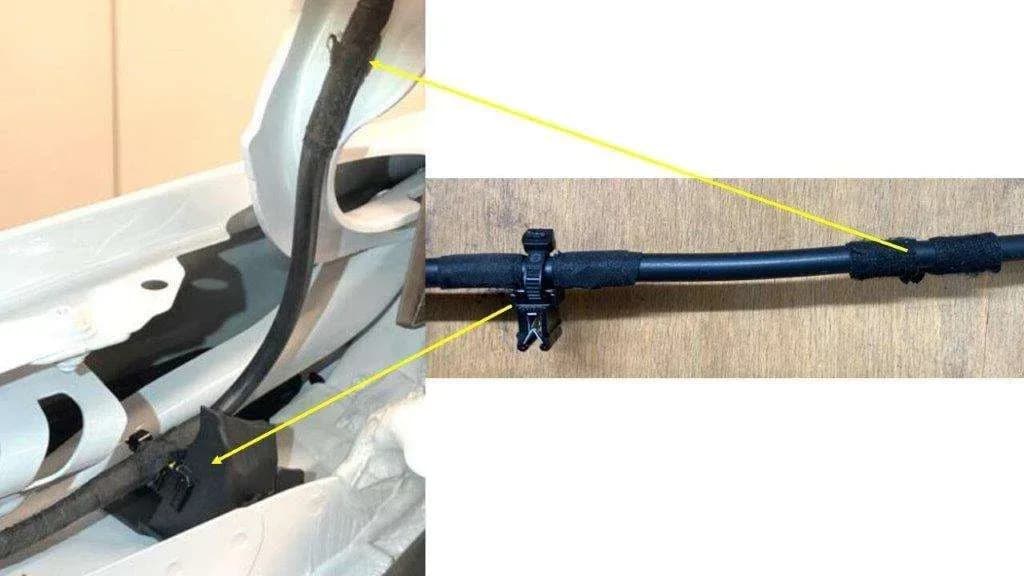
Si applica anche a
- Audi A5
- 2025–2026
- Audi S5
- 2025–2026
Revision History
This Technical Service Bulletin (TSB) has undergone revisions to ensure comprehensive and accurate information. The current version, Revision 2, was released on February 18, 2026. It includes several updates compared to the initial publication.
| Revision | Date | Purpose |
|---|---|---|
| 2 | Feb 18, 2026 | Revised title, header (added model and model years), condition, technical background, and service text (documentation requirement added). |
| 1 | 09/09/2025 | Initial publication. |
Symptoms of the Windscreen Washer System Fault
Owners of affected 2025-2026 Audi A5, S5, and A6 models may experience a complete failure of the windscreen washer system. The primary symptom reported by customers is simply: "The windscreen washer system is not working."
This issue directly impacts visibility, especially during adverse weather conditions, as the system is unable to clear the windshield effectively. If you notice your washer fluid not spraying, or spraying weakly, this technical service bulletin may apply to your vehicle.
Technical Background: Understanding the Cause
Audi Technical Service Bulletin 2079245/2 identifies the root cause of the Audi windscreen washer fault as a problem with the washer fluid hose routing near the hood hinge. Specifically, the hose can become squashed or kinked, preventing fluid flow.
There are two primary reasons for this kinking, both stemming from manufacturing or assembly processes:
- Overtightened Claw Clip: The claw clip, which secures the washer fluid hose, may have been tightened too much at the factory. This excessive pressure can compress the hose, blocking the passage of washer fluid and leading to a significant reduction or complete cessation of flow.
- Incorrectly Positioned Clips: The clips designed to hold the hose in place may have been installed in the wrong position during vehicle assembly. Improper positioning can lead to the hose bending at an acute angle, creating a kink that restricts fluid movement. This misalignment can cause the hose to be pinched when the hood is closed or during normal vehicle operation.
In most cases, this issue can be resolved without needing to replace the entire washer fluid hose, focusing instead on correcting the clip positioning and hose routing to restore proper function.
Diagnosis and Trigger Conditions
When a customer reports that their windscreen washer system is not working, technicians should first confirm the complaint. Once confirmed, the diagnostic process involves a detailed inspection of the washer fluid hose and its clips near the hood hinge.
Key areas for inspection include:
- Clip Distance: Measure the distance between the claw clip and the pine-tree clip. This distance should ideally be 160mm, with a maximum tolerance of +5mm. Deviations from this measurement can indicate improper hose tension or routing, contributing to the Audi windscreen washer fault.
- Clip Orientation: The claw clip must be positioned at a 90-degree angle relative to the pine-tree clip. This specific orientation is crucial for ensuring the hose is correctly seated in the engine compartment and under the bonnet without twisting.
- Hose Extrusion Line: Inspect the extrusion line on the hose itself. If this line appears twisted, it indicates that the hose is under tension or incorrectly routed. To properly check for twisting, both clips should be released, allowing the hose to relax and reveal any tension-induced twists.
Figure 1 in the TSB visually demonstrates a typical kink in the washer fluid hose, highlighting the problem area where fluid flow is obstructed. Figure 2 then illustrates the correct, smooth routing of the washer fluid hose, showing how it should appear when properly installed without kinks or undue tension. Figure 3 further clarifies the correct clip position, detailing the 160mm distance and 90-degree angle required for optimal function, preventing future kinking.
Repair Procedure Summary
Addressing the Audi windscreen washer fault involves a precise procedure to correct the hose routing and clip positioning, as outlined in Audi Technical Service Bulletin 2079245/2. The goal is to ensure the washer fluid hose is free from kinks and twists, allowing for unimpeded fluid flow.
Here's a summary of the repair steps:
- Initial Assessment and Clip Release: Begin by checking the existing clip positions and hose routing as described in the diagnosis section. Release both the claw clip and the pine-tree clip to relieve any tension on the hose and allow for proper repositioning. This step is critical to ensure the hose can be manipulated without resistance.
- Reshaping the EPDM Hose: If the EPDM (Ethylene Propylene Diene Monomer) hose has developed a kink, it can often be reshaped. Technicians should use a hot air blower to gently warm and
Galleria
4 immagini
Frequently Asked Questions
- What is Audi TSB 2079245/2 about?
- Audi Technical Service Bulletin 2079245/2 provides diagnostic and repair instructions for 2025-2026 Audi A5, S5, and A6 vehicles experiencing a non-functional windscreen washer system.
- What causes the Audi windscreen washer fault?
- The Audi windscreen washer fault is typically caused by the washer fluid hose being squashed or kinked near the hood hinge. This can happen due to an overtightened claw clip (part numbers 3D0971838 E or M) or clips that were positioned incorrectly during manufacturing.
- Can the washer hose be repaired or does it need replacement?
- In many cases, the kinked washer fluid hose can be repaired by optimizing its routing and using a hot air blower to reshape the EPDM material. However, if a repair is not possible, the entire washer fluid hose and its clips must be replaced and sent to Audi of America.
- What parts are needed to fix the Audi windscreen washer fault?
- To address this issue, specific parts may be required, including a claw clip (part number 3D0971838 E or 3D0971838 M), a pine-tree clip (part number N 91144301), and fabric adhesive tape (part number N 10591902). A hot air blower and cable ties are also used in the repair process.
- What are the warranty claim details for this repair?
- For vehicles under warranty, the service number is 9277 and the damage code is 0010. The labor operation for repairing the windscreen washer hose is 9254 4199 (30 Time Units), or 9254 5599 for replacement (billed according to time required). If the vehicle is outside warranty, the TSB is for informational purposes only.
Related Articles
2025-2026 Audi Drive System Fault DTC P119A00 P119B00
Audi has issued Technical Service Bulletin 2081542/1 for 2025-2026 A6, S5, and SQ5 models experiencing a 'Drive system fault' and storing DTCs P119A00 or P119B00. This is a known software issue, and a solution is anticipated by Q2 2026. Owners are advised against component replacement.
2025-2026 Audi Rear Lid Malfunction TSB 2081508/1
Audi has released Technical Service Bulletin (TSB) 2081508/1, a Pending Service Solution (PSS 55), concerning a rear lid malfunction in certain 2025-2026 Audi A5, S5, Q5, SQ5, and A6 models. Owners may experience the rear lid not opening or closing fully, or closing too quickly. This TSB outlines…
2025-2026 Audi Software Update 03.11.00/C Overview
Audi TSB 2081477/1 details the planned introduction dates for the combined software update 03.11.00/C PPE/PPC KD2 for various 2025-2026 Audi models. This informational bulletin outlines new software versions and affected platforms.
2025-2026 Audi Radiator Fan Fault P1A7B00 TSB
Audi has released Technical Service Bulletin 2081427/1 to address a check engine light (MIL) and unusual radiator fan behavior, often accompanied by DTC P1A7B00, in certain 2025-2026 A5, S5, Q5, SQ5, and 2026 A6 models. The fix involves configuring the HCP4 control unit.
2025-2026 Audi Time Changes Automatically While Driving
Audi has issued Technical Service Bulletin 2081404/1 addressing a software issue in 2025-2026 A5, Q5, and A6 models where the vehicle's clock automatically changes by an hour while driving. This TSB explains that a permanent fix is expected by late 2026, and no component replacement is needed.
Leave a comment
Comments are moderated and may take a moment to appear. Only your first name and the initial of your last name are shown publicly.
Comments
Be the first to comment.