2021-2025 Audi A4, A5, Q5 Cracking/Creaking Noises TSB
Audi Technical Service Bulletin (TSB) 2062633/5 addresses 'Cracking/creaking noises during load changes or severe vehicle body torsion' in 2021-2025 Audi A4, A5, and Q5 models. This issue stems from a loose bonded joint in the subframe connection, causing various noises in the footwells.
 Marcus Weber2022 Audi A5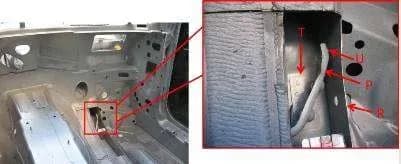
Si applica anche a
- Audi A4
- 2021–2025
- Audi A4 allroad
- 2021–2025
- Audi A5
- 2021, 2023, 2024
- Audi Q5
- 2021–2025
- Audi Q5 e
- 2021, 2023, 2024, 2025
- Audi RS 5
- 2021–2024
- Audi S4
- 2021–2025
- Audi S5
- 2021–2024
- Audi SQ5
- 2021–2025
▸ Mostra altri 3▾ Mostra meno
Owners of 2021-2025 Audi A4, A5, and Q5 models may experience various unsettling noises, particularly during vehicle load changes or severe body torsion. This issue, officially described as "Cracking/creaking noises during load changes or severe vehicle body torsion" by Audi, is addressed in Technical Service Bulletin (TSB) 2062633/5, released on September 24, 2025. The noises often manifest as snapping, crunching, groaning, or general creaking sounds, and can be heard from different areas of the vehicle, including the passenger compartment, underbody, and wheel suspension. If you are experiencing a 2022 Audi A5 cracking creaking noises, this TSB provides critical information.
Revision History of TSB 2062633/5
This Technical Service Bulletin has undergone several revisions to ensure comprehensive coverage and accuracy:
- Revision 5: Updated the header to include additional model years and revised the 'Required Parts and Tools' section with an image.
- Revision 4 (September 10, 2025): Included revised header (models), updated title text, revised Condition, Technical Background, Production Solution, Service, and Warranty (Labor Operations) sections.
- Revision 3 (November 26, 2024): Revised header (models), updated Service section to include photo/video documentation requirements, revised Warranty (Labor Operations), and updated 'Required Parts and Tools' to reflect changes in material.
Symptoms of Cracking/Creaking Noises
Drivers may notice a range of symptoms indicating this issue. The most common complaint is the presence of cracking or creaking noises, which can also be accompanied by vibrations. These sounds are typically heard from the front right and left footwells. The TSB identifies several specific complaint types and their associated locations:
- Noises and Vibrations: Snapping, crunching, groaning, or general creaking sounds originating from the passenger compartment, underbody (left, right front), or vehicle front (left front, right).
- Buzzing Noises: May be heard from the vehicle front (right).
- Noise from Assemblies: Including engine assembly and transmission assembly.
- Irregular Functionality: This can manifest in the damping/suspension regulation, leading to a feeling of irregular rebound, or incorrect operation sequence for the manual steering column forward/back adjuster.
- Contamination: In some cases, automotive fluids may appear dirty, particularly around the axle oil cooler or crankcase.
- Appearance Issues: Surface corrosion or rust may be observed on the stabilizer bar (right or left), or dimensional accuracy issues like panel offset related to the underbody longitudinal member (left or right).
The noises are often more pronounced when pulling away, braking, or during vehicle body torsion, especially in lower gears. They may also be temperature-related and might only become noticeable after driving for approximately 10 to 15 kilometers. This is a common characteristic of the 2022 Audi A5 cracking creaking noises.
Technical Background of the Issue
The root cause of the "Cracking/creaking noises during load changes or severe vehicle body torsion" is a quality issue with a specific bonded joint within the vehicle's structure. This joint, identified as '-U-', connects a reinforcement ('-P-') on the threaded console ('-T-') for the subframe's bolted connection to the longitudinal member outer panel ('-R-'). A visual representation of this area is provided in Figure 1, which shows a cutaway view of the longitudinal member. When this bonded joint becomes loose, it creates a point of friction and movement that generates the cracking and creaking sounds. This structural compromise directly leads to the audible symptoms experienced by drivers from the front right and left footwells.
Production Solution
Audi's production solution for this issue involves the use of an optimized adhesive in the manufacturing process to ensure the integrity of the critical bonded joint.
Diagnosis and Trigger Conditions
Diagnosing this issue primarily involves noise analysis and visual inspection. Technicians will typically perform a detailed assessment to confirm the presence and source of the noises. The TSB references an attached file, "A4: Cracking_creaking noises during load changes," which outlines the specific procedures for analyzing these noises and performing the necessary repairs. The procedure for the right side of the vehicle is used as an example; the procedure for the left side is similar. The key is to identify the precise location where the bonded joint has loosened.
Repair Procedure Summary
The repair for this condition, as outlined in TSB 2062633/5, involves addressing the loose bonded joint using an optimized adhesive. The general procedure includes the following steps:
- Noise Analysis and Repair Work: Technicians must follow the detailed instructions provided in the attached file, "A4: Cracking_creaking noises during load changes," to analyze the noise and prepare for the repair. This involves accessing the affected longitudinal member area. The procedure for the right side of the vehicle is illustrated as an example, with the left side following a similar process.
- Modify Longitudinal Member: The core of the repair involves modifying the longitudinal member to address the loose bonded joint. This typically includes preparing the surfaces, applying the optimized adhesive to secure the joint properly, and ensuring a strong bond. This step is crucial for resolving the 2022 Audi A5 cracking creaking noises.
- Cavity Sealing: After the primary modification, cavity sealing is performed to ensure the integrity and longevity of the repair, preventing future issues and protecting the newly bonded area.
For warranty claims, it is crucial that technicians document the complaint thoroughly. This includes attaching photos to DOC-IT that clearly show the problem. These images or videos must include the vehicle's VIN and the date, must not be edited, and should be in focus with sufficient light (high resolution is not strictly necessary). Technicians are also advised to mark the exact location of the problem on the photos to aid parts analysis, ensuring no personal data like faces, license plates, or customer data is visible.
Required Parts and Tools
To perform the repair described in TSB 2062633/5, specific materials are required:
- Cavity Preservative: Part Number D 329215M2, Quantity: 0.25
- Hexagon Bolt: Item 12 according to ETKA, Quantity: 02 per side. An image on page 6 of the TSB illustrates this specific hexagon bolt in context with the longitudinal member.
Technicians should always consult with their Parts Department and/or ETKA for the most current information regarding parts and bulletins.
Warranty Information
This Technical Service Bulletin provides important information regarding warranty claims. The Service Number for this issue is 5079, and the Damage Code is 0010. The labor operations associated with this repair are:
- Check longitudinal member: Labor Operation 5079 0199, allocated 40 Time Units (TU).
- Modify longitudinal member: Labor Operation 5079 4199, allocated 100 Time Units (TU).
- Cavity sealing: Labor Operation 5101 7501, with time units determined by the Standard Repair Time (SRT) and associated operations.
The claim comment should explicitly reference "As per TSB 2062633/5". All warranty claims submitted for payment must adhere to the Audi Warranty Policies and Procedures Manual and are subject to review or audit by Audi Warranty.
Important Warnings for Owners
Owners should be aware that if their vehicle is outside of its warranty period, this Technical Service Bulletin is informational only. This means that the repair costs may not be covered by Audi, and owners might be responsible for the expenses. It is always recommended to consult with an authorized Audi service center to determine the specific warranty coverage applicable to your vehicle and situation.
NHTSA ID: 11023741
Galleria
2 immagini
Frequently Asked Questions
- What causes cracking or creaking noises in my 2021-2025 Audi A4, A5, or Q5?
- According to Audi TSB 2062633/5, these noises, described as "Cracking/creaking noises during load changes or severe vehicle body torsion," are caused by a loose bonded joint that connects the subframe's threaded console to the longitudinal member outer panel. This structural issue leads to audible sounds from the vehicle's footwells, often heard during acceleration, braking, or body torsion.
- How is the "Cracking/creaking noises during load changes or severe vehicle body torsion" issue fixed?
- The repair involves optimizing the adhesive used in the problematic bonded joint. This procedure includes modifying the longitudinal member by applying an optimized adhesive and then performing cavity sealing. The process is detailed in Audi TSB 2062633/5 and requires specific parts like cavity preservative (D 329215M2) and hexagon bolts.
- Will the repair for the 2022 Audi A5 cracking creaking noises be covered under warranty?
- If your 2021-2025 Audi vehicle is still under warranty, the repair for the cracking/creaking noises should typically be covered. However, if the vehicle is outside of its warranty period, this Technical Service Bulletin is informational only, meaning you may be responsible for the repair costs. Always check with an authorized Audi service center for specific warranty details and to understand the applicability of Service Number 5079 and Damage Code 0010.
- What is Audi TSB 2062633/5?
- Audi TSB 2062633/5 is a Technical Service Bulletin that addresses the issue of "Cracking/creaking noises during load changes or severe vehicle body torsion" in certain 2021-2025 Audi models, including the A4, A5, and Q5. It outlines the symptoms, technical background, diagnosis, and the detailed repair procedure for this condition, including specific labor operations and required parts.
- What are the common symptoms of this issue in Audi vehicles?
- Owners commonly report snapping, crunching, groaning, or creaking noises from the passenger compartment, underbody, or vehicle front. These sounds are often accompanied by vibrations and can be more noticeable when pulling away, braking, or during vehicle body torsion, especially in lower gears. Some cases also involve irregular damping/suspension regulation or surface corrosion on the stabilizer bar.
Related Articles
2022-2025 Audi A/C Control Buttons Not Working TSB 2078655/3
Audi has issued Technical Service Bulletin 2078655/3 to address issues with unresponsive A/C control unit buttons in 2022-2025 A4, A5, S4, S5, RS 5, Q5, and SQ5 models. This TSB outlines diagnosis for the 'B131207: Button(s) in control panel, mechanical fault' and repair procedures.
2022 Audi A4, A5, Q5 Lane Departure Warning Steering Input TSB
Audi Technical Service Bulletin 2079617/1 addresses an issue in 2022 A4, A5, and Q5 models where the 'Steering input' setting for the lane departure warning system is unavailable in the MMI. This TSB outlines a software update to resolve the problem.
2021-2025 Audi A4/A5/Q5 Camera Coded Incorrectly TSB
Audi has released TSB 2076008/1 to address DTC U101400, "Control module coded incorrectly," in the Front Camera for Driver Assist Systems -R242- for 2021-2025 A4, A5, Q5, S4, S5, RS 5, and SQ5 models. This can lead to incorrect signals from driver assist systems.
2021-2025 Audi Whistling Noise from Turbocharger TSB 2071243/3
Audi Technical Service Bulletin 2071243/3 details a whistling noise that may come from the turbocharger in 2021-2025 Audi A4, A5, and Q5 models. This TSB clarifies that the noise is a comfort complaint and not indicative of a fault.
2022-2025 Audi Continental Tire Safety Recall 44CT Update
Audi has issued a dealer communication, 44CT_REV20241004, providing an update on the Continental Tire Safety Recall 44CT. This update includes additional guidance for identifying affected tires and reminds dealers of their legal obligations regarding new and pre-owned vehicles with unremedied…
Leave a comment
Comments are moderated and may take a moment to appear. Only your first name and the initial of your last name are shown publicly.
Comments
Be the first to comment.