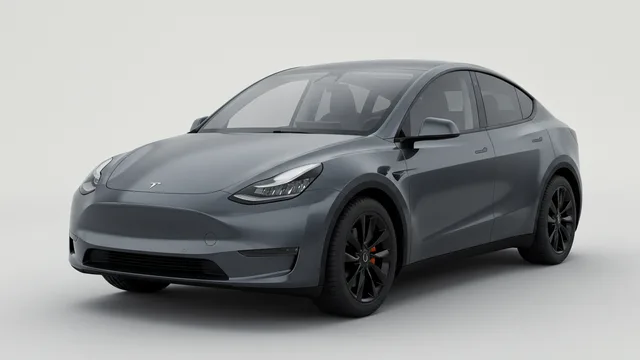
The 2021 Tesla Model Y has been subject to numerous recalls addressing critical safety concerns, including suspension fractures, camera cable defects, and software issues affecting driver assistance systems and pedestrian warnings. While no owner complaints or federal investigations have been…
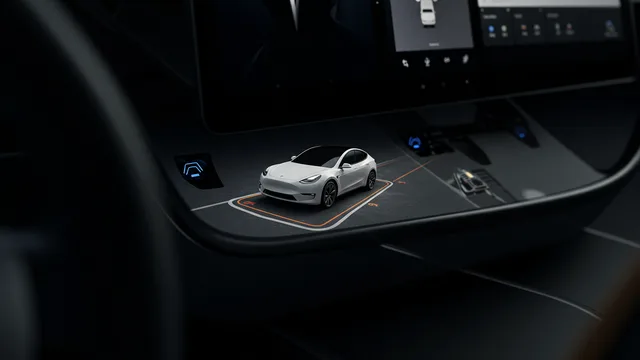
Tesla has released Service Bulletin SB-24-17-005 R1 for 2021-2023 Model S, Model X, and Model Y vehicles. This bulletin addresses a condition where the interior camera's performance for driver attentiveness detection is reduced in low-light conditions, requiring camera replacement.
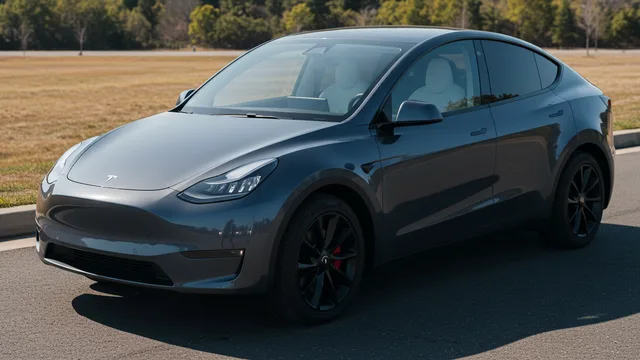
Tesla Model Y vehicles do not come with a physical owner's manual. Instead, all owner's manual content is integrated into the vehicle's software and displayed on the touchscreen, customized to your specific vehicle configuration and software version.
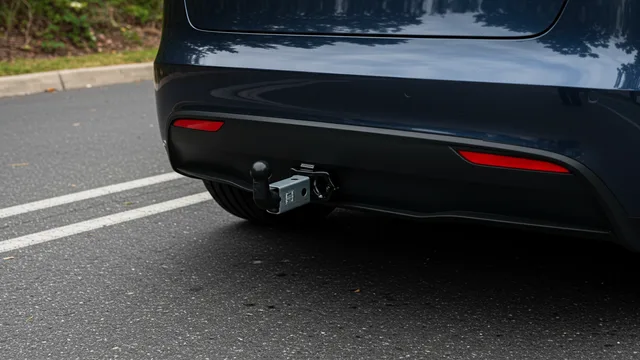
A manufacturer communication indicates that certain 2021-2022 Tesla Model Y vehicles, specifically those that underwent a tow hitch retrofit in service, might need a replacement LH Body Controller Module.
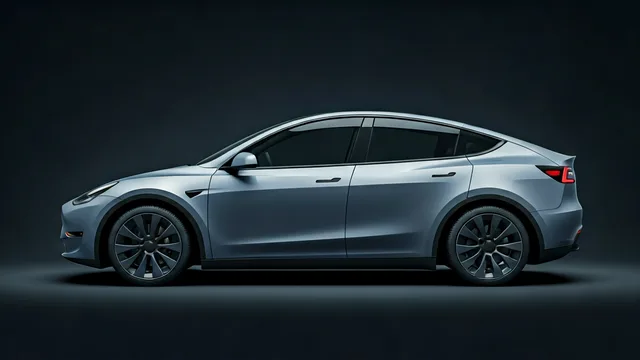
This article details Manufacturer Communication 10252959, a Technical Service Bulletin (TSB) from Tesla regarding the Owner's Manual for 2021-2024 Model Y vehicles. It provides essential information for owners seeking updates or clarifications on their vehicle's documentation.
This technical service bulletin (TSB) for the 2021-2024 Tesla Model Y, identified by NHTSA ID 10252953, pertains to the vehicle's Owner's Manual. It highlights the importance of this essential documentation for understanding your vehicle's features and operation.
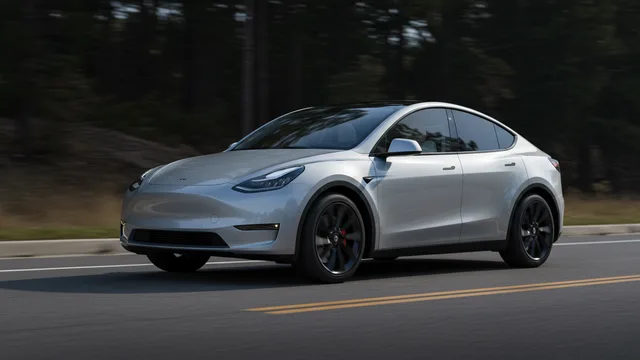
Tesla Model Y vehicles from 2021-2023 do not come with a physical owner's manual. Instead, all owner's manual content is integrated into the vehicle's software and displayed on the touchscreen, tailored to the specific vehicle configuration and software version.
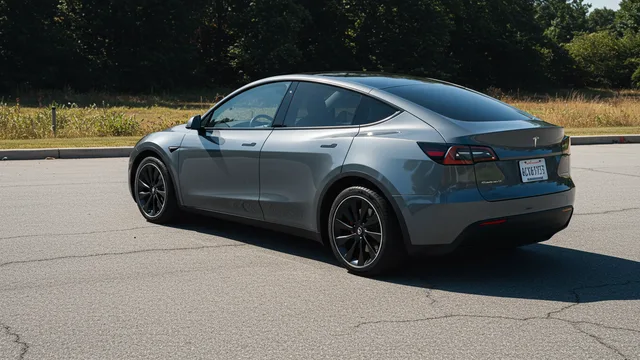
This manufacturer communication (NHTSA ID 10247837) clarifies that 2021-2023 Tesla Model Y vehicles do not come with a physical owner's manual. Instead, all content is integrated into the vehicle's software and displayed on the touchscreen, customized to your specific vehicle configuration.
This document provides essential information regarding the owner's manual for 2021-2023 Tesla Model Y vehicles. Tesla integrates all owner's manual content directly into the vehicle's software, accessible via the touchscreen, with content tailored to each specific vehicle's configuration.
Tesla Model Y vehicles from 2021-2023 do not come with a physical owner's manual. Instead, the complete Tesla Model Y owner's manual is integrated into the vehicle's software and accessible via the touchscreen, displaying content relevant to your specific configuration and software version.
Tesla Model Y vehicles from 2021-2023 do not come with a physical owner's manual. Instead, all relevant owner's manual content is integrated into the vehicle's software and displayed on the touchscreen, as detailed in NHTSA Manufacturer Communication 10238122.
Some 2021 Tesla Model Y vehicles may display "braking and stability control related alerts" on the instrument cluster and touchscreen during power-on. This issue stems from a missing hydraulic control unit (HCU) wake-up wire. A simple vehicle power cycle can typically resolve these Tesla Model Y…
Tesla, Inc. (Tesla) is recalling certain 2024 Cybertruck, 2017-2025 Model 3, and 2020-2025 Model Y vehicles. The tire pressure monitoring system (TPMS) warning light may not remain illuminated between drive cycles, failing to warn the driver of low tire pressure. As such, these vehicles fail to comply with the requirements of Federal Motor Vehicle Safety Standard number 138, "Tire Pressure Monitoring Systems."
Tesla, Inc. (Tesla) is recalling certain 2021-2024 Model 3, Model S, Model X, and 2020-2024 Model Y vehicles. The hood latch assembly may fail to detect an unlatched hood condition after the hood has been opened.
Tesla, Inc. (Tesla) is recalling certain 2012-2024 Model S, 2015-2024 Model X, 2017-2023 Model 3, and 2020-2023 Model Y vehicles. In the event of an unbelted driver, the seat belt warning light and audible chime may not activate as intended. As such, these vehicles fail to comply with the requirements of Federal Motor Vehicle Safety Standard number 208, "Occupant Crash Protection."
Tesla, Inc. (Tesla) is recalling certain 2013, 2018-2021 Model S, 2020-2021 Model X, 2018-2022 Model 3, and 2020-2022 Model Y vehicles. A factory reset muted the Pedestrian Warning System (PWS) sounds. As such, these vehicles fail to comply with the requirements of Federal Motor Vehicle Safety Standard number 141, "Minimum Sound Requirements for Hybrid and Electric Vehicles."
Tesla, Inc. (Tesla) is recalling certain 2012-2023 Model S, 2016-2024 Model X, 2017-2023 Model 3, 2019-2024 Model Y, and 2024 Cybertruck vehicles. An incorrect font size is displayed on the instrument panel for the Brake, Park, and Antilock Brake System (ABS) warning lights. As such, these vehicles fail to comply with the requirements of Federal Motor Vehicle Safety Standard number 105, "Hydraulic and Electric Brake Systems" and 135, "Light Vehicle Brake Systems."
On August 27, 2026, the 12V/low-voltage battery in my Tesla completely failed without any prior low-voltage warning displayed on the screen or sent to the mobile app. After placing my infant/toddler in their car seat in the rear and closing the door, the vehicle's electronic systems shut down entirely. The electronic door handles and key access became completely inoperative from the outside, locking my child inside the vehicle with no way for me to open the doors or retrieve them. The manual override releases are inaccessible to a young child buckled in a car seat, and the vehicle provided zero advance warning that the low-voltage battery was at critical failure. This severe design flaw creates an immediate, life-threatening entrapment hazard.
No injuries · No fire · No crash
I own a 2021 Tesla Model Y with an HW3 car computer. At approximately 54,000 miles, the vehicle developed intermittent failures of the cameras, GPS/navigation, and cruise control. On two occasions during the same routine drive, about 40 minutes into the trip, the GPS, cameras, and cruise control abruptly stopped functioning at approximately the same location. The first occurrence was about July 7, 2026 at 9:15 AM and the second August 7, 2026 at about 3:15 PM. I made the same trip once between these events without a failure. I had also previously experienced a frightening incident while driving northbound on I-280 approaching the lane division for 19th Avenue in San Francisco using Autopilot. Where my lane widened and a new lane began, the vehicle abruptly attempted to follow the new lane to the right. I had to intervene firmly with the steering wheel to maintain control. I do not know whether this event was related to the later diagnosed computer failure, but report it because of its possible safety significance. Tesla serviced the vehicle in Sunnyvale on August 16, 2026 at 54,565 miles. Tesla's invoice states: “Technician addressed the intermittent loss of GPS, cameras, and cruise control. The car computer had board-side failures and was replaced.” Tesla replaced the HW3 computer with a Hardware 3.2 computer, part 1775000-S0-L. Tesla also found corrosion at the 12V input and replaced the 12V battery. My concern is that the HW3 computer failure was intermittent and simultaneously affected cameras, GPS/navigation, and cruise control. The vehicle operated normally between failures, so a driver could not know when the problem might recur. I ask NHTSA to determine whether similar HW3 computer failures are occurring in other 2021 Model Y vehicles.
No injuries · No fire · No crash
Component Failed: Electronic Power Steering (EPAS) system / Steering Rack. The vehicle is currently displaying the active safety alert code: UI_a020 ("Steering assist reduced / disabled"). The vehicle is available for inspection. Safety Risk: A sudden loss of primary power steering assist creates a severe safety hazard, requiring extreme physical effort to steer the vehicle. This increases the risk of a crash during sudden maneuvers or at low speeds. Confirmation & Warning Lamps: The UI_a020 warning message is actively displayed on the vehicle's touchscreen. Tesla service has remotely acknowledged the alert code and required a diagnostic fee approval via the mobile app. Inspection Status: The vehicle has not yet been physically inspected. Due to severe service backlogs, the earliest available appointment Tesla could provide is more than a month away, on September 30th. I am forced to either park the vehicle or drive it with a known, I think there's active steering system fault until that date.
No injuries · No fire · No crash
In May 2025, my 2021 Tesla Model Y, with approximately 50,600 miles, developed a squeaking/groaning noise from the front suspension, especially while turning. I brought the vehicle to a Tesla Service Center because of the noise. Tesla inspected and road-tested the vehicle and confirmed the squeaking/groaning from the front suspension. According to the Tesla service invoice, the noise was caused by worn front suspension components. Tesla replaced both front lower lateral links, both front lower compliance links, and both front upper control arms. Tesla also replaced the associated lateral-link bolts/hardware and performed a four-wheel alignment. There were no warning lights or dashboard messages that I recall. The suspension noise was the symptom that caused me to seek service. The problem was confirmed by Tesla during its inspection and road test. I paid for the repair myself. I am reporting this because I recently learned that NHTSA is investigating front lower lateral-link failures in 2021–2023 Tesla Model Y vehicles under Preliminary Evaluation PE26006. My vehicle is within the model years under investigation, and Tesla replaced both of my front lower lateral links after confirming my front suspension symptoms. I do not know whether my lateral links would have eventually detached if they had not been replaced. The original components were removed by Tesla during the repair and are not available for inspection.
No injuries · No fire · No crash
SAFETY DEFECT REPORT: UNMAPPED RECALL EXPANSION / COMPONENT COMMONALITY My 2021 Tesla Model Y experienced a sudden, dangerous loss of electronic power-assisted steering (EPAS) while driving, instantly displaying the alert: "Steering assist reduced / Steering may require increased effort."An official diagnosis by Tesla Service (Estimate #3000-009-0038060635, attached) confirmed a catastrophic failure of the steering gear assembly, requiring a full replacement of the unit. The specific component listed for replacement is STEERING GEAR - LEFT HAND DRIVE, Part Number: 1188832-00-B. This is the identical engineering architecture and part family (1188832) targeted in NHTSA Safety Recall 25V092 for an overvoltage breakdown of the internal EPAS printed circuit board. While my vehicle falls outside the current 2023 model year production window defined by Tesla for 25V092, it uses the exact same component architecture and suffered the exact same failure mode. This represents a clear pattern of failure and component commonality expanding into earlier model years (2021). I am submitting my official itemized Tesla repair estimate of $3,072.50 as physical documentation. I request that the NHTSA review this component match and investigate an expansion of Recall 25V092 to protect other owners of earlier model years from this sudden loss of steering control.
No injuries · No fire · No crash