2021-2026 Audi Oil Leak Detection Technical Service Bulletin
Audi has issued Technical Service Bulletin 2060750/4 for 2021-2026 models, outlining a procedure to accurately detect engine oil leaks using a fluorescent UV additive (G 052 940 A1) and a UV lamp (VAS231005). This TSB helps technicians diagnose oil consumption, contamination, and visible leaks.
 David Chen2021 Audi e-tron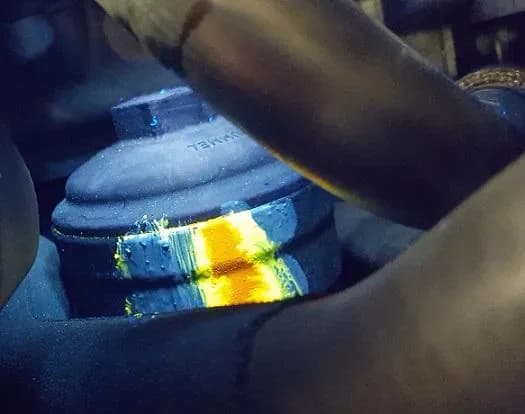
S'applique également à
- Audi A3
- 2022–2025
- Audi A4
- 2021–2025
- Audi A4 allroad
- 2021–2025
- Audi A5
- 2021–2024
- Audi A6
- 2021–2025
- Audi A6 allroad
- 2021–2025
- Audi A7
- 2021–2025
- Audi A7 e
- 2021–2022
- Audi A8 L e
- 2021
- Audi e-tron
- 2022–2023
- Audi e-tron GT
- 2022–2025
- Audi e-tron Sportback
- 2021–2022
- Audi Q3
- 2021–2025
- Audi Q5
- 2021–2025
- Audi Q5 e
- 2021, 2023, 2024, 2025
- Audi Q7
- 2021–2025
- Audi Q8
- 2021–2025
- Audi R8
- 2021–2023
- Audi RS 3
- 2022–2024
- Audi RS 5
- 2021–2024
- Audi RS 6 Avant
- 2021–2025
- Audi RS 7
- 2021–2025
- Audi RS e-tron GT
- 2022–2024
- Audi RS Q8
- 2021–2025
- Audi S e-tron GT
- 2026
- Audi S3
- 2022–2025
- Audi S4
- 2021–2025
- Audi S5
- 2021–2024
- Audi S6
- 2021–2025
- Audi S7
- 2021–2025
- Audi S8
- 2021–2025
- Audi SQ5
- 2021–2025
- Audi SQ7
- 2021–2025
- Audi SQ8
- 2021–2025
- Audi TT
- 2021–2023
- Audi TT RS
- 2021–2022
- Audi TTS
- 2021–2023
▸ Afficher 31 de plus▾ Afficher moins
Audi has released Technical Service Bulletin (TSB) 2060750/4, effective August 1, 2025, to provide a standardized method for diagnosing engine oil leaks. This TSB is crucial for addressing customer complaints related to oil consumption, engine compartment contamination, or visible oil leaks. While the TSB specifically applies to Audi vehicles with combustion engines, the NHTSA database links this 2021 Audi e-tron manufacturer_communication to a wide range of models, including the 2021 Audi e-tron, from model years 2021 through 2026.
Symptoms
Owners of affected Audi models may notice several indicators of an engine oil leak. These symptoms often include:
- Visible oil leaks in the area of the front end or engine compartment.
- Contamination with oil within the engine bay.
- Increased engine oil consumption, requiring frequent top-offs.
These issues can stem from various parts of the lubrication system, such as the cylinder head, valvetrain, or oil pan. This 2021 Audi e-tron manufacturer_communication aims to provide a clear diagnostic path for these concerns.
Diagnosis / Trigger Conditions
This Technical Service Bulletin outlines a method using a fluorescent yellow UV leak search additive to pinpoint the exact source of an oil leak. The additive mixes with the engine oil and becomes visible under a UV lamp, glowing fluorescent yellow at the leak point. This technique is effective for both small and large leaks, with larger leaks potentially visible even at idle speed. For very small leaks, a test drive might be necessary to reproduce the condition. The additive is safe for both gasoline and diesel engines and does not require an oil change after use.
Repair Procedure Summary
The diagnostic procedure involves two main steps for technicians:
- Add UV Leak Additive: 10 mL of the search additive G 052 940 A1 is added to the engine via the oil filler neck. This quantity is sufficient for up to 5 quarts of engine oil. For larger oil capacities, the amount should be doubled. Adding extra additive does not pose a risk of engine damage.
- Locate Leak: The engine is then run, and a UV lamp (VAS231005 or equivalent) is used to scan for fluorescent yellow glow, indicating the precise location of the oil leak. Engine cleaning before this procedure is not necessary.
It is important to note that the UV leak detection additive G 052 940 A1 is specifically for engine oil leaks and is not approved for use in gearboxes.
Required Tools and Parts
To perform the oil leak detection, the following specific items are required:
- Part Number G 052940A1: Leak search additive (10 mL quantity).
- Tool Number VAS231005 (WVA-074) or equivalent: UV lamp.
- Fasteners, Bolts, Nuts, and Screws: As needed, referencing ETKA/ELSA and the repair manual for specific requirements.
Warranty claims for this procedure, if applicable, should follow Audi Warranty Policies and Procedures Manual, using Service Number 1701 and Damage Code 0055, with Labor Operations 1001 2952 (20 TU) for cleaning the engine.
Owner Action
If you are experiencing symptoms of an engine oil leak, such as visible oil spots or increased oil consumption, it is recommended to schedule an appointment with an authorized Audi service center. While this TSB is primarily informational for vehicles outside of warranty, it provides the official diagnostic procedure for technicians. Be aware that this 2021 Audi e-tron manufacturer_communication is slated for release on August 1, 2025, so service centers may not yet be implementing this specific procedure until that date.
Source: NHTSA ID 11022633
Frequently Asked Questions
- What is Audi TSB 2060750/4 about?
- Audi TSB 2060750/4 details a diagnostic procedure for identifying engine oil leaks in various Audi combustion engine models using a fluorescent UV leak additive (G 052 940 A1) and a UV lamp (VAS231005).
- Which Audi models are affected by TSB 2060750/4?
- This TSB applies to a wide range of Audi models with combustion engines from model years 2021 through 2026. The NHTSA database links it to models including the Audi A3, A4, A6, A7, Q3, Q5, Q7, Q8, and their S and RS variants, as well as the e-tron models, though the TSB's focus is on combustion engine oil leaks.
- What are the symptoms of an oil leak addressed by this TSB?
- Symptoms include visible oil leaks in the engine area, oil contamination in the engine compartment, and increased engine oil consumption. These issues can originate from components like the cylinder head, valvetrain, or oil pan.
- Is the UV leak additive G 052 940 A1 safe for my engine?
- Yes, the UV leak additive G 052 940 A1 is safe for both gasoline and diesel engines. It mixes with the engine oil and does not require an oil change after its use for diagnosis. Adding extra additive beyond the recommended amount will not damage the engine.
- When does Audi TSB 2060750/4 become effective?
- Audi TSB 2060750/4 is scheduled for release and becomes effective on August 1, 2025. Service centers may not implement this specific diagnostic procedure until that date.
Related Articles
2021 Audi e-tron Electrical Malfunction and Power Loss
A 2021 Audi e-tron owner reported a severe 'Electrical Malfunction' resulting in complete loss of power on the highway. The issue has persisted despite dealer attempts to fix it over five months, posing significant safety risks.
2021-2026 Audi UTR Troubleshooting & FAQs TSB 2081409/1
This Audi Technical Service Bulletin (TSB 2081409/1) provides comprehensive answers to frequently asked questions and troubleshooting steps for the Audi Universal Traffic Recorder (UTR) accessory, covering topics like SD card compatibility, video playback, Wi-Fi issues, and more.
2021-2025 Audi Emergency Call System Fault TSB
Audi has released Technical Service Bulletin 2059528/18 to address an "Emergency call function: malfunction! Function unavailable. Please contact service" warning, often accompanied by a red SOS LED and DTC B200000. This issue affects various 2021-2025 Audi models and is due to a software problem…
2021-2026 Audi Adaptive Light System Fault C12B3FA TSB
Audi has released Technical Service Bulletin 2054202/7 to address an intermittent 'Audi adaptive light: system fault' message and DTC C12B3FA in various 2021-2026 models. This TSB outlines diagnosis and resolution for driver assistance system malfunctions.
2021-2026 Audi Parking Aid False Warnings TSB 2024323/12
This Technical Service Bulletin (TSB 2024323/12) details diagnostic and repair procedures for 2021-2026 Audi vehicles experiencing false parking aid warnings. Learn about environmental factors, sensor checks, and proper installation to resolve issues like 'Parking aid does not work / warning is…
Leave a comment
Comments are moderated and may take a moment to appear. Only your first name and the initial of your last name are shown publicly.
Comments
Be the first to comment.