2015-2025 Audi Steering Wheel Visual Damage TSB
Audi Technical Service Bulletin 2028220/11 clarifies that steering wheel visual damage caused by external factors like fingernails, rings, or disinfectants on 2015-2025 Audi vehicles is not a manufacturing defect and is not covered under warranty. This TSB supersedes previous versions.
 Sarah Mitchell2023 Audi e-tron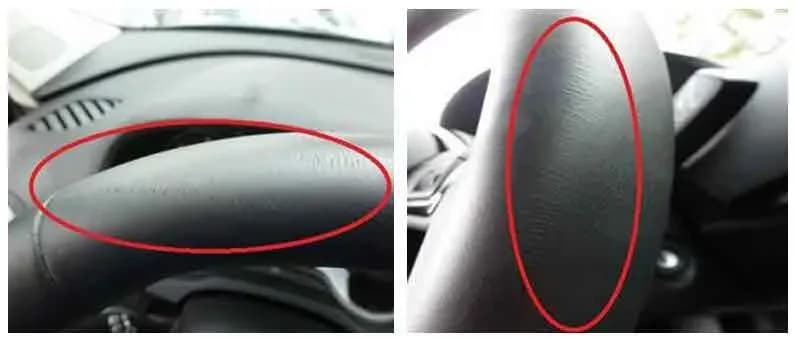
S'applique également à
- Audi A3
- 2022–2025
- Audi A4
- 2021–2025
- Audi A4 allroad
- 2021–2025
- Audi A5
- 2021–2025
- Audi A6
- 2021–2025
- Audi A6 allroad
- 2021–2025
- Audi A7
- 2021–2025
- Audi A7 e
- 2021–2022
- Audi A8 L e
- 2021
- Audi e-tron
- 2021–2022
- Audi e-tron GT
- 2022–2025
- Audi e-tron Sportback
- 2021–2022
- Audi Q3
- 2021–2025
- Audi Q5
- 2021–2025
- Audi Q5 e
- 2021, 2023, 2024, 2025
- Audi Q7
- 2021–2025
- Audi Q8
- 2021–2025
- Audi R8
- 2021–2023
- Audi RS 3
- 2022–2025
- Audi RS 5
- 2021–2025
- Audi RS 6 Avant
- 2021–2025
- Audi RS 7
- 2021–2025
- Audi RS e-tron GT
- 2022–2024
- Audi RS Q8
- 2021–2025
- Audi S e-tron GT
- 2026
- Audi S3
- 2022–2025
- Audi S4
- 2021–2025
- Audi S5
- 2021–2025
- Audi S6
- 2021–2025
- Audi S7
- 2021–2025
- Audi S8
- 2021–2025
- Audi SQ5
- 2021–2025
- Audi SQ7
- 2021–2025
- Audi SQ8
- 2021–2025
- Audi TT
- 2021–2023
- Audi TT RS
- 2021–2022
- Audi TTS
- 2021–2023
▸ Afficher 31 de plus▾ Afficher moins
What this TSB Addresses
Audi Technical Service Bulletin 48 24 68 2028220/11, issued on July 27, 2024, provides important clarification regarding visual damage to steering wheels across all Audi models from 2015 to 2025. This bulletin aims to inform technicians and owners that certain types of steering wheel damage are not due to manufacturing faults but rather external factors. This TSB supersedes previous versions, including Technical Service Bulletin Group 48 number 23-41 dated June 20, 2023.
This information is particularly relevant for owners experiencing Audi e-tron steering wheel damage or similar issues on other models, as it outlines what is and isn't covered by warranty. The bulletin emphasizes that steering wheel appearance damage due to external impact, such as contact with fingernails, zippers, watches, or rings, is not a warrantable condition.
Revision History
This Technical Service Bulletin has undergone several revisions to update its content and scope:
- Revision 11 (July 27, 2024): Revised the header to update model and model years, and revised the Technical Background section to include additional images. This is the current version, identified as 48 24 68 2028220/11.
- Revision 10 (June 20, 2023): Revised the header to update model years. This version superseded the previous one, 48 23-41.
- Revision 9 (August 25, 2021): Revised the header to update model years and revised the Technical Background section to add photos.
Symptoms of Steering Wheel Visual Damage
The TSB describes various forms of steering wheel appearance damage that can occur due to external influences. These are not indicative of a manufacturing defect but rather wear and tear or specific external interactions. Examples include:
- Damage from external impact: This can manifest as scuffs, scratches, or indentations caused by contact with items such as fingernails, zippers, watches, or rings. The TSB includes figures (Figures 1-4) illustrating examples of such damage.
- Damage from external influences: This category covers issues like color coming off the steering wheel material, often due to exposure to disinfectants or hand sanitizer. Figures 7-8 show examples where color is peeling.
- Twisted leather: What might appear to be cracks in the leather could actually be twisted leather, which is also attributed to external factors rather than material failure. Figures 9-10 provide visual examples of this condition.
- Paint peeling off trim: Damage to the steering wheel trim, such as paint peeling, is also cited as a form of visual damage not related to manufacturing. Figures 11-12 depict trim with paint peeling off.
These types of Audi e-tron steering wheel damage are illustrated with multiple figures in the TSB, showing clear examples of each condition.
Technical Background
Audi's investigations have consistently shown that the appearance damage to steering wheels, as described in this bulletin, is a direct result of external impact or influences. This includes contact with common items like fingernails, zippers, watches, and rings. The TSB explicitly states that "This type of damage is not warrantable, as numerous investigations have shown that there is no fault in material or workmanship." This clarifies that the issue is not a manufacturing defect but rather an outcome of how the steering wheel is used and interacted with over time.
Important Warranty Information
Owners should be aware of the specific warranty conditions outlined in TSB 48 24 68 2028220/11 regarding steering wheel damage.
- Not Covered by Warranty: "This damage is due to outside influence and is not covered by any Audi Warranty." This means that if your steering wheel exhibits the types of damage described in this bulletin, it will not be repaired or replaced under your vehicle's warranty.
- Charge Back Policy: Audi states that "Steering wheels with the above damage which have been replaced, will be charged back." This indicates that if a dealer replaces a steering wheel with this type of damage and attempts to claim it under warranty, the cost will be charged back to the dealership unless specific conditions for a covered fault are met.
- Claim Documentation: For any steering wheel component fault that is covered under warranty, appropriate pictures must be attached to the Technical Assistance Center (TAC) case with a clear reference to the vehicle. Without the required documentation, the warranty or goodwill claim may be rejected. The relevant service number for such claims is 4810, and the damage code is 0030.
Production Solution and Service
The Technical Service Bulletin explicitly states "Not applicable" for both "Production Solution" and "Service." This indicates that there are no manufacturing changes being implemented to address this type of damage, nor are there specific service procedures or repairs outlined by Audi for these externally induced cosmetic issues.
Additional Information
All parts and service references provided in this TSB (2028220) are subject to change and/or removal. Owners or technicians should always check with their Parts Department and/or ETKA for the latest information and parts bulletins. It is also recommended to consult the Repair Manual for fasteners, bolts, nuts, and screws that require replacement during any repair.
NHTSA ID: 2028220/11
Galerie
5 images
Frequently Asked Questions
- What is Audi TSB 2028220/11 about?
- Audi Technical Service Bulletin 2028220/11 clarifies that visual damage to the steering wheel, such as scuffs, discoloration, or peeling paint, is typically caused by external factors and is not a manufacturing defect. It provides guidance on warranty coverage for such issues.
- Is steering wheel visual damage covered under Audi warranty?
- No, according to TSB 2028220/11, visual damage to the steering wheel resulting from external impact or influences (like contact with rings, or exposure to disinfectants) is generally not covered under Audi's warranty. Such damage is considered outside influence, not a fault in material or workmanship.
- What types of damage are considered external impact on the steering wheel?
- External impact damage includes scuffs, scratches, or indentations caused by items like fingernails, zippers, watches, or rings. It also covers issues like color coming off due to disinfectants or hand sanitizer, twisted leather that appears cracked, and paint peeling from steering wheel trim.
- What should I do if my Audi e-tron steering wheel has damage?
- If your Audi e-tron steering wheel has visual damage, it's important to understand that if it's due to external factors as described in TSB 2028220/11, it will likely not be covered under warranty. You may need to consider repair or replacement at your own expense. If you believe the damage is due to a manufacturing defect, you should contact an authorized Audi service center for an assessment.
Related Articles
Should 2023 Audi e-tron Owners Worry? Recall & TSB Roundup
The 2023 Audi e-tron faces significant safety concerns, including recalls for potential brake pedal detachment and charging cable overheating. Owners have also reported serious issues like unintended acceleration and electrical system malfunctions. This guide covers all known problems and solutions.
2023 Audi e-tron Brake Pedal Recall
Audi has issued a recall (NHTSA ID: 26V240000, Audi Recall 46P7) for certain 2019-2024 E-Tron and 2020-2024 E-Tron Sportback vehicles, including the 2023 Audi e-tron. The recall addresses a potential issue where the brake pedal may detach from the brake booster, leading to a loss of brake function.
2015-2027 Audi Noise Diagnosis with Frequency Analysis App TSB
Audi has released Technical Service Bulletin 2051095/11 detailing the Audi Frequency Analysis app. This app helps technicians diagnose noise complaints more precisely across 2015-2027 Audi models. Learn how the app works, where to download it, and its features for effective vehicle noise analysis.
2023 Audi e-tron AC/DC Charging Not Possible TSB
This manufacturer communication (NHTSA ID 11031035) provides critical information for 2023 Audi e-tron owners facing issues with AC/DC charging. It specifically highlights problems linked to software version 00C6: 0093/3119, which can prevent the vehicle from charging.
2023-2025 Audi Rear Seat Reminder Message TSB 2074943/2
Audi Technical Service Bulletin 2074943/2 explains the instrument cluster message 'Please check rear seats and be aware of door safelock' in various 2023-2025 Audi models. This informational TSB details the rear occupant detection system designed to prevent children and pets from being left in…
Leave a comment
Comments are moderated and may take a moment to appear. Only your first name and the initial of your last name are shown publicly.
Comments
Be the first to comment.