2025 Audi A5, Q5, e-tron SVM Software Update Errors TSB 2079692/2
Audi has released Technical Service Bulletin (TSB) 2079692/2 to address various issues that may arise during Software Version Management (SVM) updates on 2025 Audi A5, Q5, Q6 e-tron, and A6 e-tron models. This TSB provides solutions for common error messages and ODIS tester codes.
 Marcus Weber2025 Audi A5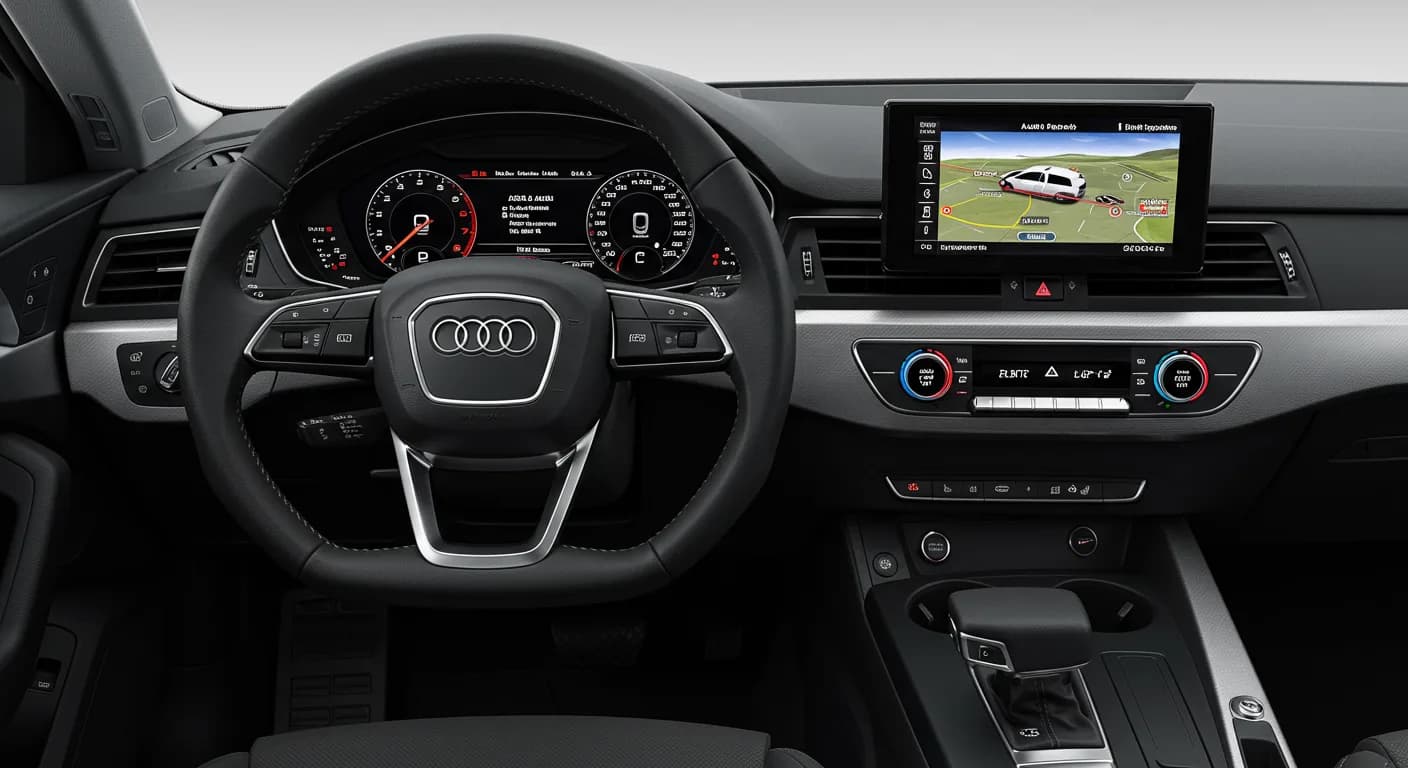
S'applique également à
- Audi Q5
- 2025
- Audi S5
- 2025
- Audi SQ5
- 2025
Audi has issued Technical Service Bulletin (TSB) 2079692/2 to assist technicians in resolving various issues that may arise during Software Version Management (SVM) updates for certain 2025 Audi models. This TSB, released on October 30, 2025, serves as an aid document for situations where flashing is aborted during the related TSB 2079690, which involves a combined software update version 03.10.00/C (28.13.01) KD2. The document specifically addresses common error messages and diagnostic codes encountered by technicians, ensuring a smoother update process for your vehicle's control modules and services.
This TSB is crucial for addressing potential complications that can prevent successful software updates, which are vital for maintaining optimal vehicle performance and functionality. Owners of affected 2025 Audi A5, Q5, Q6 e-tron, Q6 e-tron Sportback, and A6 e-tron Sportback models should be aware of this bulletin, as it outlines the diagnostic and repair procedures their service centers will follow if they experience any of these specific 2025 Audi SVM update errors during a software update.
Revision History
TSB 2079692/2 has undergone revisions to ensure its accuracy and comprehensive coverage. The initial publication, Revision 1, was released on October 10, 2025. A subsequent update, Revision 2, revised the header to include additional vehicle models, specifically the PPC - Q5/A5 series, broadening the scope of its applicability.
Understanding Software Version Management (SVM) Updates
Software Version Management (SVM) is Audi's system for managing and updating the numerous software components within a vehicle's control modules. These updates are critical for addressing bugs, improving performance, adding new features, and ensuring the vehicle's systems operate correctly. When a software update is performed, the vehicle's various electronic control units (ECUs) communicate with diagnostic tools like the ODIS tester to receive and install new programming.
However, this complex process can sometimes encounter issues, leading to error messages or incomplete updates. The TSB 2079692/2 is designed to guide technicians through these challenging scenarios, providing specific solutions for common problems that might otherwise halt the update. Understanding these potential issues and their resolutions helps ensure that your 2025 Audi SVM update errors are promptly and effectively addressed, maintaining the integrity of your vehicle's advanced electronic systems.
Important Warning: Warranty Information
Audi explicitly states that TSB 2079692/2 is informational only and is not applicable to any Audi Warranty. This means that while the bulletin provides crucial guidance for technicians in diagnosing and resolving software update issues, the procedures outlined within it do not fall under standard warranty coverage. Owners should consult with their dealership regarding any potential costs associated with these diagnostic and repair procedures.
Detailed Troubleshooting for SVM Update Errors
This section details the specific complaints and error messages that technicians might encounter during a software update, along with the prescribed solutions from TSB 2079692/2. Each scenario describes a particular issue displayed on the ODIS tester or in the vehicle's instrument cluster, followed by the recommended steps to resolve it.
1. ODIS Tester Message: "0x0009 Control module in after-run"
Complaint: Technicians may observe the diagnostic message "0x0009 Control module in after-run" on the ODIS tester. This indicates that the programming conditions for the software update were not met, suggesting that certain prerequisites, such as stable battery voltage or specific ignition states, were not fulfilled during the update attempt.
Technical Solution: To resolve this, the technician should first erase the event memory of the control module. Following this, they must perform the software update procedure again without switching the ignition off and on. This ensures that the programming conditions are reset and met for a successful re-attempt.
2. Instrument Cluster Warning: "Adaptive cruise assist currently unavailable"
Complaint: After a software update, owners or technicians might notice the message "Adaptive cruise assist currently unavailable" displayed in the instrument cluster. This indicates that the adaptive cruise assist system, a key driver-assistance feature, is not functioning correctly post-update.
Technical Solution: The solution for this particular issue is straightforward. After the software update is complete, all vehicle doors must be opened and then closed once. This action helps to re-initialize the system and clear the warning message, restoring the functionality of the adaptive cruise assist.
3. ODIS Tester Message: Diagnostic Address(es) with General Error
Complaint: The ODIS tester may report a general error related to diagnostic addresses, indicating that one or more control units are logging on incorrectly or cannot be reached. This problem specifically applies when an SVM code is entered for the first time, suggesting a communication breakdown during the initial setup or configuration of the control units.
Technical Solution: The technician should attempt to restore communication capability via GFF (Guided Fault Finding). If this initial attempt is unsuccessful, a DISS ticket (Diagnostic Information System Support) should be opened, specifying the code on the affected control unit. This escalates the issue to Audi support for further assistance.
4. ODIS Tester Event Codes: 8060 or 8096
Complaint: The ODIS tester may display event codes 8060 or 8096. These codes typically signify a lost configuration after a software update or indicate that certain control units can no longer be reached following the update. This suggests a critical data loss or communication failure within the vehicle's network, contributing to the 2025 Audi SVM update errors.
Technical Solution: The recommended action is to perform a bus sleep cycle for at least 15 minutes. This allows the vehicle's electronic systems to power down and reset. After the bus sleep cycle, the technician should repeat the update procedure using the SVM code, which should help re-establish communication and configuration.
5. ODIS Tester Connection Errors: 9024 or ODS1008E
Complaint: Technicians might encounter connection errors such as 9024 or ODS1008E on the ODIS tester, often accompanied by a "Negative response from server" message. This indicates that the GSB bus timed out, and the ODIS-S tester made four attempts to establish the connection without success, preventing the software update from proceeding.
Technical Solution: The technician should perform the update again. If this second attempt is unsuccessful, it is recommended to contact support for further assistance, as more in-depth network or server-side troubleshooting may be required.
6. Steering Wheel Vibration During Flashing
Complaint: During the flashing procedure, vibration of the steering wheel is a normal occurrence. However, if the steering wheel continues to vibrate after the software update has been completed, it indicates an issue that needs further attention.
Technical Solution: If the steering wheel still vibrates after the update, technicians are instructed to refer to TSB 2076547, titled "48 General information on flashing procedure (vibrating steering wheel)". This separate bulletin provides specific guidance for diagnosing and resolving persistent steering wheel vibration issues related to software flashing.
7. File Transmission Freezes / Download Issues
Complaint: The ODIS tester may display a message indicating that file transmission has frozen for longer than 5 minutes, or that the data required for the software update cannot be downloaded from the workshop server (EdgeBox). This issue is generally caused by a firewall setting on the workshop tester, preventing communication on specific ports.
Technical Solution: If this error occurs for the first time, the technician should check the firewall settings (referring to the campaign description for details) and re-enter the SVM code. It is crucial to configure the firewall in accordance with the ODIS release notes, specifically ensuring that port 8080 is enabled. This often requires assistance from an IT administrator.
8. ODIS Tester Error Codes: 8072, 8076, 8118, 8101, 9999
Complaint: The ODIS tester displays a range of error codes including 8072, 8076, 8118, 8101, and 9999, indicating that the software update stored in the entered SVM code cannot be performed. This signifies a critical failure in the update process.
Technical Solution: A dialogue will be shown on the ODIS tester stating: "A further attempt can be started subsequently to try to update the vehicle to the new version. Please perform the procedure again until the software update is successful…" This dialogue can be confirmed by selecting "Yes" if the SVM code has already been used and modifications to the vehicle have already been made. If the SVM code is being used for the first time on this vehicle, the technician should refer to the information provided on the ODIS tester for specific instructions.
Next Steps for Owners
If you own a 2025 Audi A5, Q5, Q6 e-tron, Q6 e-tron Sportback, or A6 e-tron Sportback and are experiencing issues related to software updates or any of the symptoms described, it is essential to contact your authorized Audi dealership. They have access to this Technical Service Bulletin (TSB 2079692/2) and the necessary diagnostic tools and training to address these specific 2025 Audi SVM update errors. Be prepared to describe any warning messages or unusual vehicle behavior you have observed.
NHTSA ID: 10250647
Frequently Asked Questions
- What is TSB 2079692/2 about?
- TSB 2079692/2 is an Audi Technical Service Bulletin that provides troubleshooting steps and solutions for various errors encountered during Software Version Management (SVM) updates on 2025 Audi A5, Q5, Q6 e-tron, and A6 e-tron models. It addresses issues like 'Adaptive cruise assist currently unavailable' and specific ODIS diagnostic codes.
- What does the error message 'Adaptive cruise assist currently unavailable' mean after an update?
- If you see the message 'Adaptive cruise assist currently unavailable' in your instrument cluster after a software update, it indicates that the system needs to be re-initialized. The TSB instructs technicians to open and close all vehicle doors once to resolve this issue.
- What should be done if the ODIS tester shows error codes like 8060 or 8096?
- According to TSB 2079692/2, ODIS error codes 8060 or 8096 suggest a lost configuration or unreachable control units after a software update. The solution involves performing a bus sleep cycle for at least 15 minutes, followed by repeating the update procedure using the SVM code.
- Are there any warranty implications for this TSB?
- Audi explicitly states that TSB 2079692/2 is informational only and is not applicable to any Audi Warranty. This means that while it provides guidance for technicians, the procedures outlined within it do not fall under standard warranty coverage. Owners should consult their dealership regarding potential costs.
- What if the software update files cannot be downloaded from the workshop server?
- If the ODIS tester indicates that files cannot be downloaded (e.g., 'File transmission freezes'), TSB 2079692/2 advises checking the workshop's firewall settings. Specifically, port 8080 needs to be enabled to allow communication with the workshop server (EdgeBox) for successful data transfer.
Related Articles
2024-2025 Audi On-Car Analysis: Check Engine Light & DTCs
Audi's March 2025 On-Car Analysis list provides guidance for technicians on several issues affecting 2024-2025 Audi A3, Q5, and A5 models. These include check engine lights, vehicle sound malfunction warnings, and specific diagnostic trouble codes (DTCs) such as POE5E00 and P219500. The document…
2025-2026 Audi A5/Q5 Coolant Pump V188 Blocked P2BC100 TSB
Audi TSB 2080825/2 addresses the 'Coolant pump for charge air cooler, blocked' issue (DTC P2BC100) and 'Drive system: fault' message in 2025-2026 Audi A5 and Q5 models, often after extended stationary periods. It outlines diagnosis and repair steps.
2025 Audi A5/Q5/S5/SQ5: 'Position P Cannot Be Selected'
A Technical Service Bulletin (TSB 2080044/4) has been issued for certain 2025 Audi A5, Q5, S5, and SQ5 vehicles regarding an issue where 'Position P cannot be selected' and the vehicle cannot be locked. This condition is resolved with a software update.
2025 Audi A5/S5/Q5/SQ5 Software Update Flashing Issues
This technical service bulletin (TSB 2079692/5) from Audi addresses various issues encountered during the combined software update 03.10.00/C (28.13.01) KD2 for 2025 Audi A5, S5, Q5, and SQ5 models. It covers diagnostic errors, control module communication problems, and solutions for successful…
2025 Audi A5/Q5/S5/SQ5 Software Update TSB 2079690/8
Audi has released Technical Service Bulletin 2079690/8 for 2025 A5, Q5, S5, and SQ5 models. This TSB details a combined software update (00 Combined software update 03.10.00/C (28.13.01) KD2) that resolves various issues including navigation, connectivity, digital key functionality, and driving…
Leave a comment
Comments are moderated and may take a moment to appear. Only your first name and the initial of your last name are shown publicly.
Comments
Be the first to comment.