2026 Audi A2 e-tron Sets New Efficiency Benchmark
Audi has announced preliminary energy consumption figures for its upcoming A2 e-tron, positioning the compact electric model as the most efficient vehicle in the brand's history. The 140-kW version, equipped with an optional efficiency package, is projected to achieve 12.8 kilowatt-hours per 100…

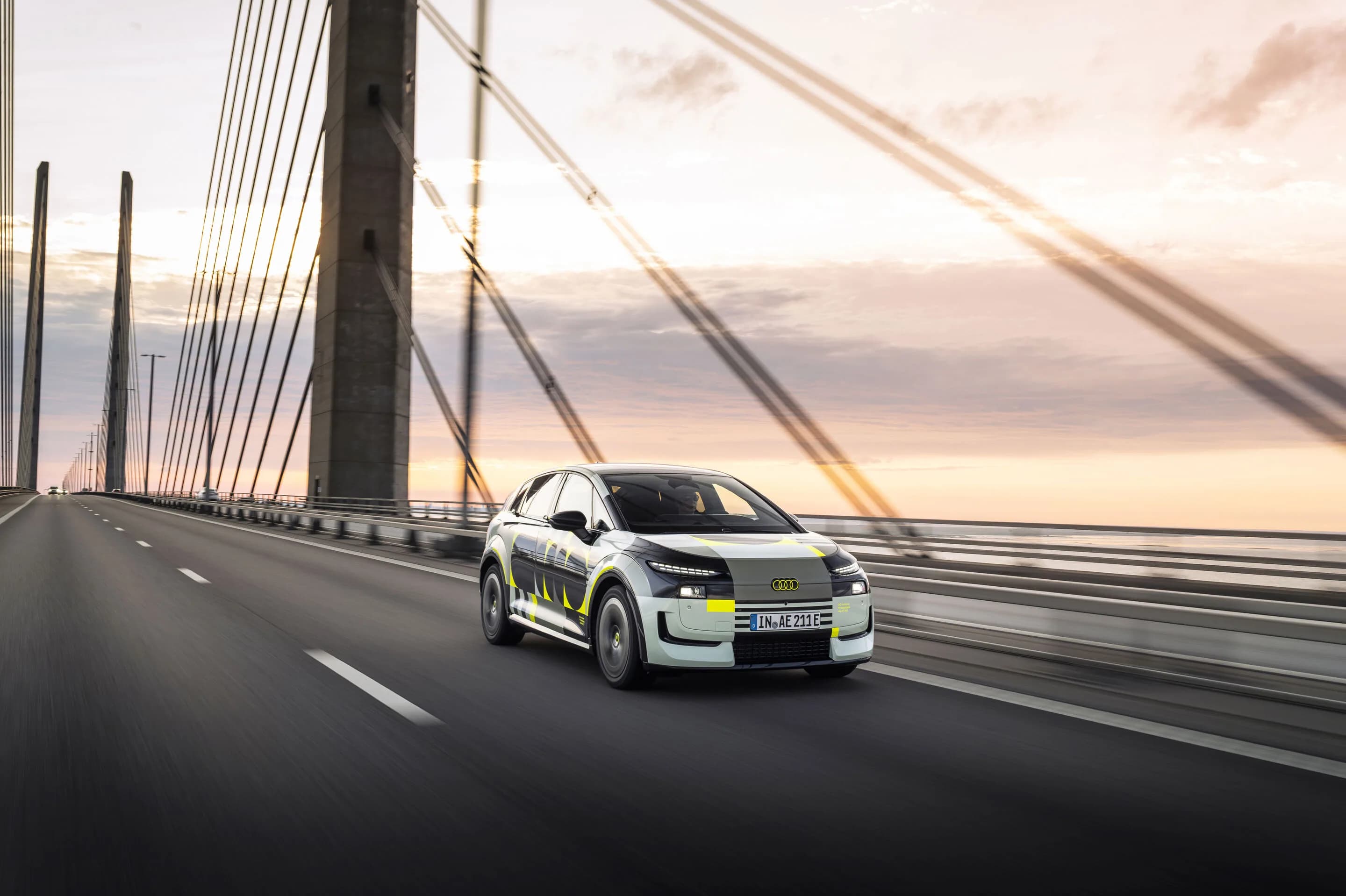
Audi has announced preliminary energy consumption figures for its upcoming A2 e-tron, positioning the compact electric model as the most efficient vehicle in the brand's history. The 140-kW version, equipped with an optional efficiency package, is projected to achieve 12.8 kilowatt-hours per 100 kilometers based on WLTP measurements. This efficiency is attributed to a combination of advanced drive technology, aerodynamic design, and an optimized battery system.
Aerodynamic Design for Reduced Drag
The 2026 Audi A2 e-tron achieves a drag coefficient of 0.24, which is the lowest among Audi's compact models. This aerodynamic performance is crucial, as drag accounts for over 50 percent of a vehicle's total energy demand at speeds above approximately 100 km/h. The vehicle's body features a rounded front, a flowing roofline, and a defined rear, designed to reduce drag compared to conventional fastback models.
Further aerodynamic enhancements include air curtains that redirect airflow to minimize turbulence around the front flanks. Gap reducers and gap breathers also contribute to smoother air management around the wheel arches. An active cool-air intake system remains closed during normal driving and at higher speeds to optimize range, opening only during charging, rapid acceleration, or in hot conditions to protect the battery and electronics.
Collectively, these measures can reduce the A2 e-tron's energy consumption by up to 0.9 kWh/100 km. This directly contributes to the model's overall efficiency, helping it achieve the preliminary 12.8 kWh/100 km figure.
Advanced Drivetrain and Battery Technology
The A2 e-tron features an electric drive system that is up to 10 percent more efficient than previous designs. Its permanently excited synchronous motor is engineered for both efficiency and driving comfort, particularly in everyday traffic conditions. Key advancements include the use of silicon carbide semiconductors in the power electronics, which replace older silicon technology to reduce switching losses, especially under partial load.
The electric motor itself incorporates thinner laminations, measuring 0.2 millimeters instead of 0.3 millimeters, to decrease iron losses. Additionally, the stator winding can switch between star and delta configurations, allowing the motor to operate in more efficient speed ranges. The transmission uses a new low-friction oil to minimize energy loss, and a tall 10.2:1 gear ratio helps lower motor speed at higher road speeds, further reducing energy consumption.
Powering the A2 e-tron is a 61-kWh lithium iron phosphate (LFP) battery. This battery utilizes a cell-to-pack design, where cells are directly integrated into the housing, increasing packing density and energy density within a compact space. LFP technology is noted for not requiring rare earth elements, its slower aging characteristics, and its inherent safety.
Smart Energy Management and Charging
The LFP battery's durability allows for routine charging to 100 percent, which helps maintain consistent long-range capability. Its flat voltage curve ensures consistent power output even as the state of charge decreases. This focus on long-term performance and usability is a key aspect of the A2 e-tron's overall efficiency strategy.
Beyond the cell chemistry, the vehicle's efficiency gains stem from the integrated management of the battery, thermal systems, charging electronics, and software. An adapted cooling strategy, for instance, boosts wallbox charging efficiency to 89.6 percent, reducing energy loss during the charging process. An algorithm specifically designed for the LFP battery accurately assesses its state of charge and health.
The 2026 Audi A2 e-tron also supports bidirectional charging capabilities. Vehicle-to-Load functionality allows the car to power external devices, while Vehicle-to-Home enables the vehicle to act as an energy storage system for a household, though this feature will initially be available in Germany, Austria, and Switzerland. An Audi-recommended charging box is required for these functions.
With its focus on aerodynamic optimization, an advanced electric powertrain, and a sophisticated LFP battery system, the 2026 Audi A2 e-tron aims to deliver a highly efficient compact electric vehicle experience. Its preliminary energy consumption figures suggest a strong entry into the competitive EV market when it debuts in fall 2026.
Galería
1 imagen
Leave a comment
Comments are moderated and may take a moment to appear. Only your first name and the initial of your last name are shown publicly.
Comments
Be the first to comment.