2021-2023 Hyundai Lamp Condensation TSB 23-BD-002H
Hyundai Technical Service Bulletin (TSB) 23-BD-002H provides comprehensive information regarding condensation in headlamps, DRLs, fog lamps, and rear combination lamps across various 2021-2023 Hyundai models. This bulletin clarifies that lamp assembly replacement is often unnecessary for normal…
 Ahmet Topcu2022 Hyundai Tucson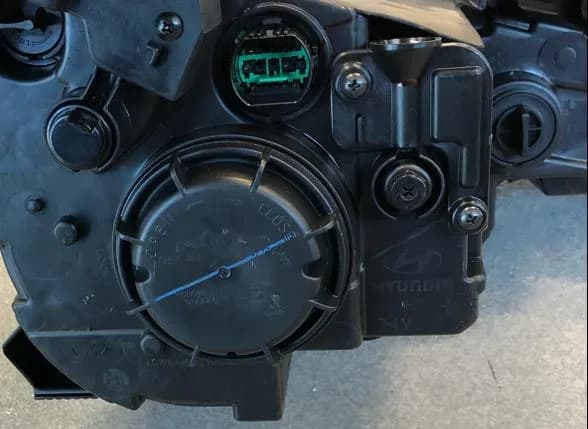
También aplica a
- Hyundai Accent
- 2021–2022
- Hyundai Elantra
- 2021–2023
- Hyundai Elantra N
- 2022
- Hyundai Ioniq 5
- 2022–2023
- Hyundai Kona
- 2021–2023
- Hyundai Kona N
- 2022
- Hyundai Nexo
- 2021–2023
- Hyundai Palisade
- 2021–2023
- Hyundai Santa Cruz
- 2022–2023
- Hyundai Santa Fe
- 2021–2023
- Hyundai Sonata
- 2021–2023
- Hyundai Tucson
- 2021, 2023
- Hyundai Veloster
- 2021
- Hyundai Veloster N
- 2021–2022
- Hyundai Venue
- 2021–2023
▸ Mostrar 9 más▾ Mostrar menos
Hyundai Technical Service Bulletin (TSB) 23-BD-002H addresses a common concern among vehicle owners: the presence of moisture or condensation inside their vehicle's lamp assemblies. This bulletin, issued in January 2023, applies to all Hyundai models from 2021 to 2023, including the Tucson, Ioniq 5, Palisade, and Santa Fe, among others. It supersedes the previous bulletin 20-BD-014H by offering updated information and examples for diagnosing and resolving lamp condensation.
The TSB clarifies that the appearance of moisture in components such as the headlamp, rear combination lamp, daytime running lamp (DRL), or fog lamp is frequently a natural occurrence. For most cases of Hyundai lamp condensation, a full lamp assembly replacement is not necessary.
Symptoms of Lamp Condensation
Owners may observe visible moisture droplets or a fogging effect on the inner surfaces of their vehicle's lamp lenses. This can occur in the headlamps, DRLs, fog lamps, or rear combination lamps. The extent and location of this moisture can vary based on environmental factors and how the vehicle is used, including lamp usage, driving time, and distance.
Normal Condensation vs. Water Leak
TSB 23-BD-002H distinguishes between two types of lamp condensation:
Normal Condensation: This is considered a natural occurrence. It typically appears after rain, a car wash, or when the vehicle is parked in cold temperatures. It happens when water vapor inside the lamp assembly is exposed to temperature variations, causing it to condense. This type of Hyundai lamp condensation is normal and does not require replacement of the lamp assembly.
Water Leak: This indicates a more significant issue. Signs of a water leak include water collecting at the bottom of the lamp assembly, visible water streaks, or condensation that persists for 30 minutes or more after the lamps have been on. A water leak may be caused by a poor seal between the lamp housing and lens, cracks in the lamp assembly, or improper fitment. This condition requires diagnosis and repair.
Important Warnings for Owners
Hyundai explicitly states in TSB 23-BD-002H that lamp assembly replacement is NOT necessary in most cases for condensation. Furthermore, it emphasizes that this condensation is NORMAL and replacement is NOT REQUIRED for natural condensation. Owners should be aware of these guidelines to avoid unnecessary repairs.
Diagnosis and Repair Flowchart Summary
For technicians, the TSB provides a flowchart to guide the repair process for Hyundai lamp condensation:
- Initial Assessment: Determine if lamp condensation is present.
- Identification: Refer to the lamp condensation identification guidelines to distinguish between normal condensation and a water leak.
- Water Leak Scenario: If a water leak is identified, the lamp assembly must be removed and inspected for external damage or aftermarket modifications. If damage is present and caused by an external influence, the repair may not be covered under warranty, and the affected lamp assembly should be replaced. If no damage, the lamp assembly is replaced.
- Normal Condensation Scenario: If normal condensation is identified, the technician should follow the lamp assembly drying guidelines.
- Persistent Condensation: If condensation remains after following the drying guidelines, the desiccant or moisture absorbent pack inside the lamp assembly should be replaced, and the drying procedure repeated.
- Final Step: If condensation still persists after these steps, the affected lamp assembly should be replaced.
Lamp Assembly Drying Guidelines
To address normal Hyundai lamp condensation, the TSB outlines a specific drying procedure:
- Park the vehicle in a well-ventilated area.
- Remove any dust cap(s) from the lamp assembly. Some assemblies may have two caps.
- To prevent battery discharge, ensure the engine is running while the lamps are on.
- Allow the vehicle to idle for 30 minutes with the engine running and lamps illuminated. This helps evaporate the condensation and moisture.
- After drying, reinstall the dust cap(s).
- If condensation remains, replace the lamp desiccant or moisture absorbent pack (if equipped) and repeat the drying procedure.
Warranty Information
Normal warranty applies for any lamp assembly with condensation. When submitting a warranty claim, it is crucial to provide STUI (Service Technical Update Information) pictures. These photos should show the headlamp installed with the fender and hood partially visible, as illustrated in the TSB. If only a desiccant or moisture absorbent pack is replaced, the warranty claim should be filed using the part number for that component, not the entire lamp assembly.
NHTSA ID: 10230904
Galería
6 imágenes
Frequently Asked Questions
- Is condensation in my Hyundai's headlamps normal?
- Yes, Hyundai Technical Service Bulletin 23-BD-002H states that minor condensation in headlamps, DRLs, fog lamps, and rear combination lamps is often a normal occurrence due to temperature variations and does not typically require lamp assembly replacement.
- When should I be concerned about Hyundai lamp condensation?
- You should be concerned if you observe water collecting at the bottom of the lamp assembly, visible water streaks, or if the condensation persists for 30 minutes or more after the lamps have been on. These could indicate a water leak rather than normal condensation.
- How can I remove normal condensation from my Hyundai's lamp assemblies?
- Hyundai TSB 23-BD-002H recommends parking the vehicle in a well-ventilated area, removing the dust caps, running the engine with the lamps on for 30 minutes to allow moisture to evaporate, and then reinstalling the dust caps.
- Does Hyundai TSB 23-BD-002H apply to all Hyundai models?
- While the bulletin states 'ALL' models, the specific vehicles linked by NHTSA for this document are 2021-2023 Hyundai models, including popular ones like the Tucson, Ioniq 5, Palisade, and Santa Fe.
- Will my dealer replace my lamp assembly for condensation under warranty?
- According to TSB 23-BD-002H, lamp assembly replacement is generally not necessary for normal condensation. If a water leak is confirmed or if replacing the desiccant and drying procedures fail, then replacement may be covered under normal warranty, provided the issue isn't due to external damage or aftermarket modifications.
Related Articles
2021-2024 Hyundai Santa Fe / Tucson DTC U028700 EOP
Hyundai has issued Technical Service Bulletin (TSB) 26-AT-002H for certain 2021-2024 Santa Fe and Tucson vehicles. This TSB addresses diagnostic trouble code U028700, indicating a "Lost Communication With Trans Fluid Pump Module," which can cause the Idle Stop & Go (ISG) system to become…
2022 Hyundai Tucson Inoperable Horn Warranty Extension
Hyundai has issued a warranty extension for certain 2022 Tucson (NX4A) vehicles experiencing an inoperable horn. This issue, detailed in TSB 26-BE-004H, is caused by foreign substances oxidizing internal horn parts. Coverage is extended to 10 years/120,000 miles.
2022 Hyundai Tucson Inoperative Horn TSB 26-BE-004H
Hyundai has issued Technical Service Bulletin 26-BE-004H for certain 2022 Tucson (NX4A) vehicles experiencing an inoperative horn. This TSB extends warranty coverage to 10 years/120,000 miles for horn replacement due to internal oxidation from foreign substances.
2021-2022 Hyundai Anti-Theft Ignition Cylinder Protector TSB
Hyundai has issued Technical Service Bulletin 25-01-089H (Customer Satisfaction Campaign P33) to address vehicle theft concerns by installing an anti-theft ignition cylinder protector and anti-theft decals on various 2021-2022 models.
2021-2022 Hyundai Anti-Theft Ignition Cylinder Protector Campaign P33
Hyundai has launched Customer Satisfaction Campaign P33 for 2021-2022 models, offering a free anti-theft ignition cylinder protector and decals. This hardware upgrade, detailed in TSB 25-01-089H, is available upon customer request to counter social media theft methods.
Leave a comment
Comments are moderated and may take a moment to appear. Only your first name and the initial of your last name are shown publicly.
Comments
Be the first to comment.