2021 Honda Civic A/C Compressor Shaft Seal Leak Warranty
Honda has issued Service Bulletin 23-039, extending the warranty for A/C compressor shaft seal leaks on certain 2021 Civic models. This issue stems from new refrigerant and oil requirements, which can cause the seal to swell and leak. Owners will be notified and eligible vehicles will receive a…
 Marcus Weber2021 Honda Civic Type R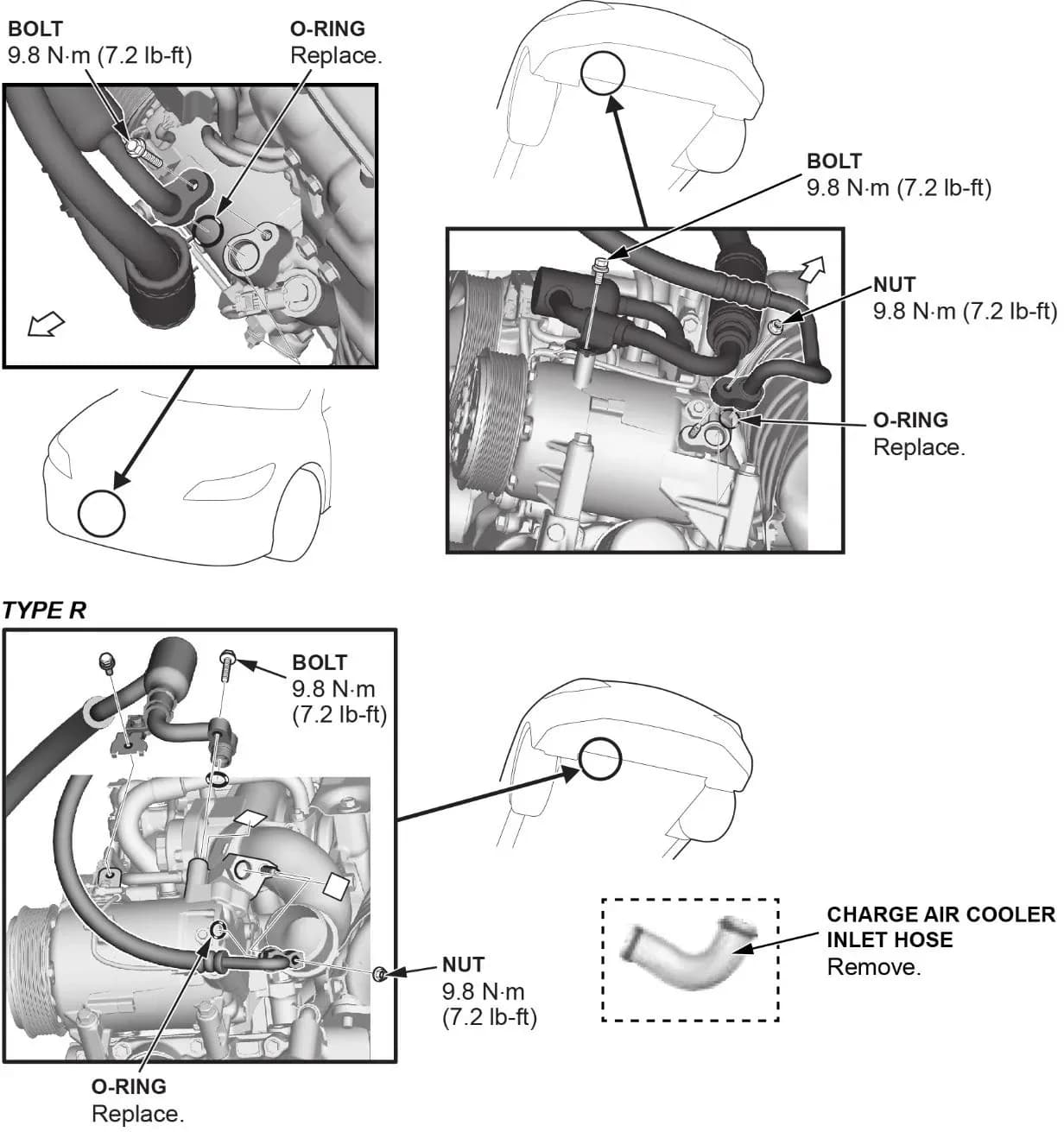
También aplica a
- Honda Civic
- 2021
Honda has released Service Bulletin 23-039, Version 5, dated June 19, 2024, to address a potential A/C compressor shaft seal leak in certain 2021 Honda Civic models. This bulletin supersedes a previous version, 23-039 dated January 18, 2024, to provide updated information. The core issue is related to new North American regulations concerning A/C refrigerant and oil, which can cause the compressor shaft seal to swell and wear abnormally, leading to refrigerant leaks.
To provide relief for affected owners, American Honda is extending the warranty on the A/C compressor shaft seal. The coverage is now 10 years from the original date of purchase, with unlimited mileage, a significant increase from the original 3-year warranty.
Symptoms of an A/C Compressor Shaft Seal Leak
Owners of affected 2021 Honda Civic vehicles might notice a decrease in the effectiveness of their air conditioning system. This is typically due to a loss of refrigerant caused by the leaking compressor shaft seal. While no specific dashboard warning lights are mentioned, a noticeable reduction in cooling performance is a key indicator.
Diagnosis and Inspection
To determine if your 2021 Honda Civic is experiencing a Honda Civic A/C compressor shaft seal leak, a Honda technician will perform a detailed inspection. This involves several steps:
- Initial Visual Check: The technician will remove the right-front tire and engine undercover to gain access to the A/C compressor.
- Oil Presence Check: They will inspect the armature plate surface of the compressor for any signs of oil. If oil is present, it indicates a leak.
- Felt Washer Examination: If no oil is immediately visible, the felt washer from the compressor will be removed and placed on paper. If oil transfers to the paper within 10 seconds, a leak is confirmed.
- Leak Detector Test: A calibrated leak detector will be used around the compressor snout for at least five minutes to detect any refrigerant leaks. Running the vehicle for ten minutes and re-testing may be necessary for accurate results.
If no oil or leak is found after these checks, the components will be reassembled, and the vehicle will be run for ten minutes before a final leak check is performed. If a leak is detected at any point, the repair procedure will be initiated.
Repair Procedure Summary
The repair for the Honda Civic A/C compressor shaft seal leak involves a comprehensive process to replace the faulty seal. Technicians are advised to wear safety glasses and rubber gloves due to the presence of fluids. The general steps include:
- A/C System Preparation: Connecting an A/C recover/recycle/recharge machine to the high-pressure and low-pressure service ports, then recovering the A/C refrigerant.
- Component Disconnection: Disconnecting the discharge and suction hoses, immediately sealing the ports to prevent contamination. For Civic Type R models, the charge air cooler inlet hose and A/C condenser fan shroud must also be removed.
- Compressor Removal: Removing the A/C compressor from the vehicle.
- Disassembly: Removing the center hub bolt, clutch, felt washer, outer pulley C-ring, and pulley. The old seal C-ring is then removed.
- Cleaning: Thoroughly cleaning the compressor bore and shaft with a lint-free cloth, avoiding compressed air to prevent debris from entering the system.
- Seal Extraction: Using specialized tools, including a press tool and extractor tool, to carefully break loose and extract the old compressor shaft seal.
- New Seal Installation: Inspecting the compressor shaft bore for damage, lubricating the new seal and seal guide with new POE compressor oil, and then installing the new seal using the seal guide tool and press adapter. The new seal C-ring is then inserted.
- Reassembly: Reinstalling the pulley, new pulley outer C-ring, new felt washer, clutch plate, shims, and a new clutch center flange bolt (torqued to 17 N·m or 13 lb-ft). The compressor is filled with one can of POE compressor oil.
- Final Steps: Mounting the side bracket, installing the compressor, connecting the suction and discharge hoses (replacing O-rings as needed), and reinstalling the drive belt and other removed parts.
- System Recharge and Test: Recharging the A/C system, setting it to MAX COOL, and running the vehicle for ten minutes at 1,500-2,000 RPM. A final leak detector check is performed around the shaft seal, clutch, and O-ring areas with the A/C off before installing the undercover and tire.
Required Tools and Parts
To perform this repair, specific parts and specialized tools are necessary:
- Parts:
- Seal Set Assembly Kit: 38918-64A-318
- O-Ring (1/2"): 80872-SN7-003
- O-Ring (5/8"): 80871-SN7-003
- RB100EV Oil: 38899-64A-A02
- Special Tools:
- A/C Compressor Seal Puller: 07AAC-5AAA100
- A/C Compressor Seal Guide: 07AAG-5AAA101
- A/C Compressor Seal Driver: 07AAE-5AAA101
- 6CVC Seal Press (1.5L): 07AAD-5AAA101
- 6CVC Seal Press (2.0L): 07AAD-5BAA100
These tools were auto-shipped to dealers in December 2022. For support or replacements, the Special Tools Hotline can be contacted at (800) 346-6327.
Warranty Claim Information
For warranty claims related to the A/C compressor shaft seal replacement, dealers will use the following codes:
- Operation Number: 6141D4
- Description: AC compressor seal replacement (includes inspection, evacuate and recharge)
- Flat Rate Time: 2.1 hours
- Defect Code: 6A500
- Symptom Code: RE800
- Template ID: A23039A
- Failed Part Number: 38810-5BA-A03
Important Warnings for Owners
- Eligibility: This warranty extension does not apply to any vehicle that has been declared a total loss or sold for salvage by a financial institution or insurer, or has a branded or similar title under any state's law.
- DIY Repairs: The procedures outlined in Service Bulletin 23-039 are intended for skilled technicians with proper tools, equipment, and training. These repairs should not be attempted by
Galería
41 imágenes
Frequently Asked Questions
- What is Service Bulletin 23-039 about?
- Service Bulletin 23-039 addresses an A/C compressor shaft seal leak in certain 2021 Honda Civic models. It extends the warranty for this specific issue due to new North American refrigerant and oil regulations that can cause the seal to swell and leak.
- How long is the warranty extension for the A/C compressor shaft seal leak?
- Honda has extended the warranty for the A/C compressor shaft seal leak from the original 3 years to 10 years from the vehicle's original date of purchase, with no mileage limitation.
- What are the signs of a Honda Civic A/C compressor shaft seal leak?
- The primary symptom of a Honda Civic A/C compressor shaft seal leak is a noticeable decrease in the effectiveness of your vehicle's air conditioning system, indicating a loss of refrigerant. Technicians will also look for oil on the compressor's armature plate or felt washer.
- Can I perform the repair for the A/C compressor shaft seal leak myself?
- No, the repair procedure detailed in Service Bulletin 23-039 requires specialized tools and technical expertise. Honda explicitly states that these procedures should not be attempted by 'do-it-yourselfers' and recommends contacting an authorized Honda automobile dealer for diagnosis and repair.
- How do I know if my 2021 Honda Civic is eligible for this warranty extension?
- Owners of affected vehicles will be sent a notification. You can also contact an authorized Honda automobile dealer, who can perform an iN VIN status inquiry to confirm your vehicle's eligibility for the warranty extension and repair under Service Bulletin 23-039.
Related Articles
2021 Honda Civic Type R P0304 Misfire TSB 25-062
Honda has issued Service Bulletin 25-062 for 2021 Civic Type R vehicles experiencing a 'Misfire No. 4 Cylinder' and diagnostic trouble code P0304. This issue is caused by water entering the hood scoop, leading to corrosion of the ignition coil, plug tube, and spark plug.
2021 Honda Civic Type R Misfire DTC P0304
Honda Service Bulletin 25-062 details a common issue in the 2021 Honda Civic Type R where water from the hood scoop can lead to corrosion in the No. 4 spark plug hole, causing a misfire and triggering DTC P0304. This bulletin outlines inspection and repair procedures, including potential cylinder…
2021 Honda Civic Type R A/C Condenser Warranty
Honda has issued Service Bulletin 21-014, extending the warranty for the A/C condenser on 2021 Civic Type R vehicles to 10 years/unlimited miles due to potential manufacturing defects causing refrigerant leaks.
2021 Honda Civic A/C Compressor Shaft Seal Leak TSB 23-039
American Honda has issued Service Bulletin 23-039, extending the warranty for the A/C compressor shaft seal on 2021 Honda Civic models. This addresses potential leaks caused by new refrigerant and oil requirements, offering a 10-year, unlimited mileage warranty from the original purchase date.
2021 Honda Civic A/C Compressor Shaft Seal Leak Warranty Extension
Honda has issued Service Bulletin 23-039, extending the warranty for A/C compressor shaft seal leaks on certain 2021 Civic models. This addresses potential leaks caused by new refrigerant and oil, offering a 10-year warranty from the original purchase date.
Leave a comment
Comments are moderated and may take a moment to appear. Only your first name and the initial of your last name are shown publicly.
Comments
Be the first to comment.