2023 Audi TCM Software Recall 37P3 for MIL Faults
Audi has announced emissions recall 37P3 for certain 2023 A4, A5, A6, A7, Q5, and RS3 vehicles. A software error in the Transmission Control Module (TCM) prevents fault codes from being cleared, causing the malfunction indicator lamp (MIL) to remain illuminated. This recall updates the TCM software.
 Ahmet Topcu2023 Audi A6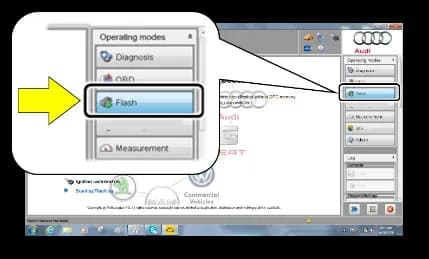
También aplica a
- Audi A4
- 2023
- Audi A4 allroad
- 2023
- Audi A5
- 2023
- Audi A6 allroad
- 2023
- Audi A7
- 2023
- Audi Q5
- 2023
- Audi RS 3
- 2023
▸ Mostrar 1 más▾ Mostrar menos
Audi has initiated Emissions Recall 37P3 to address a software issue affecting the Transmission Control Module (TCM) in certain 2023 Audi vehicles. This recall specifically targets a software error within the TCM of affected DSG transmissions.
The core problem is that after repairs are completed to resolve an underlying transmission issue, certain fault codes that trigger the "malfunction indicator lamp (MIL)" cannot be cleared. While this 2023 Audi A6 TCM software error does not affect tailpipe emissions or vehicle drivability, the persistent MIL illumination can prevent vehicles from passing subsequent state inspection and maintenance testing.
Symptoms
The primary symptom of this issue is the "malfunction indicator lamp (MIL)" remaining illuminated on the dashboard. This occurs even after a repair has been performed to correct an underlying transmission problem. While the vehicle's performance and emissions are not directly impacted, the inability to clear these fault codes can lead to inspection failures.
Fault Codes / DTCs
The recall document indicates that "certain fault codes" cannot be cleared, leading to the MIL illumination. However, specific Diagnostic Trouble Codes (DTCs) are not listed in this communication. The underlying cause is a 2023 Audi A6 TCM software error.
Diagnosis and Trigger Conditions
The problem is traced to a software error within the Transmission Control Unit (TCM) of affected DSG transmissions. This error prevents the proper clearing of fault codes after a transmission-related repair. The condition is triggered when the TCM software incorrectly handles the clearing process for these specific fault codes.
Repair Procedure Summary
The corrective action for Emissions Recall 37P3 involves updating the Transmission Control Module (TCM) software. This software update is performed using specialized Audi diagnostic equipment.
Technicians must first verify the vehicle's eligibility using the VIN in the Elsa system's "Campaign/Action" screen, ensuring the campaign status is "open." If multiple software updates are pending, the oldest one must be performed first.
During the update process, several critical conditions must be met:
- The ODIS software on the diagnostic tester must be fully up to date.
- A battery charger, such as the VAS5908, must be connected to the vehicle battery and maintain a voltage above 12.5 volts throughout the update. Failure to do so can damage the control module.
- The diagnostic tester's screen saver and power-saving settings must be disabled.
- The VAS Diagnostic Tester (e.g., VAS6150X or VAS6160X) must be plugged in using its supplied power adapters, not relying on battery power alone.
- The flash process must be performed through "Audi Flashing," not "Guided Fault Finding (GFF)," to ensure efficiency and prevent issues.
- The VAS Diagnostics Interface must be connected to the tester via a USB cable; Bluetooth or Wi-Fi connections increase the risk of connection loss and are not permitted for this procedure.
After the update, the SVM process must be completed, and the diagnostic log sent to GFF Paperless. The SVM code 37P3A008 is used for this procedure.
Required Tools or Parts
To perform this software update, technicians will require specific equipment:
- Battery Tester/Charger: VAS5908 (or equivalent, with a current rating of at least 90A).
- Diagnostic Tester: VAS6150X or VAS6160X (or equivalent).
- Campaign Completion Label: Part number CAMP 010 000, which must be affixed next to the vehicle emission control information label after the work is complete.
- SAGA Code Stamps: Item numbers AUD4927ENG or AUD4927FRE are available for ordering for stamping repair orders.
Important Warnings for Owners and Dealers
Owners and dealers should be aware of several critical advisories related to this recall:
- Inventory Vehicles: Dealers must ensure that every affected vehicle in their inventory has this campaign completed before delivery to consumers. Vehicles cannot be delivered until the update is completed.
- Modified Control Modules: If any control module(s) in your vehicle has been "chipped," "tuned," or otherwise modified from factory specifications with aftermarket components and/or software, work needed to repair, replace, or return the control module(s) to factory specifications is NOT covered under this action.
- Radiator Fan Safety: "Radiator Fan(s) may cycle ON high speed during the Update Process! There is a serious risk that personal injury may result if contact is made with spinning fan blades. Keep hands and all objects away from Radiator Fan(s) during Update Process!"
- Warranty Reimbursement: A warranty claim may not be reimbursed if the SVM process is not completed in its entirety and the database does not receive the update confirmation response.
Owner Action
Owner notification for this emissions recall (37P3) is scheduled to begin in May 2024. If you own a 2023 Audi A4, A5, A6, A7, Q5, or RS3, you should contact your authorized Audi dealer as soon as possible to schedule the TCM software update. This work will be performed free of charge and is estimated to take about one hour.
For California Owners: The California Air Resources Board and the Department of Motor Vehicles (DMV) require that emissions-related campaigns like this 2023 Audi A6 TCM software error fix be completed prior to vehicle registration renewal. Upon completion of the work, your dealer will provide a signed "Vehicle Emission Recall - Proof of Correction" certificate (RC EMISCAVWAU). It is crucial to retain this certificate for your records and only mail it to the California DMV if requested.
You can check your vehicle's eligibility for this or any other recall/service campaign by visiting www.audiusa.com and entering your Vehicle Identification Number (VIN).
Bulletin Revision History
This emissions recall document, code 37P3, was originally published on April 26, 2024. It was subsequently updated on May 2, 2024, with revised criteria for claiming instructions.
NHTSA ID: 11002185
Galería
3 imágenes
Frequently Asked Questions
- What is Audi Emissions Recall 37P3 about?
- Audi Emissions Recall 37P3 addresses a software error in the Transmission Control Module (TCM) of certain 2023 Audi vehicles. This error prevents specific fault codes from being cleared, causing the "malfunction indicator lamp (MIL)" to stay illuminated even after underlying transmission repairs are completed.
- Which Audi models are affected by the 2023 Audi A6 TCM software error?
- This recall affects various 2023 Audi models, including the A4, A5, A6, A7, Q5, and RS3. You should check with your Audi dealer or use Audi's online VIN lookup tool to confirm if your specific vehicle is included in recall 37P3.
- Will I have to pay for the repair related to recall 37P3?
- No, the software update for the Transmission Control Module (TCM) under Emissions Recall 37P3 will be performed free of charge by your authorized Audi dealer. However, any work needed to repair or replace control modules that have been 'chipped' or 'tuned' with aftermarket software is not covered.
- What is the 'Vehicle Emission Recall - Proof of Correction' certificate?
- For owners in California, the California Air Resources Board and DMV require that emissions-related campaigns like recall 37P3 are completed before vehicle registration renewal. Your dealer will provide a signed 'Vehicle Emission Recall - Proof of Correction' certificate (RC EMISCAVWAU) after the software update, which you should retain for your records.
- What is the SVM code 37P3A008?
- The SVM code 37P3A008 is a specific service campaign code used by Audi technicians to perform the Transmission Control Module (TCM) software update required for Emissions Recall 37P3. This code guides the diagnostic system to apply the correct software fix.
Related Articles
2021-2023 Audi A6/A7 TPMS Warning Light DTC U012700
Audi has released Technical Service Bulletin 2065474/5 to address instances where a Tire Pressure Monitoring System (TPMS) warning light appears in the instrument cluster, or a "TPMS message" is displayed, accompanied by diagnostic trouble code U012700.
2021-2025 Audi DL382 Transmission Noises TSB 2074806/3
Audi has released Technical Service Bulletin (TSB) 2074806/3 to address various noises and vibrations originating from the DL382 transmission and engine in 2021-2025 A4, A5, A6, A7, and Q5 models. This TSB provides detailed diagnostic and repair procedures for technicians.
2022-2025 Audi Steering Lock for Active Steering Failed Warning
Audi has issued Manufacturer Communication 11018963 to address instances where the warning message "Steering lock for active steering failed" appears in various 2022-2025 Audi A4, A5, A6, A7, S, and RS models. This technical service bulletin provides critical information for diagnosing and…
2022-2024 Audi A4-A8 Steering Lock Failure TSB 2061904/6
Audi has issued Technical Service Bulletin 2061904/6 for 2022-2024 A4, A5, A6, A7, and A8 models. It addresses a 'Steering lock for active steering failed' warning, often accompanied by DTC C110DF0, indicating a hardware issue with the steering column lock magnet.
2019-2025 Audi Self-Leveling Suspension Leans to One Side
Audi has issued Technical Service Bulletin 43 25 02 2061907/3 to clarify updated tolerance specifications for self-leveling suspension systems in various 2019-2025 models. This bulletin addresses customer concerns where the vehicle leans to one side when parked on a level surface.
Leave a comment
Comments are moderated and may take a moment to appear. Only your first name and the initial of your last name are shown publicly.
Comments
Be the first to comment.