Honda Advances In-Motion Wireless EV Charging for Commercial Vehicles
Honda R&D, in collaboration with Taisei Corporation and Taisei Rotec Corporation, has developed foundational technology for a magnetic coupling wireless power transfer (WPT) road system. This system is designed to enable electric vehicles (EVs) to charge wirelessly while in motion, including large…

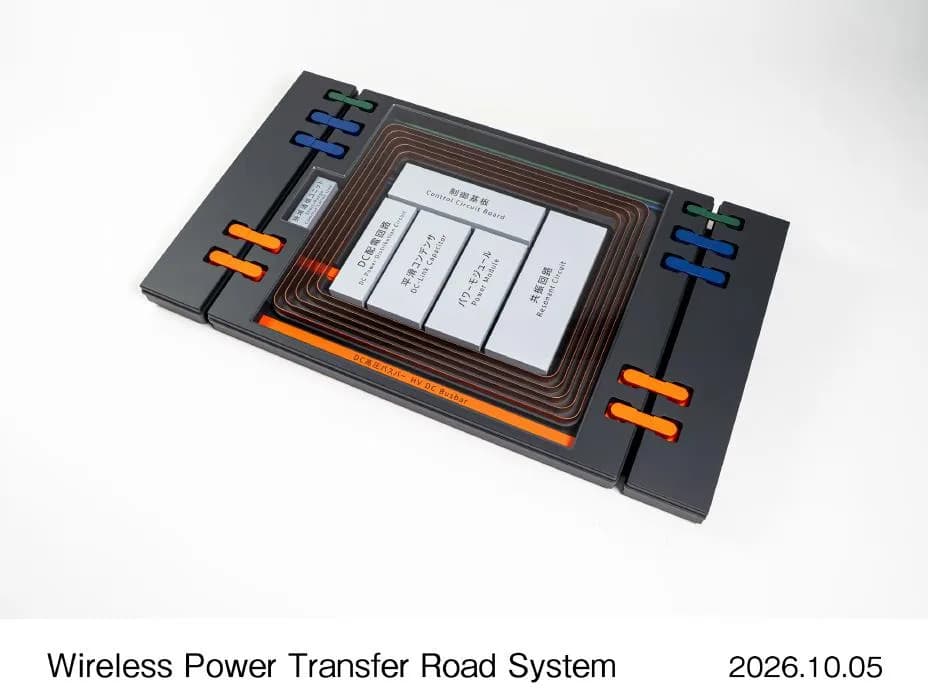
Honda R&D, in collaboration with Taisei Corporation and Taisei Rotec Corporation, has developed foundational technology for a magnetic coupling wireless power transfer (WPT) road system. This system is designed to enable electric vehicles (EVs) to charge wirelessly while in motion, including large commercial vehicles. Demonstration testing for this innovative technology is scheduled to begin in Japan from April 2027.
Advancing Wireless Charging Technology
This new WPT road system integrates specialized technologies from each partner. Honda R&D contributed high-power-density power receiver and transmitter units compatible with DC power distribution. Taisei Corporation developed a responsive DC power supply system, while Taisei Rotec Corporation focused on methods for embedding equipment within road surfaces.
The combined effort aims for high-power wireless transfer with practical installation in road pavement. This approach is intended to support a broad range of electric vehicles, from standard passenger cars to heavy-duty commercial trucks. Honda's long-term goal is to achieve carbon neutrality by 2050 and enhance EV convenience by expanding charging options.
Honda has been researching dynamic wireless power transfer (DWPT) since 2021, which allows vehicles to receive power while moving. This reduces the need for frequent stops at charging stations. The initial focus for DWPT implementation is the logistics and transportation sectors, where it is expected to offer significant operational benefits. This Honda wireless EV charging technology is a key step.
System Design and Durability
The magnetic coupling WPT road system, under joint development since 2025, consists of three main components. A DC power supply system is located on the ground, connecting to a DC distribution-based ground assembly (GA) system embedded in the road. This GA system comprises multiple power transmitter units. A vehicle assembly (VA) unit, installed on the EV, then receives the power.
Taisei Corporation is responsible for the DC power supply system, while Honda R&D develops the GA system for road embedding and the vehicle system with its VA unit. Taisei Rotec Corporation specializes in the construction methods for these WPT roads. All three companies collaborate on pavement structures, durability testing, and upgrade procedures for roads with embedded GA systems.
A key achievement of this research is the development of GA units and pavement structures robust enough to withstand the loads of large commercial vehicles, specifically those with a gross vehicle weight of approximately 20 tons. The internal structure of the GA units has been optimized to ensure long-term durability. Additionally, the system features a DC distribution structure that integrates the inverter and coil within each GA unit, which Honda states is a world-first. This design facilitates efficient and stable high-power transfer for Honda wireless EV charging.
Future Development and Implementation
The technology also emphasizes practical installation and future upgradability. The GA unit's design supports milling and embedding into existing pavement, simplifying wiring and reducing installation effort. This makes it easier to integrate into current road infrastructure and facilitates future maintenance or upgrades.
Further testing is planned, with a new test drive roadway to be constructed at T-FIELD/TAMRA by late 2026. This facility will conduct long-term durability evaluations, including loading tests equivalent to one million wheel loads (49 kN per wheel) using actual vehicles. Performance tests for DWPT and electromagnetic field leakage will also be carried out to ensure safety and power transfer efficiency.
Looking ahead, the companies aim to verify performance at high power outputs of up to 150 kW for large commercial vehicles and assess reliability for vehicles traveling at high speeds. They will also participate in the "Tateyama Project," a DWPT demonstration testing project led by East Nippon Expressway Company Limited (NEXCO East) on the Tateyama Expressway, starting in fiscal year 2027.
This collaborative effort by Honda R&D, Taisei, and Taisei Rotec represents a significant step towards practical in-motion wireless EV charging. By addressing durability, power transfer efficiency, and ease of installation, the technology could enhance the usability of electric vehicles, particularly in commercial applications, and contribute to broader EV adoption.
Galerie
9 Bilder
Leave a comment
Comments are moderated and may take a moment to appear. Only your first name and the initial of your last name are shown publicly.
Comments
Be the first to comment.