BMW Landshut Begins Hydrogen Drivetrain Component Production
BMW Group Plant Landshut has initiated pre-series production of a critical control unit, the 'Energy Master,' for the upcoming BMW iX5 Hydrogen. Concurrently, the plant is expanding its manufacturing capacity for battery-electric vehicle components, reinforcing its position in advanced drivetrain…

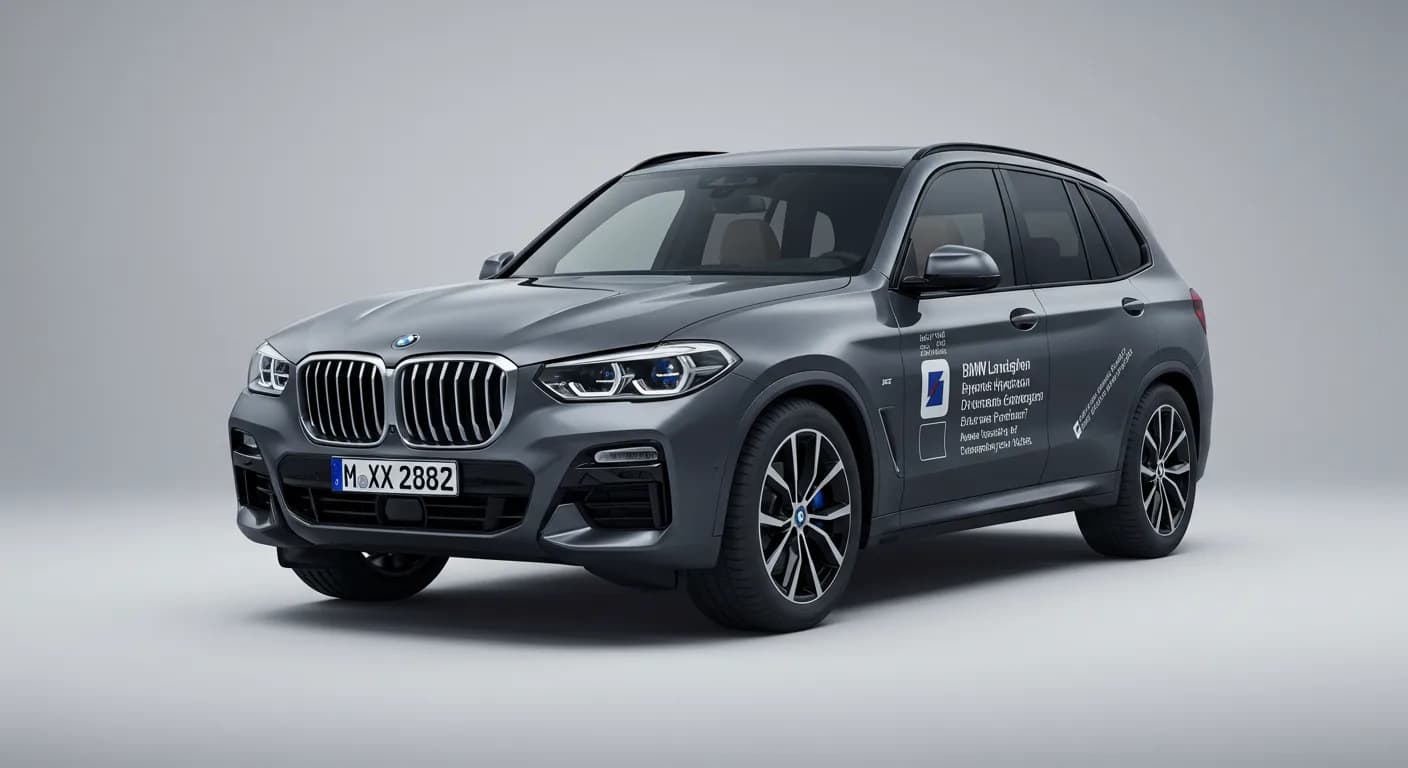
BMW Group Plant Landshut has commenced pre-series production of a key control unit, known as the “Energy Master,” designed for the BMW iX5 Hydrogen. This development marks a significant step in the production readiness for BMW's hydrogen-powered vehicle. Simultaneously, the plant has inaugurated a second production line for the battery-electric version of the Energy Master, which is used in Neue Klasse vehicles like the BMW iX3 and BMW i3.
The Energy Master serves as the central control unit for the high-voltage system in both battery-electric and hydrogen drivetrains. In battery-electric vehicles, it is integrated with the high-voltage battery. For the BMW iX5 Hydrogen, a specialized version is mounted on the BMW Hydrogen Flat Storage system, managing energy and data flows, and regulating power supply to the electric motor and onboard electrical systems. This component acts as a crucial interface between the fuel cell system, the innovative high-voltage battery, and the electric drive units, ensuring the overall system operates safely and efficiently. The development and production of this component are being handled entirely in-house by the BMW Group for the first time.
Advancements for the BMW iX5 Hydrogen
The BMW iX5 Hydrogen, slated for launch in 2028, will feature a new hydrogen tank concept, the BMW Hydrogen Flat Storage system. This design optimizes installation space and is compatible with the Gen6 high-voltage battery without compromising interior room. This compatibility allows for fuel cell models to be manufactured on the same production lines as vehicles with other drive systems.
With a projected range of up to 750 kilometers, the iX5 Hydrogen integrates the latest generation of fuel cell technology, Gen3. This technology, developed in collaboration with Toyota Motor Corporation, is designed to be more compact, efficient, and powerful than previous iterations. Series production of the fuel cell systems is scheduled to begin in 2028 at BMW Group Plant Steyr, with Landshut providing essential technology and components.
Landshut's Expanding Role and Strategic Investment
BMW Group Plant Landshut is expanding its capabilities across both battery-electric and hydrogen drivetrain technologies. The commissioning of a second production line for the battery-electric Energy Master is expected to nearly double its capacity for components used in models such as the BMW iX3 and BMW i3. Beyond the Energy Master, Landshut already produces other critical hydrogen drivetrain components, including the media distribution plate and the fuel cell stack housing for the current BMW iX5 Hydrogen pilot fleet.
The German Federal Ministry of Transport has provided EUR 191 million in funding for the
Leave a comment
Comments are moderated and may take a moment to appear. Only your first name and the initial of your last name are shown publicly.
Comments
Be the first to comment.