2025-2026 Audi A3, S3, RS 3 Transmission Shift Issue TSB
Audi has released Technical Service Bulletin (TSB) 2071692/6 addressing a condition where certain 2025-2026 Audi A3, S3, and RS 3 vehicles may automatically shift from Drive (D) or Reverse (R) to Park (P). This TSB clarifies that this behavior is a safety feature of the seat occupied recognition…
 Sarah Mitchell2026 Audi S3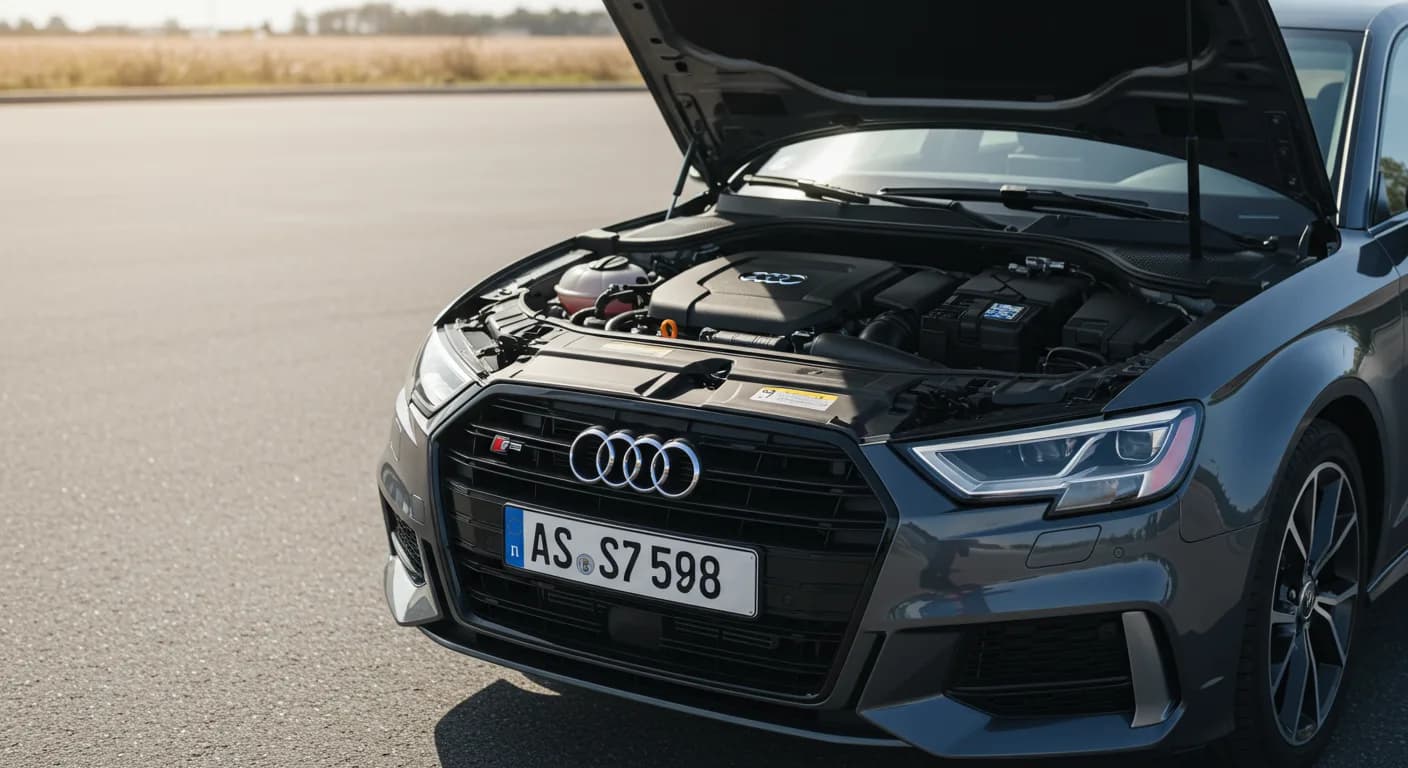
Gilt auch für
- Audi A3
- 2025–2026
- Audi RS 3
- 2025–2026
- Audi S3
- 2025
Audi has issued Technical Service Bulletin (TSB) 2071692/6 to address a specific condition observed in certain 2022-2026 Audi Q4 e-tron, Q4 Sportback e-tron, 2025-2026 Audi A3, S3, RS 3, and 2025 Audi Q6 e-tron, Q6 Sportback e-tron, SQ6 e-tron, and SQ6 Sportback e-tron models. This bulletin clarifies why a vehicle might automatically shift from Drive (D) or Reverse (R) to Park (P), or prevent shifting out of Park initially. This behavior is not a malfunction but an intended safety feature of the vehicle's seat occupied recognition system.
The Audi S3 transmission shift issue is designed to prevent unintended vehicle movement when a driver is not properly detected or secured. This TSB provides important information for both technicians and owners regarding the system's operation and what actions should be taken, or avoided, when this condition occurs.
Symptoms
Owners may experience the following symptoms, as described in TSB 2071692/6:
- "The vehicle cannot be switched from transmission position "P" to transmission position "D" or "R""
- "The vehicle switches from transmission position "D" or "R" back to transmission position "P" automatically."
Workshop findings indicate that when these conditions occur, there is typically "No event memory entry is logged in the airbag control unit". This absence of a fault code suggests the behavior is a system response rather than a component failure.
Diagnosis / Trigger Conditions
This condition primarily occurs in situations where the seat occupied recognition system does not detect sufficient pressure from the driver, especially when the driver's seat belt is not fastened. For instance, very light drivers, or shifts in weight, can cause the sensor in the driver's seat foam to register insufficient pressure. When this happens, the vehicle's safety systems interpret it as the driver not being present or properly secured.
The system's logic prioritizes safety. If the driver is not wearing a seat belt and is not recognized due to low weight, the vehicle immediately switches back to transmission position "P" when "R" or "D" is selected. This prevents the vehicle from rolling away if the driver is not properly detected.
Technical Background
Modern Audi vehicles, including those affected by TSB 2071692/6, are equipped with a sophisticated "leaving concept" system. This system detects and authenticates the driver on the seat, enabling functions like activating the ignition by pressing the brake without needing to press the start/stop button (this applies specifically to e-tron models).
The ability to select transmission position "D" or "R" is determined by several factors: the seat occupied recognition, whether the seat belt is fastened, and if the driver's door is closed. The system is designed to ignore very light occupants or objects, such as children or bags on the driver's seat, to ensure that only a properly detected driver can operate the vehicle in drive or reverse. This design is crucial for the "leaving concept" to function safely and prevent unintended vehicle movement.
Important Warnings / What Owners Should Know
Audi's TSB 2071692/6 includes several critical advisories for owners and technicians to prevent unnecessary repairs and ensure safe operation:
- Do not replace parts unnecessarily: "Replacing the seat occupied sensor is not the solution to this complaint if no event memory entries clearly relating to the seat occupied sensor are present."
- Avoid unauthorized repairs: "There is no reason to replace parts or attempt repairs. Unjustified work/replacement parts will be charged back."
- Warranty limitations: "Invoicing under warranty is not permitted." and "This TSB is informational only and not applicable to any Audi Warranty."
- Driver responsibility: Audi explicitly states, "Please wear a seat belt when driving."
- System operation: "Selecting transmission position “D” or “R” is always possible when the driver is wearing their seat belt." This highlights that the Audi S3 transmission shift issue is mitigated by proper seat belt use.
Service Advice for Technicians
For technicians diagnosing this condition, Audi provides clear guidance. The seat belt recognition system takes precedence over the seat occupied recognition if the driver's seat belt is fastened. Therefore, technicians are advised to ensure the driver's door is always closed and the seat belt is always fastened when testing or driving the vehicle.
It is crucial not to replace the seat occupied sensor unless there are clear event memory entries in the airbag control unit specifically related to the sensor. The TSB emphasizes that any unjustified parts replacement or repair attempts will be charged back to the dealership, and such work cannot be invoiced under warranty.
Revision History
Audi Technical Service Bulletin 2071692/6 has undergone several revisions to update its content and scope:
- Revision 6 (Date: -): Revised header to include additional models and a revised Condition section with an updated model table.
- Revision 5 (Date: February 3, 2025): Modified the title, revised the header to add customer codes, and updated the Technical Background section.
- Revision 4 (Date: October 25, 2024): Modified the Technical Background section.
Additional Information
All part and service references mentioned in TSB 2071692/6 are subject to change or removal. Technicians and service personnel should always consult their Parts Department and/or ETKA for the most current information and bulletins. Furthermore, it is important to check the Repair Manual for any fasteners, bolts, nuts, and screws that require replacement during any repair process.
NHTSA ID: 2071692/6
Frequently Asked Questions
- What does Audi TSB 2071692/6 address?
- Audi TSB 2071692/6 addresses situations where certain Audi models, including the 2025-2026 A3, S3, and RS 3, may automatically shift from Drive (D) or Reverse (R) to Park (P), or prevent shifting out of Park. This is explained as a safety feature of the seat occupied recognition system.
- Why does my Audi S3 automatically shift to Park (P)?
- Your Audi S3 transmission shift issue is likely due to the seat occupied recognition system. If the system detects that the driver is not wearing a seat belt and/or does not exert enough pressure on the seat sensor, the vehicle will automatically shift to Park (P) as a safety measure to prevent rolling away.
- Is the automatic shift to Park a defect in my Audi?
- No, according to Audi TSB 2071692/6, the automatic shift to Park (P) is an intended safety feature, not a defect. It's part of the vehicle's 'leaving concept' designed to ensure the driver is present and secured before the vehicle can be driven.
- What should I do if my Audi experiences this transmission shift issue?
- The primary recommendation from Audi is to always wear your seat belt when driving. If the driver's seat belt is fastened and the driver's door is closed, selecting transmission position 'D' or 'R' should always be possible. Replacing the seat occupied sensor is generally not the solution unless specific fault codes are present in the airbag control unit.
Related Articles
2026 Audi S3 Emergency Assist Intervention TSB 2081476/1
Audi Technical Service Bulletin 2081476/1 details issues with the emergency assist system in 2026 Audi S3, A3, RS 3, and Q3 vehicles. Owners may experience unexpected system activation and various instrument cluster warnings related to lane departure, adaptive cruise, or driver inactivity.
2026 Audi MQBevo Active Front Assist Intervention TSB
Audi Technical Service Bulletin 2081074/1 details instances where the active front assist system intervenes in 2026 Audi A3, S3, RS 3, and Q3 MQBevo vehicles. This TSB provides guidance for workshops on diagnosing and understanding these system interventions.
2026 Audi A3/S3/RS 3 MMI Software Update for Emergency Call Fault
Audi has released Technical Service Bulletin 2081005/1 for 2026 A3, S3, and RS 3 models addressing MMI function problems and the 'Emergency call fault' message. This update targets the MIB3, AED2, and OCU3 control units to resolve software-related issues.
2025-2026 Audi A3/S3/RS3 Mirror Heating Issue
A Technical Service Bulletin (TSB 2076087/2) addresses concerns from 2025-2026 Audi A3, S3, and RS3 owners regarding the exterior mirror heating not working. This TSB clarifies that the mirror heating is intentionally disabled when Audi Drive Select is in efficiency mode due to efficiency…
2025-2026 Audi A3/S3/RS3 Seat Heater Button Flashes
Owners of 2025-2026 Audi A3, S3, and RS3 models may experience their seat heater button on the air conditioner control console flashing, indicating a software issue. Audi's TSB 2077639/2 explains that no repairs are currently needed, and component replacement will not resolve the problem.
Leave a comment
Comments are moderated and may take a moment to appear. Only your first name and the initial of your last name are shown publicly.
Comments
Be the first to comment.