2021 Audi Q8 Oil Leak from Cylinder Head TSB
Audi has issued Technical Service Bulletin 2053278/8 to address oil leaks originating from the cylinder head in certain 2021 Audi Q8 models equipped with 2.9L and 3.0L TFSI engines. Owners may notice oil loss, a burning smell, or an "Oil level warning (too low)" message.
 Sarah Mitchell2021 Audi Q8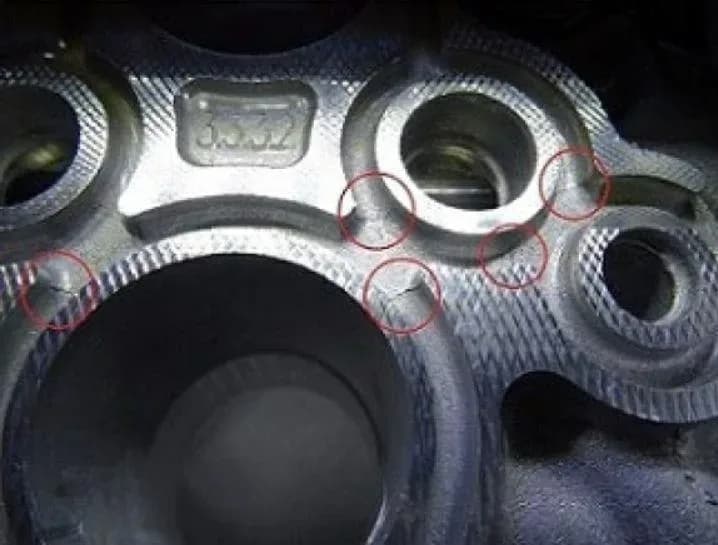
Gilt auch für
- Audi A4
- 2021
- Audi A6
- 2021
- Audi A7
- 2021
- Audi Q5
- 2021
- Audi Q7
- 2021
- Audi RS 5
- 2021
- Audi S6
- 2021
- Audi S7
- 2021
- Audi S8
- 2021
- Audi SQ5
- 2021
- Audi SQ7
- 2021
- Audi SQ8
- 2021
▸ 6 weitere anzeigen▾ Weniger anzeigen
Owners of certain 2021 Audi Q8 vehicles equipped with 2.9L or 3.0L TFSI engines may experience an oil leak from the cylinder head. Audi has released Technical Service Bulletin (TSB) 2053278/8 to provide repair instructions for technicians to diagnose and resolve this issue. This TSB supersedes previous bulletin 21-38 dated April 1, 2021.
Symptoms of a 2021 Audi Q8 Oil Leak
Owners may notice several signs indicating an oil leak from the cylinder head:
- Oil loss in the area around the engine compartment, front end, or underbody.
- An "Oil level warning (too low)" message displayed.
- A distinct smell coming from the engine compartment, often associated with burning oil.
During workshop inspection, technicians may identify leaks in specific areas:
- Around the cylinder head cover, valve cover, and cylinder head.
- Around the fuel injector.
- Around the Audi valvelift system actuator.
Technical Background
The root cause of this 2021 Audi Q8 oil leak is attributed to metal shavings. These shavings can be produced during the manufacturing process and become lodged in the sealing groove between the cylinder head cover and the cylinder head, compromising the seal and leading to oil loss. Audi states that improved production processes have been implemented to prevent this issue in newer vehicles.
Diagnosis and Repair Procedure Summary
To accurately determine the source of the 2021 Audi Q8 oil leak, technicians will follow a specific diagnostic and repair process outlined in TSB 2053278/8. The procedure involves carefully inspecting the engine for the exact leak location, as there are two primary possibilities:
- Initial Inspection: The engine compartment cover and heat shield are removed, followed by the upper noise insulation.
- Valvelift System Actuator Leak: The Audi valvelift system actuator of the affected cylinder is removed. If a substantial quantity of oil is found beneath it, the leak is caused by the O-ring of the valvelift system actuator. Technicians are instructed to take photos with a date stamp and VIN reference, ensuring they are in focus and well-lit, and upload them to DOC-IT with the repair order. The repair involves replacing the O-ring, cleaning the engine compartment, and replacing the noise insulation if it is oil-soaked.
- Injector Area Leak: If no substantial oil is found below the valvelift system actuator, the lower noise insulation is removed. The technician then locates the affected cylinder where oil has gathered around the injector area, and the noise insulation is soaked in oil. The cylinder head cover and its seal are removed. The gasket groove in the cylinder head cover is inspected for casting residues, which are then carefully removed using a small flat screwdriver, taking care not to damage the seal groove.
- Final Assembly: A new seal is installed, the camshaft cover is re-assembled, and the engine compartment is cleaned. Any oil-soaked noise insulation is replaced.
Important Warnings for Owners and Technicians
Audi explicitly states a critical instruction regarding the repair process:
- Do not replace the Audi valvelift system actuator(s) with an O-ring seal when the leak has been determined to be around the area of the injector(s). This highlights the importance of accurate diagnosis to ensure the correct repair is performed and to prevent unnecessary part replacements.
Required Parts and Tools
Technicians will consult ETKA for specific fasteners, bolts, nuts, and screws required for the repair. Key parts that may be needed include:
- 06M906048F: Solenoid valve (if applicable)
- 06M103650D: Gasket Cylinders 1-3 (if applicable)
- 06M103649D: Gasket Cylinders 4-6 (if applicable)
- G 12E050S0: Coolant concentrate 1.5L (if applicable)
Warranty Information
This repair is covered under Audi's warranty for up to 48 months or 50,000 miles, whichever comes first. For Certified Pre-Owned (CPO) vehicles, the claim type is G10, requiring owner verification. If the vehicle falls outside these warranty parameters, this Technical Service Bulletin serves as informational guidance only. Technicians will use specific service numbers for claiming the repair:
- 1580: For leaks identified at the injector.
- 1551: For leaks identified at the Audi valvelift system actuator.
Associated damage codes are 0050 (for service number 1580) and 0010 (for service number 1551). Diagnostic time for General Function Test (GFF) is 0150 0000. A road test after the service procedure is allocated 0121 0004 time units.
NHTSA ID: 10198480
Galerie
6 Bilder
Frequently Asked Questions
- What are the common signs of an oil leak in my 2021 Audi Q8?
- You might notice oil stains around the engine compartment, front end, or underbody of your 2021 Audi Q8. Other indicators include an "Oil level warning (too low)" message on your dashboard or a burning smell coming from the engine compartment.
- What is the cause of the oil leak addressed by TSB 2053278/8?
- According to Audi TSB 2053278/8, the oil leak is caused by metal shavings that can get lodged in the sealing groove between the cylinder head cover and the cylinder head during manufacturing, leading to a compromised seal and oil loss.
- Is the repair for the 2021 Audi Q8 oil leak covered under warranty?
- Yes, the repair for this oil leak is generally covered under Audi's warranty for up to 48 months or 50,000 miles, whichever comes first. If you have a Certified Pre-Owned vehicle, it may also be covered under specific conditions.
- Are there different types of oil leaks from the cylinder head, and how are they fixed?
- Yes, TSB 2053278/8 identifies two main leak sources: the O-ring of the Audi valvelift system actuator or the area around the fuel injectors. The repair procedure differs based on the specific leak location, involving either replacing the actuator's O-ring or cleaning casting residues and replacing the cylinder head cover seal.
Related Articles
2021-2025 Audi Engine Control Module Software Update 53ZC
Audi has issued an update to its Engine Control Module (ECM) software campaign 53ZC / WARR EXT – U82, dated March 20, 2026. This dealer communication indicates that additional vehicles have been added to the affected chart for this important software update. Owners of 2021-2025 Audi Q8, A7, A6…
2021-2025 Audi Fuel System DTCs P014800 and P008700
Audi Technical Service Bulletin (TSB) 2079461/3 details diagnostic and repair procedures for 2021-2025 Audi vehicles experiencing a 'MIL light on' or 'limp-home function' due to fuel system DTCs P014800 or P008700. This bulletin guides technicians on diagnosing and potentially replacing the…
2021-2025 Audi Black Trim Discoloration TSB
Audi has issued Technical Service Bulletin 2078651/4 to address red, purple, gray, or metallic discoloration on black exterior trim strips in 2021-2025 Audi models. This TSB explains the cause (paint UV resistance issue) and outlines the replacement procedure for affected components.
2021 Audi Virtual Cockpit Display Fault TSB 2078439/2
Audi TSB 2078439/2 addresses issues with the virtual cockpit display in 2021 A6, A7, A8, Q7, Q8 models, including a black screen or "Instrument cluster: fault" message, often accompanied by DTC B200049.
2021-2026 Audi TFSI Engine Oil Leak TSB 2053278/10
Audi has released Technical Service Bulletin 2053278/10 to address oil leaks from the cylinder head on 2.9 and 3.0 TFSI engines in various 2021-2026 models. Learn about symptoms, diagnosis, and the recommended repair process.
Leave a comment
Comments are moderated and may take a moment to appear. Only your first name and the initial of your last name are shown publicly.
Comments
Be the first to comment.