2021-2023 Nissan Lamp Fogging TSB
Nissan TSB NTB03-074Q addresses fogging and condensation in headlamps, fog lamps, and rear combination lamps for 2021-2023 models. Learn to distinguish normal moisture from issues requiring dealer service and understand warranty coverage.
 Marcus Weber2021 Nissan Sentra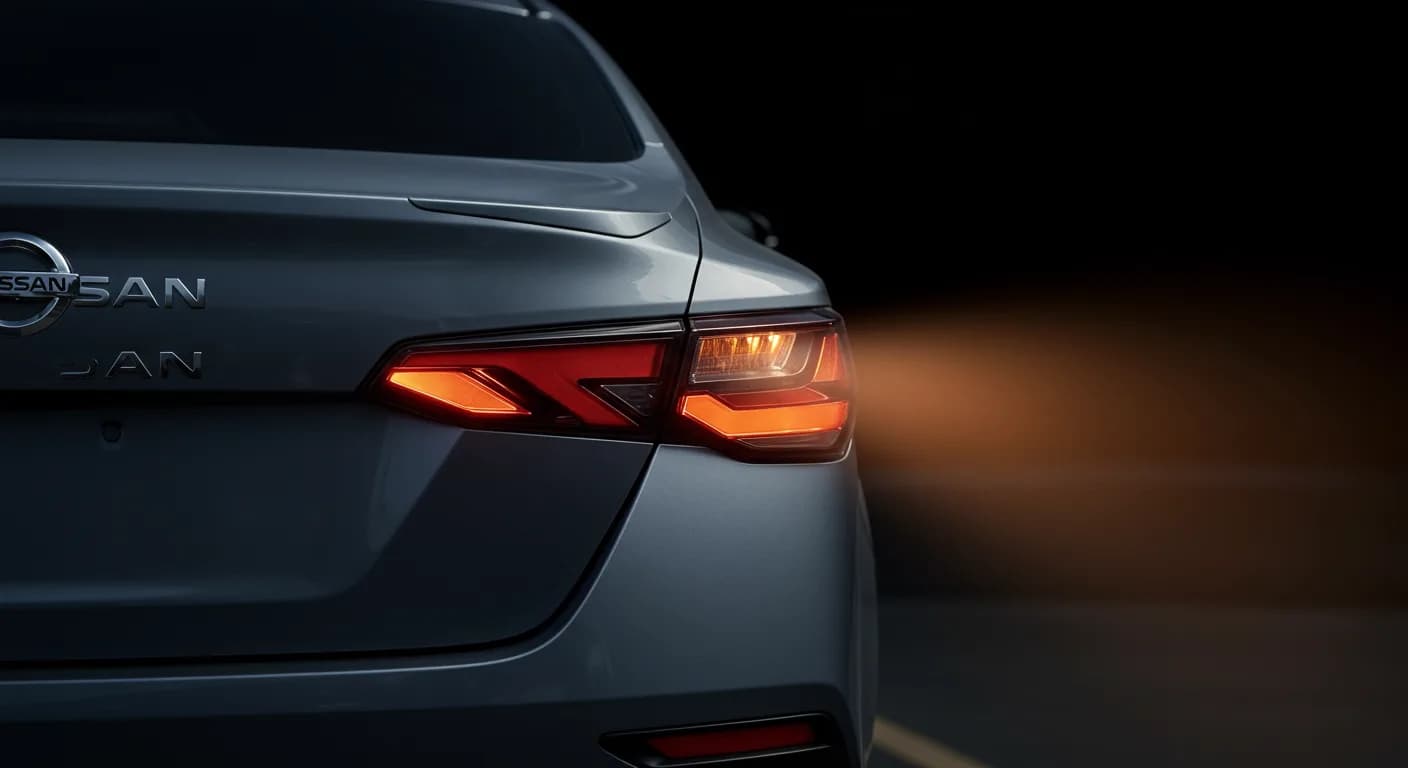
Também se aplica a
- Nissan Altima
- 2021–2023
- Nissan Armada
- 2021–2023
- Nissan Frontier
- 2021–2023
- Nissan GT-R
- 2021–2023
- Nissan Kicks
- 2021–2023
- Nissan Leaf
- 2021–2023
- Nissan Maxima
- 2021–2023
- Nissan Murano
- 2021–2023
- Nissan NV
- 2021
- Nissan NV200
- 2021
- Nissan Pathfinder
- 2021–2023
- Nissan Rogue
- 2021–2023
- Nissan Rogue Sport
- 2021–2022
- Nissan Sentra
- 2022–2023
- Nissan Titan
- 2021–2023
- Nissan Versa
- 2021–2023
▸ Mostrar mais 10▾ Mostrar menos
Nissan Technical Service Bulletin (TSB) NTB03-074Q addresses customer concerns regarding Nissan lamp fogging in headlamps, fog lamps, and rear combination lamps. This bulletin helps technicians and owners differentiate between normal condensation and conditions that indicate a problem requiring service.
All current Nissan lamp assemblies are vented to the atmosphere, not sealed. This design allows for air expansion and contraction due to temperature variations, preventing damage to the lamp. As a result, moisture in the air can enter and exit the lamp assembly through these vents, and certain environmental conditions can cause moisture to condense.
Symptoms of Nissan Lamp Fogging
Owners may observe water vapor or fog inside their headlamps, fog lamps, or rear combination lamps. This condensation can appear anywhere on the outer lens, typically at its coldest location.
Normal Condensation:
- Temporary fogging or cloudiness inside the lens.
- Often occurs due to environmental conditions or sudden temperature changes (e.g., car wash, cold sunny day).
- Should disappear over time when the lamp is in a dry environment.
Abnormal Condensation (Requires Inspection):
- Moisture that trickles, drips, or pools inside the lens.
- Large drops of water (larger than 3 mm in diameter) collecting inside the lens.
- An accumulation of water puddled at the bottom of the lamp, which is 10 mm or more in depth.
Diagnosis and Repair Procedure
When a customer reports Nissan lamp fogging, technicians follow a specific diagnostic flow chart to determine if the condition is normal or if lamp replacement is necessary.
- Visual Inspection: The first step is to visually inspect the lamp for puddles, runs on the lens, large droplets (over 3 mm), or water depth of 10 mm or more. If physical damage (cracked or broken) is present, the assembly should be replaced.
- Bulb Type Check: Determine if the lamp's light source is a Xenon or Halogen type (non-LED) or an LED-only assembly. Halogen bulbs use a filament, while Xenon bulbs use electrodes and an HID Control Unit. LED bulbs are semiconductors and typically have a Control Module.
- Condensation Clearing Test (Non-LED Lamps): For Xenon or Halogen lamps, the vehicle is pulled into the service bay, and the lamps are turned on. The condensation is monitored for 30 minutes. If the condensation clears, the condition is considered normal.
- LED Lamp Consideration: LED-only lamp assemblies do not generate enough heat to dissipate normal condensation. Therefore, if an LED lamp shows abnormal condensation, it may require replacement without the clearing test.
- Replacement: If condensation does not clear in non-LED lamps, or if abnormal conditions are found in any lamp type, the lamp assembly may need replacement. If only the lamp housing is replaced, bulbs, sockets, harness, and ballasts are reused.
Important Warranty Information
Nissan's New Vehicle Limited Warranty does not cover physically damaged (cracked or broken) headlamps, fog lamps, or rear combination lamps. It is crucial for owners to understand that not all lamp assembly replacements are covered under warranty.
- Any parts found physically damaged (cracked or broken) will be charged back to the dealer.
- Any parts determined as "no defect found" after replacement may also be charged back to the dealer.
Therefore, accurate diagnosis of Nissan lamp fogging is essential to avoid unnecessary charges.
Frequently Asked Questions
- Is fogging in my 2021-2023 Nissan headlamps always a problem?
- No, minor fogging or water vapor in your Nissan's headlamps, fog lamps, or rear combination lamps can be normal. Nissan TSB NTB03-074Q explains that this is often due to temperature changes and the lamp's vented design, and it should clear on its own.
- What should I do if I see large water drops or puddles in my Nissan's lights?
- If you notice moisture trickling, dripping, pooling, or large water drops (over 3 mm) or more than 10 mm of water depth, this is considered abnormal. You should have your vehicle inspected by a Nissan dealer as this may indicate a water leak path.
- Does my Nissan's warranty cover lamp fogging?
- Nissan's New Vehicle Limited Warranty does not cover physically damaged (cracked or broken) lamps. While some lamp replacements might be covered if a defect is found, parts replaced due to physical damage or those where "no defect found" is determined may be charged back to the dealer.
- How does Nissan TSB NTB03-074Q help diagnose lamp fogging?
- TSB NTB03-074Q provides a detailed flow chart for technicians to assess the condition. It guides them through visual inspections, considers the type of bulb (Halogen, Xenon, or LED), and outlines steps like running the lights for 30 minutes to see if condensation clears, helping to distinguish normal **Nissan lamp fogging** from issues requiring repair.
Related Articles
2021-2024 Nissan Sentra CVT Removal Tool TSB
Nissan Technical Service Bulletin NTB24-045 introduces new engine support tools and a revised procedure for 2021-2024 Sentra models. This update allows technicians to remove the Continuously Variable Transmission (CVT) without also needing to remove the engine, streamlining complex transmission…
2020-2024 Nissan B2E01-96 Internal Battery DTC TSB
Nissan Technical Service Bulletin NTB22-027B provides a procedure to clear DTC B2E01-96, related to the internal battery of the Telematics Communication Unit (TCU), affecting various 2020-2024 Nissan models.
2021-2024 Nissan Sentra Front Rattle or Knock Noise TSB
Nissan has issued Technical Service Bulletin NTB22-045B for 2021-2024 Sentra models experiencing a rattle or knock noise from the front, especially when driving over bumps or turning. This bulletin identifies the passenger (RH) side Engine Mounting Insulator as the likely cause.
2021-2022 Nissan Sentra Inner Tie Rod Recall R23B3
Nissan is conducting a voluntary safety recall, R23B3, for certain 2021-2022 Sentra vehicles to replace both inner tie rods. This essential steering component replacement will be performed at no charge to the customer.
2021 Nissan Sentra False AEB/FCW Activation TSB
Owners of 2021 Nissan Sentra vehicles may experience false activation or unexpected braking from the Automatic Emergency Braking (AEB) or Forward Collision Warning (FCW) systems. Nissan Technical Service Bulletin NTB21-115A provides a software update to the ICC/ADAS 2 module to resolve this issue.
Leave a comment
Comments are moderated and may take a moment to appear. Only your first name and the initial of your last name are shown publicly.
Comments
Be the first to comment.