2021 Hyundai IUMPR Data Collection TSB 20-01-039H
Hyundai Technical Service Bulletin 20-01-039H outlines the CARB-mandated In Use Monitor Performance Ratio (IUMPR) data collection for certain 2019-2021 Hyundai models in California. This procedure ensures compliance with emissions regulations and is performed by dealers using GDS Mobile.
 Ahmet Topcu2021 Hyundai Tucson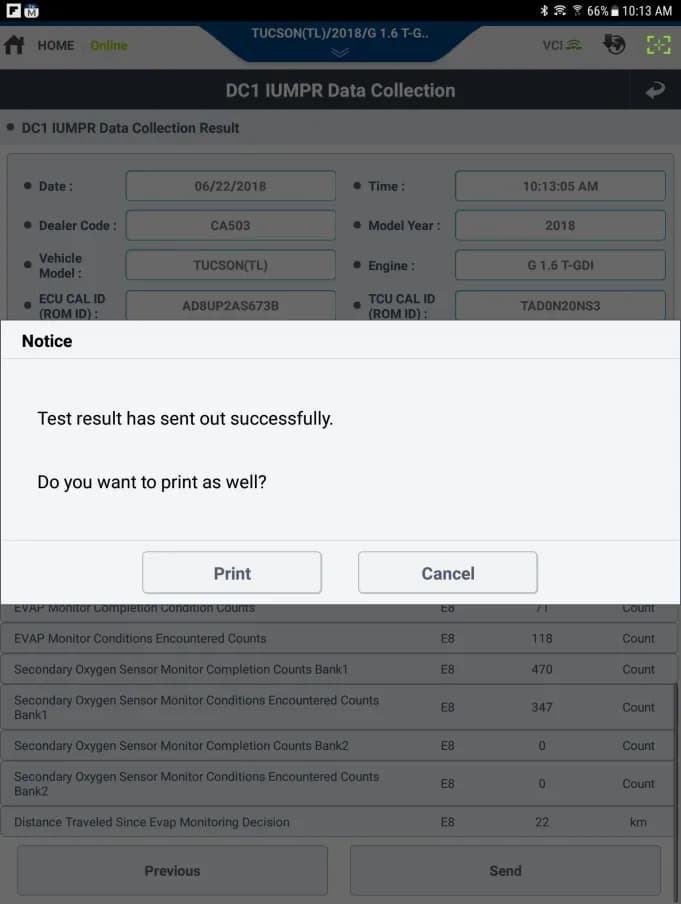
Also applies to
- Hyundai Kona
- 2021
- Hyundai Palisade
- 2021
- Hyundai Veloster
- 2021
What is the Hyundai IUMPR Data Collection?
Hyundai Technical Service Bulletin (TSB) 20-01-039H describes a procedure for collecting On-Board Diagnostics (OBD) "In Use Monitor Performance Ratio" (IUMPR) data from specific 2019-2021 Hyundai vehicles. This data collection is a requirement mandated by the California Air Resources Board (CARB) and is specifically for California dealers. The bulletin revises a previous TSB, 19-01-042H, to include 2021 model year vehicles.
This process ensures that Hyundai vehicles comply with emissions monitoring regulations. The collected data is no longer submitted manually via datasheet or dealer email; instead, it is sent electronically via the GDS Mobile diagnostic tool when the procedure outlined in TSB 20-01-039H is followed.
Important Warnings and Notes
This TSB includes several critical advisories for dealers and owners:
- "California Dealers only must perform this data collection on vehicles whenever an affected vehicle is in the shop for any maintenance or repair if the vehicle meets the below specified criteria."
- "This campaign procedure must be performed prior to completing any other open campaigns." This means the IUMPR data collection takes precedence over other service actions.
- Dealers should access Hyundai Motor America's "Warranty Vehicle Information" screen via WEBDCS to identify open campaigns for a vehicle upon its arrival.
- "You may receive an error screen if internet is not connected, vehicle doesn't have an open DC1 campaign, or if any of the other conditions specified on page-1 does not apply."
- "Valid data should not contain '0' for values at most parameters." This ensures the accuracy of the submitted data.
- "Submission of a printout by dealer email is no longer required for claim payment. The data should be transmitted electronically by GDS. However, your printout will serve as claim evidence in the event the GDS fails to send it electronically."
- "Should Section-B not show a status of pending or sent out succesfully for the applicable VIN, then the above collection procedure steps 1-6 will need to be repeated." This highlights the importance of successful data transmission.
Data Collection Procedure Summary
The Hyundai IUMPR data collection process involves using the GDS Mobile diagnostic tool. Here's a summary of the steps:
- Connect GDS Mobile: Connect the GDS Mobile device to the vehicle with the ignition ON (the engine does not need to be running). The GDS Mobile should automatically detect the vehicle's VIN. Confirm the correct vehicle information is displayed.
- Select IUMPR Function: From the GDS Mobile's main menu, navigate to the "More" section and select the "IUMPR" function.
- Start DC1 IUMPR: Select "DC1 IUMPR Start." Ensure GDS is connected to the internet, as it needs to confirm the vehicle has an open DC1 campaign.
- Enter Information: Accurately enter the required information into the fields, such as Dealer Code, Mileage, Technician Name, Repair Order Number, and Test Group (found on the engine underhood emissions label).
- Initiate Collection: Select "DC1 IUMPR Data Collection Start."
- Confirm and Send: Review the collected IUMPR data. Confirm the VIN was correctly captured. Scroll down to the second page and select "Send" to transmit the data to Hyundai's server. A "Test result has sent out successfully." message should appear.
- Print Record (Optional): While not required for claim payment, a printout of the IUMPR data collection can be made for the repair order as evidence, especially if electronic transmission fails.
Warranty Information
The warranty information for this Hyundai IUMPR data collection campaign is as follows:
| Model Year | Op Code | Operation | OpTime | Causal Part | Nature | Cause |
|---|---|---|---|---|---|---|
| 2019 | CCARB019 | IUMPR Data Collection | 0.4 | NTF00 00000 | 174 | ZZ4 |
| 2020 | CCARB020 | IUMPR Data Collection | 0.4 | NTF00 00000 | 174 | ZZ4 |
| 2021 | CCARB021 | IUMPR Data Collection | 0.4 | NTF00 00000 | 174 | ZZ4 |
Claims should be submitted on the Campaign Claim Entry Screen.
Checking Data Transmission Status
After attempting the Hyundai IUMPR data collection, dealers can check the transmission status:
- Select Status Check: From the DC1 IUMPR Data Collection screen, select "Status Check."
- Review Status: The Data Transmission Status Check screen will display the following:
- SENT: Indicates the IUMPR data has been successfully sent to Hyundai's server.
- Pending: Indicates the data was collected and saved in GDS but is awaiting automatic transmission once an internet connection is established. If the internet connection is restored, the data will be sent automatically. Dealers can also try "Send All Pending" if they have just connected to the internet.
If the status is not "pending" or "sent out successfully" for the applicable VIN, the entire data collection procedure (steps 1-6) must be repeated.
What Owners Should Do
If you own a 2019-2021 Hyundai Tucson, Kona, Veloster, or Palisade in California, your vehicle may be subject to this Hyundai IUMPR data collection. This is a mandatory emissions reporting requirement, not a repair for a fault. When you bring your vehicle to a Hyundai dealer for maintenance or repair, they will check for open campaigns, including this DC1 campaign. If your vehicle meets the eligibility criteria, the dealer will perform the data collection as part of their service.
Source: NHTSA ID: 10182304
Gallery
9 images
Frequently Asked Questions
- What is the purpose of the Hyundai IUMPR data collection?
- The Hyundai IUMPR data collection, detailed in TSB 20-01-039H, is a mandatory procedure required by the California Air Resources Board (CARB). It collects On-Board Diagnostics (OBD) "In Use Monitor Performance Ratio" data to ensure vehicles comply with emissions monitoring regulations.
- Which Hyundai models are affected by TSB 20-01-039H?
- This TSB applies to certain 2019-2021 Hyundai models, specifically including the 2021 Hyundai Tucson, Kona, Veloster, and Palisade, that are located in California and meet specific eligibility criteria.
- What are the key conditions for a vehicle to be eligible for this data collection?
- To be eligible, a vehicle must have an open DC1 campaign in WebDCS, over 3,000 miles on the odometer, no recent ECM updates or battery disconnections, and no active check engine light. The "Hyundai IUMPR data collection" must also be performed before any other open campaigns.
- What happens if the IUMPR data transmission fails?
- If the data transmission fails, the GDS Mobile system will display a message like "Data transmission has failed. Please check your internet connection." The system will attempt to re-upload the data automatically once an internet connection is restored. If the status remains 'pending' or not 'sent out successfully', the entire data collection procedure must be repeated.
Related Articles
2021 Hyundai Tucson Health Check: Engine & Paint TSBs
For the 2021 Hyundai Tucson, there are no reported recalls, owner complaints, or federal investigations. However, owners should be aware of several manufacturer service bulletins (TSBs) addressing engine emissions, potential engine bearing issues, white paint peeling, and an anti-theft ignition…
2021 Hyundai Tucson Emissions Logic Update (9C2)
Hyundai Service Campaign 9C2 addresses elevated engine-out emissions in certain 2021 Hyundai Tucson models by updating the Engine Control Module (ECM) software. This update helps ensure compliance with emissions standards and prevents failed inspections.
2015 Hyundai Sonata GDS Event 1383 Campaign Suspended
Hyundai Motor America has temporarily suspended Service Campaign 9C2, related to software GDS event #1383, for the 2015 Hyundai Sonata (LFA) 2.4L. Vehicles will not show this campaign as open in WebDCS during the suspension period.
2021 Hyundai Tucson GDS Event #1383 Engine Investigation
Hyundai is actively investigating a software-related engine issue, identified as GDS event #1383. While primarily concerning 2015 Sonata 2.4L vehicles, this manufacturer communication is linked by NHTSA to the 2021 Hyundai Tucson, indicating an ongoing review for a resolution.
2010-2021 Hyundai Engine Bearing TSB 26-01-033H
Hyundai Technical Service Bulletin (TSB) 26-01-033H is a critical reference for Op codes and part numbers under Service Campaign T6G. This campaign addresses engine bearing inspection and replacement for various Hyundai models from 2010-2021, often triggered by DTC P1326 and "Abnormal Engine Noise."
Leave a comment
Comments are moderated and may take a moment to appear. Only your first name and the initial of your last name are shown publicly.
Comments
Be the first to comment.