2024 BMW iX High-Voltage Battery Defect Delivery Stop
BMW has issued a Delivery Stop (SIB 61 19 24) for certain 2024 iX (I20 E-Series) vehicles due to a manufacturing defect in the high-voltage battery cells. This defect can lead to electrolyte leakage, potentially causing a "yellow or red Check Control message" and interrupting vehicle charging…
 Sarah Mitchell2024 BMW iX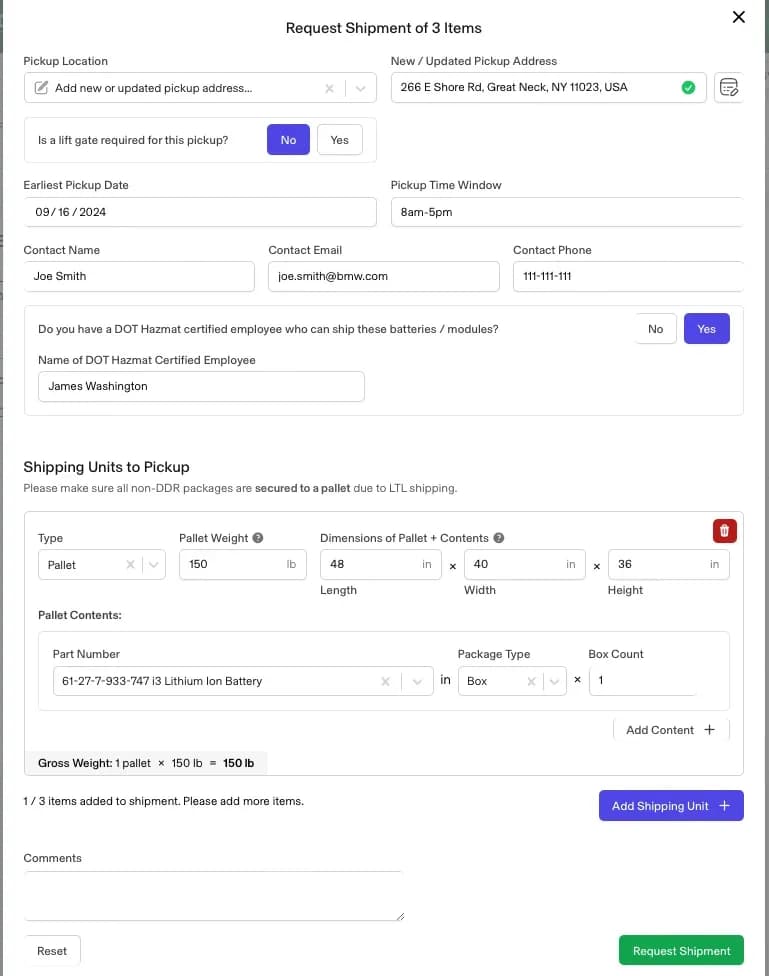
BMW has issued a Delivery Stop, identified as Service Information Bulletin (SIB) 61 19 24 (Revision 1, dated September 24, 2024), for certain 2024 iX (I20 E-Series) vehicles. This bulletin replaces a previous version of SIB 61 19 24 dated August 2024. The Delivery Stop addresses a significant 2024 BMW iX battery defect concerning the high-voltage battery system.
The defect involves a manufacturing flaw in the high-voltage cells of the battery, which can lead to electrolyte leakage. This leakage might create a conductive connection with surrounding components. Depending on the contact resistance, owners may experience specific symptoms and the vehicle's charging capabilities will be affected.
Symptoms of the Battery Defect
Owners of affected 2024 BMW iX vehicles may observe the following indicators of the 2024 BMW iX battery defect:
- A "yellow or red Check Control message" displayed in the instrument cluster.
- A "charging interruption during charging" when attempting to power the vehicle.
BMW notes that while it is permitted to continue driving the vehicle if these messages appear, the charging interruption will persist.
Important Warnings for Owners and Dealers
BMW has issued several critical warnings related to this Delivery Stop and the handling of affected high-voltage battery components:
- "Do not deliver to a customer, a New, Certified Pre-Owned or Used vehicle subject to a Delivery Stop, until the vehicle is repaired."
- "Do not use or sell replacement equipment/parts subject to a Delivery Stop."
- "Please DO NOT return these replaced High Voltage (HV) battery modules directly to the WPRC." Instead, specific recycling procedures must be followed.
- "DO NOT DISPOSE OF THE BATTERY PACKAGING IN WHICH THE NEW BATTERY IS DELIVERED, AS IT IS REQUIRED FOR SHIPPING THE NORMAL END OF LIFE CORES (NOT RECALLED) BACK FOR RECYCLING."
- "DO NOT SEND ANY LITHIUM-ION BATTERIES TO THE WPRC. Lithium-ion batteries are strictly prohibited from being sent to any WPRC facility. Failure to comply with this directive could result in catastrophic consequences including fines and a partial or full claim debit."
- "It is critical that lithium-ion batteries are not co-mingled with lead acid or AGM battery cores."
- For recalled batteries, "Recall batteries – do NOT use original fiberboard box packaging, even if green condition! Recall batteries require special packaging provided by a 3rd party vendor contracted by BMW NA."
Cause of the Defect
The root cause of the 2024 BMW iX battery defect is a manufacturing flaw within the high-voltage cells of the high-voltage battery. This defect can lead to electrolyte leakage, which in turn may cause a conductive connection with adjacent components.
Repair Procedure Summary
To address the 2024 BMW iX battery defect, the following high-level procedure is outlined in SIB 61 19 24:
- Serial Number Read Out: Technicians must perform a cell module serial number read out test plan using the ISTA diagnostic system. This step determines the serial numbers and locations of the high-voltage cell modules installed in the vehicle.
- TSARA Case Submission: After the read-out, a TSARA (Technical Service and Repair Assistance) case must be submitted. This case should be titled "Delivery Stop: Replace Cell Modules – I20" and include the module serial number read-out for assistance in identifying the specific faulted module(s).
- Module Replacement: The defective high-voltage cell modules are then replaced. This replacement procedure follows repair instructions 61 27 711 to 61 27 723, depending on the exact location of the affected cell module.
It is crucial that only properly trained personnel, who have passed all applicable High-Voltage Technical Training Courses, perform these repairs. Work on high-voltage systems by unqualified individuals can result in severe injury or vehicle damage. Specific training courses mentioned include "ST2324 High Voltage Drivetrain Systems", "ST1824 Alternative Drive Part 1", "ST2205 Generation 5 High-voltage class", "ST2006 – SP44 HV Battery", "ST1825 – Alternative Drive Part 2", and "ST2325 for High Voltage Battery Systems".
Required Tools or Parts
To perform the repair for the 2024 BMW iX battery defect, specific parts and materials are required. The following table lists the identified parts:
| Part Number | Part Description | Quantity |
|---|---|---|
| 07 14 9 487 466 | Screw | 18 |
| 61 27 9 487 465 | Screw | 6 |
| 61 27 9 487 464 | Screw | 8 |
| 33 32 6 775 040 | Hexagon screw with washer | 2 |
| 31 11 6 899 302 | Multi-purpose bolt | 14 |
| 61 27 8 846 469 | Dual-cell module for high-voltage battery | As required |
| 61 13 6 925 452 | Abrasion-resistant fabric adhesive tape | 1 |
| 61 27 8 846 470 | Dual-cell module for high-voltage battery | As required |
| 61 27 9 454 854 | Screw | 20 |
| 61 27 9 468 423 | Housing gasket | 1 |
| 07 14 8 860 492 | Screw | 94 |
| 07 14 8 838 288 | Sealing bolt | 24 |
Bulk Supply Material - Sublet
| Part Number | Description | Quantity |
|---|---|---|
| 83 19 5A32851 | HT-12 Antifreeze RTU (Bulk DN = 1/10 Liter) (Pre-mix) | As needed |
| 83 19 2468442 | BMW Antifreeze/Coolant (DN = 1 Gallon Concentrate) - HT-12 | As needed |
Claim Information
Reimbursement for this action will be processed through normal claim entry. The relevant Repair Code is 0061770800, described as "I20 cell modules, replace high-voltage battery." Various work packages and labor operations are detailed for different stages of the repair, including initial diagnosis, top cell module replacement, and bottom cell module replacement. Alternative Mobility Solution (AMS) expenses are also reimbursable under Sublet Code 2.
High-Voltage Battery Recycling Program
BMW of North America has implemented a Lithium-Ion Battery Recycling Program (Bulletin #: C-2-0824-0612) to ensure proper and safe disposal of high-voltage batteries. This program supersedes previous bulletins C-2-0407-0602, C-2-0407-0603, and C-2-0323-0606. This is particularly relevant for the 2024 BMW iX battery defect as it involves high-voltage battery components.
Battery Core Credit Process
Starting September 1, 2024, all Li-Batteries (12V, 48V, and high voltage) will have a core charge ranging from $150 to $600, depending on battery size and capacity. For warranty and non-warranty Li-Batteries purchased after this date, a YRE5 parts return code is required to initiate the recycling request and generate core credit. Batteries purchased prior to September 1, 2024, will not qualify for a core credit.
Normal End of Life Li-Batteries (Non-Recalled or Damaged)
For low and high voltage lithium-ion batteries replaced under normal diagnosis or repairs, the battery/module should be placed in the returnable packaging received with the replacement part. If the original packaging is unusable, DDR shipping crates will be provided. The return process is managed through the Redwood Materials portal.
Recalled or Damaged Li-Batteries
Special procedures apply to recalled or damaged batteries, classified as DDR (Damaged, Defective, or Recalled) under Department of Transportation (DOT) 49 CFR regulations, which require special packaging. Redwood Materials facilitates these returns. The process involves a specific assessment by a GEN 5 high voltage battery Certified Technician ("HV certified technician") before contacting Redwood Materials.
Electrical Assessment
The electrical assessment determines the module category based on ISTA vehicle tests for critical faults. The categories are:
| Module category | Description |
|---|---|
| GREEN | "Not critical" fault codes stored according to the diagnosis procedure as per recall bulletin. |
| YELLOW | Electrical fault in the module. "Not critical" according to the diagnosis, procedure as per recall bulletin. |
| RED | Module damaged or "critical" according to the diagnosis or no assessment possible via the diagnosis, procedure can't be completed as per recall bulletin. |
Visual Assessment
This assessment classifies the battery based on physical condition:
| Assessment Category | Green | Yellow | Red |
|---|---|---|---|
| Smoke | X | ||
| Evidence of Fire | X | ||
| Heat Development | X | ||
| Crack or opening on the housing * | X | X | |
| Dents/bulges in the housing, deformations, changes** | X | X | |
| Parts/components weakened due to corrosion | X | ||
| Slack, lose or damaged connections | X | ||
| Serial number/Safety Instructions sticker not legible*** | X | ||
| Suspected water damage or leakage | X |
- *Size of the crack determines the module transport category.
- **Dent/bulge up to a depth of 0.5 mm or a length of 5 cm is permitted and rated as green.
- ***The serial number must be clearly identifiable. If the nameplate can no longer be read, the housing of the high-voltage battery unit must be clearly marked with the serial number.
Transportation Measures Based on Assessment
| Module Category | Explanation | Transportation Measures |
|---|---|---|
| Green Transport | The cell module does not show any damage or fault. It can be considered safe. | Recall batteries – do NOT use original fiberboard box packaging, even if green condition! Recall batteries require special packaging provided by a 3rd party vendor contracted by BMW NA. |
| Yellow Transport | The cell module shows damage or faults, but it is not liable to rapidly disassemble or react dangerously when transported. | Special packaging provided by a 3rd party vendor contracted by BMW NA. |
| Red Transport | The cell module shows damage or faults, and it is known or is suspected to be capable of rapid disassembly or dangerous reaction when transported. | Submit a TSARA case for additional instructions and procedures From BMW NA. |
If there is any uncertainty regarding the assessment results, BMW Technical Support should be contacted immediately. Until resolved, the removed high-voltage battery unit or cell module must be identified with warning sign 6 and cordoned off.
Owner Action
If you own a 2024 BMW iX and experience a "yellow or red Check Control message" or "charging interruption during charging," it is important to contact your authorized BMW dealer. They will be able to check if your vehicle is affected by SIB 61 19 24 and perform the necessary diagnostic and repair procedures. Do not attempt to repair high-voltage components yourself.
Source: NHTSA ID: 11008115
Gallery
13 images
Frequently Asked Questions
- What is the specific issue with the 2024 BMW iX high-voltage battery?
- The 2024 BMW iX battery defect involves a manufacturing flaw in the high-voltage cells that can lead to electrolyte leakage. This leakage may create a conductive connection with surrounding components, resulting in a "yellow or red Check Control message" and a "charging interruption during charging".
- How will I know if my 2024 BMW iX is affected by this delivery stop?
- If your 2024 BMW iX is affected, you may see a "yellow or red Check Control message" on your instrument cluster or experience issues with charging. Your dealer can check if your vehicle is part of the Delivery Stop using the campaign number SIB 61 19 24.
- Can I continue to drive my 2024 BMW iX if I see a warning message related to this defect?
- BMW states that it is permitted to continue driving the vehicle even if a "yellow or red Check Control message" is displayed. However, the issue will result in a "charging interruption during charging," and you should contact your dealer for repair as soon as possible.
- What is the repair for the 2024 BMW iX battery defect?
- The repair involves identifying and replacing the defective high-voltage cell modules within the battery. This procedure, outlined in SIB 61 19 24, requires specialized tools and must be performed by a BMW High-Voltage Certified Technician.
- What should I do if I believe my 2024 BMW iX has this battery defect?
- You should contact your authorized BMW dealer immediately. They will be able to diagnose the issue, confirm if your vehicle is covered by SIB 61 19 24, and arrange for the necessary repair. Do not attempt to service high-voltage components yourself.
Related Articles
2024-2025 BMW iX Tailgate Groaning Noise SIB 51 05 26
BMW has issued Service Information Bulletin SIB 51 05 26 for 2024-2025 iX Battery Electric Vehicles experiencing a "groaning" noise when the tailgate closes. The bulletin attributes the noise to contamination on the tailgate stop pads and wedges, providing a cleaning procedure.
2022-2025 BMW iX Window Inoperative in Freezing Temperatures
BMW has issued Service Information Bulletin (SIB) 51 13 25 for 2022-2025 iX models regarding door window glass becoming inoperative in freezing temperatures. Learn about the symptoms, causes, and the recommended cleaning and lubrication repair.
2022-2025 BMW iX Clicking Sound from Driver's Footwell TSB
BMW has issued Service Information Bulletin SIB 51 02 25 for 2022-2025 iX models experiencing a 'clicking' sound from the driver's footwell. The issue is caused by an air duct clamp and is resolved by applying felt tape.
2024 BMW iX Right Ball Joint Parts Return Bulletin
BMW Parts Bulletin TEC776 addresses the return of incorrect right ball joint parts (P/N 32 10 5 A2B D08) for the 2024 BMW iX. Affected inventory must not be sold, and dealers must follow specific return procedures by August 22, 2025.
2024 BMW iX Wheel Insert Return Bulletin TEC767
BMW Parts Bulletin TEC767 mandates the return of specific wheel insert part numbers 36 13 5 A3D E22 and 36 13 5 A3D E23 for the 2024 BMW iX. This action ensures quality control, with strict deadlines for dealers to return affected parts.
Leave a comment
Comments are moderated and may take a moment to appear. Only your first name and the initial of your last name are shown publicly.
Comments
Be the first to comment.