2024 BMW i4, i5, i7 High-Voltage Battery Delivery Stop
A manufacturing defect in the high-voltage battery cells of certain 2024 BMW i4, i5, and i7 models can cause electrolyte leakage, leading to a 'Check Control message' and charging interruptions. BMW has issued SIB 61 18 24, a delivery stop, to replace affected cell modules.
 David Chen2024 BMW i5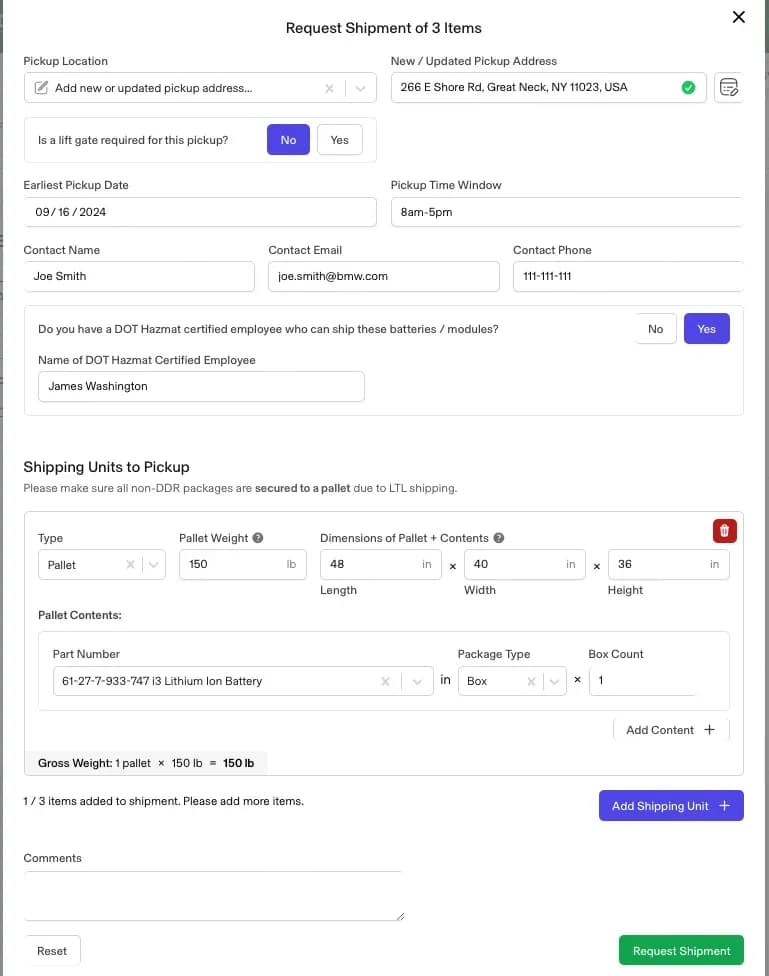
Si applica anche a
- BMW i4
- 2024
- BMW i7
- 2024
BMW has issued a Delivery Stop, identified by Service Information Bulletin (SIB) 61 18 24, for certain 2024 i4, i5, and i7 models. This action addresses a manufacturing defect within the high-voltage battery cells that could lead to electrolyte leakage. This issue can result in a "Check Control message" appearing on the instrument cluster and may cause interruptions during vehicle charging.
This bulletin, Revision 1, supersedes the previous SI B61 18 24 dated August, 2024, and includes updates to the situation, cause, correction, procedure, parts, and claim information. The BMW i5 high-voltage battery issue affects specific production ranges, and BMW is taking proactive measures to ensure vehicle safety and functionality before customer delivery or during the next service visit.
Symptoms and Impact
The core issue stems from a manufacturing defect in the high-voltage cells of the high-voltage battery. This defect can lead to electrolyte leakage, which might create a conductive connection with surrounding components. Depending on the contact resistance of this connection, owners may observe a yellow or red "Check Control message" displayed on their vehicle's instrument cluster.
While driving the vehicle may still be permitted, the defect will cause a charging interruption during charging. This means that even if the vehicle appears operational, its ability to recharge its high-voltage battery will be compromised, potentially leaving owners stranded or unable to utilize their electric vehicle as intended. The presence of a "Check Control message" related to the BMW i5 high-voltage battery or other affected models is a clear indicator that the vehicle requires attention.
Important Warnings for Owners and Dealers
BMW has issued several critical warnings that must be strictly followed to ensure safety and proper resolution of this issue:
- "Do not deliver to a customer, a New, Certified Pre-Owned or Used vehicle subject to a Delivery Stop, until the vehicle is repaired." This is a mandatory hold on affected vehicles in dealer inventory.
- "Do not use or sell replacement equipment/parts subject to a Delivery Stop." This prevents potentially defective components from entering circulation.
- "Please create a TSARA case for ALL vehicles prior to any disassembly." This ensures proper documentation and guidance from BMW technical support.
- "Please DO NOT return the replaced High Voltage (HV) battery modules directly to the WPRC." Specific recycling procedures must be followed for these hazardous materials.
- "Recall batteries – do NOT use original fiberboard box packaging, even if green condition! Recall batteries require special packaging provided by a 3rd party vendor contracted by BMW NA." This highlights the specialized handling required for recalled high-voltage batteries.
- "DO NOT DISPOSE OF THE BATTERY PACKAGING IN WHICH THE NEW BATTERY IS DELIVERED, AS IT IS REQUIRED FOR SHIPPING THE NORMAL END OF LIFE CORES (NOT RECALLED) BACK FOR RECYCLING." Retain packaging for proper returns.
- "DO NOT SEND ANY LITHIUM-ION BATTERIES TO THE WPRC. Lithium-ion batteries are strictly prohibited from being sent to any WPRC facility. Failure to comply with this directive could result in catastrophic consequences including fines and a partial or full claim debit." This is a severe warning regarding hazardous waste disposal.
- "It is critical that lithium-ion batteries are not co-mingled with lead acid or AGM battery cores." Proper segregation of battery types is essential for safe recycling.
- "Assessment of the HV Cell Module must be performed by a GEN 5 high voltage battery Certified Technician (“HV certified technician") as per the instructions below, prior to contacting REDWOOD MATERIALS (Air Document REH-HIN-P-6125-32 - V.1)" This emphasizes the specialized expertise required for handling these components.
The Repair: Replacing High-Voltage Cell Modules
The correction for this issue involves replacing the identified cell modules within the high-voltage battery. This procedure is highly specialized and requires specific training and equipment.
Specialized Training and Safety
Working on high-voltage systems carries significant risks. BMW mandates that "Only properly trained personnel, who passed all applicable HV Technical Training Courses, should perform repairs which require disconnecting, or removal of High Voltage battery components on any Hybrid or Electric Vehicle." Unqualified personnel performing such work risk severe injury or vehicle damage. Technicians must consult Repair Instruction 61 00... "Observe safety instructions when handling electric vehicles" before beginning any work.
Before any high-voltage component is disconnected or removed, the HV system must be disabled and secured using the HV Service Disconnect Switch and a lockout procedure. This must be performed by a properly trained HV technician with a minimum HV Qualification level, having completed courses like "ST2324 High Voltage Drivetrain Systems," which includes "ST1824 Alternative Drive Part 1." For Generation 5 vehicles, specific vehicle training is mandatory, and non-HV certified technicians are explicitly NOT allowed to work on the high-voltage system.
When the HV system is disabled, a "Blitz" (lightning bolt icon) will be displayed in the instrument cluster. High Voltage Battery removal and rework can ONLY be performed by a High-voltage Certified Technician with HV Battery Certification corresponding to the specific vehicle type. Examples of required certifications include "ST2006 – SP44 HV Battery" or "ST1825 – Alternative Drive Part 2" for GEN4 HV batteries, and "ST2205 Generation 5 High-voltage class" or "ST 2325 for High Voltage Battery Systems" for GEN5 HV batteries.
Diagnosis and Initial Steps
Before any disassembly, technicians must create a TSARA case for ALL affected vehicles. The first step in the repair process involves performing a cell module serial number read-out test plan using BMW's ISTA diagnostic system. This test identifies the serial numbers and locations of the high-voltage cell modules installed in the vehicle. The diagnostic path for this procedure is "Vehicle management > Service function > Electric drive > High-voltage battery unit > High-voltage battery unit: Read out stored serial number."
Once the test plan is completed, a TSARA case titled "Delivery Stop: Replace Cell Modules" must be submitted, including the read-out module serial numbers. TSARA will then provide assistance in identifying the specific faulty cell module(s) that require replacement.
Repair Procedure Overview
Following the identification of the defective modules, technicians will replace them using specific repair instructions, which range from 61 27 711 to 61 27 723, depending on the exact location of the affected cell module. It is important to note that one specific G26 (MC 33AW) i4 M50 model may require the replacement of two cell modules under this action.
Required Parts and Materials
The repair necessitates specific high-voltage battery cell modules and other related components. Key parts include:
- 61 27 8 863 448: Cell module, high-voltage battery
- 61 27 8 863 438: Dual-cell module for high-voltage battery (for G26, G60)
- 61 27 8 863 443: Dual-cell module for high-voltage battery (for G70)
Additionally, bulk supply materials such as HT-12 Antifreeze RTU (Part Number 83 19 5A32851) or BMW Antifreeze/Coolant HT-12 (Part Number 83 19 2468442) will be required for coolant replacement after the battery work.
High-Voltage Battery Recycling Program (C-2-0824-0612)
BMW has implemented a comprehensive Lithium-Ion Battery Recycling Program (Bulletin C-2-0824-0612) in partnership with Redwood Materials. This program is crucial for the safe and environmentally responsible disposal of high-voltage battery components. This bulletin supersedes earlier versions, including C-2-0407-0602, C-2-0407-0603, and C-2-0323-0606.
Battery Assessment and Classification
Before transport, every high-voltage cell module must undergo a rigorous assessment by a GEN 5 high-voltage battery Certified Technician. This assessment includes both an electrical and a visual inspection, leading to a classification of Green, Yellow, or Red:
Electrical Assessment:
- GREEN: "Not critical" fault codes stored, or no critical diagnosis procedure per recall bulletin.
- YELLOW: Electrical fault in the module, but "Not critical" according to diagnosis, or diagnosis procedure as per recall bulletin.
- RED: Module damaged or "critical" according to diagnosis, or no assessment possible, or diagnosis procedure cannot be completed per recall bulletin.
Visual Assessment: Technicians check for specific conditions such as smoke, evidence of fire, heat development, cracks or openings in the housing, dents/bulges, weakened parts/components due to corrosion, slack/loose/damaged connections, illegible serial numbers/safety stickers, and suspected water damage or leakage. Dents/bulges up to 0.5 mm depth or 5 cm length are permitted for a Green classification.
Transport Requirements and Packaging
The classification determines the transport requirements. For "Green" condition recalled batteries, technicians "do NOT use original fiberboard box packaging"; instead, special packaging provided by a third-party vendor contracted by BMW NA is required. "Yellow" condition batteries also require this special packaging. For "Red" condition batteries, a TSARA case must be submitted for additional instructions and procedures from BMW NA.
Any removed high-voltage battery unit or cell module, or even a vehicle with an in-situ high-voltage battery unit, must be identified with warning sign 6 and cordoned off if there is any uncertainty regarding its condition or if it's awaiting transport.
Core Credit Process
Effective September 1, 2024, all Li-Batteries (12V, 48V, and high voltage) will have a core charge ranging from $150 to $600, depending on battery size and capacity. For warranty and non-warranty Li-Batteries purchased after this date, a YRE5 parts return code is required to initiate the recycling request through Redwood's portal and generate the core credit. Batteries purchased before September 1, 2024, do not qualify for a core credit.
Return Process
For normal end-of-life batteries, the battery/module should be placed in the returnable packaging received with the replacement part. If the packaging is damaged, DDR shipping crates will be provided. Once ready for return, dealers must log into the Redwood Materials portal at https://portal.redwoodmaterials.com/bmw to initiate the process. A Certified HazMat Shipper must be on-site to execute the return, along with an Emergency Response Phone Number.
For recalled or damaged Li-Batteries, Redwood Materials will provide special packaging. Dealers must reference bulletin C-2-0824-0302 for supplemental HV Battery recall training if not already completed. Redwood Materials can be contacted at [email protected] or 775-446-6858 for questions regarding packaging, pickup, or general inquiries.
Warranty and Claim Information
Reimbursement for this service action is processed via normal claim entry using Repair Code 0061760800, which covers the replacement of G26, G60, and G70 BEV cell modules. Labor operations include 00 77 516 (removing and installing high-voltage battery, including lid) and 00 77 517 (replacing identified affected module(s)). Specific flat rate unit (FRU) allowances are provided for various module positions for the G26 i4, G60 i5, and G70 i7 models.
Bulk materials, such as antifreeze/coolant, can be claimed under Sublet Code 4, up to $100.00. The service action also qualifies for Alternative Mobility Solution (AMS) expense reimbursement, claimed under Sublet Code 2. Further details on AMS can be found in SI B01 29 16.
What Owners Should Do
If you own a 2024 BMW i4, i5, or i7 and believe your vehicle falls within the affected production dates (February 5, 2024 – April 24, 2024 for i4; February 15, 2024 – June 19, 2024 for i5; April 4, 2024 – July 19, 2024 for i7), or if you observe a "Check Control message" related to your high-voltage battery or experience charging interruptions, contact your authorized BMW dealer immediately. They can check if your vehicle is subject to this delivery stop and arrange for the necessary inspection and repair. Do not attempt to diagnose or repair the high-voltage battery system yourself due to the significant safety risks involved.
Source: NHTSA ID: 11008114
Galleria
12 immagini
Frequently Asked Questions
- What is the BMW SIB 61 18 24 delivery stop about?
- The BMW SIB 61 18 24 is a delivery stop issued for certain 2024 BMW i4, i5, and i7 models due to a manufacturing defect in the high-voltage battery cells. This defect can cause electrolyte leakage, leading to a "Check Control message" and charging interruptions.
- What are the symptoms of the high-voltage battery defect?
- Owners may see a yellow or red "Check Control message" displayed on the instrument cluster. The primary functional symptom is an interruption during vehicle charging, preventing the high-voltage battery from fully recharging.
- Can I still drive my BMW i5 high-voltage battery affected vehicle if I see the "Check Control message"?
- While the bulletin states that driving may be permitted, the defect will cause charging interruptions. It is strongly recommended to contact your BMW dealer immediately if you experience these symptoms or if your vehicle is identified as part of the delivery stop, as the issue impacts the **BMW i5 high-voltage battery**'s charging capability.
- What is the repair procedure for this issue?
- The repair involves replacing the identified defective high-voltage cell modules. This must be performed by a BMW High-voltage Certified Technician using specialized diagnostic tools (ISTA) and following specific repair instructions (61 27 711 to 61 27 723). A TSARA case must be opened prior to any disassembly.
- Why are there strict warnings about handling and recycling the high-voltage batteries?
- High-voltage lithium-ion batteries are classified as hazardous materials and require specialized handling, packaging, and recycling procedures to prevent catastrophic consequences, including fines and safety risks. BMW's recycling program (C-2-0824-0612) ensures these components are managed safely and environmentally, prohibiting returns to general WPRC facilities or co-mingling with other battery types.
Related Articles
2022-2024 BMW i Series Drivetrain Malfunction TSB
BMW has issued Service Information Bulletin SIB 12 05 23 to address a 'Drivetrain Malfunction' message and related isolation fault codes (0317F1, 0317F2) in 2022-2024 BMW i Series vehicles. The issue stems from metal debris in the eDrive motor's brush module, requiring a specialized cleaning…
2022-2025 BMW i4, i5, i7, iX Coolant Leak from Changeover Valve
BMW has issued Service Information Bulletin SIB 17 01 24 to address coolant leaks originating from the changeover valve(s) in certain 2022-2025 i4, i5, i7, and iX electric vehicles. This issue can lead to low heater output, a visible coolant leak, and specific fault codes.
2024 BMW iX, i5, i4, i7 High Voltage Parts Return
BMW has issued Parts Bulletin TEC837, requesting the return of specific high voltage connection part numbers for 2024 iX, i5, i4, and i7 electric vehicles. This bulletin instructs dealers to return affected inventory and previously shipped parts to the Regional Distribution Center.
2024-2025 BMW i5 Sunroof Water Drain Hose Delivery Stop
BMW has issued a delivery stop, SIB 54 06 25, for certain 2024-2025 BMW 5 Series Sedan and i5 Sedan models. The issue involves a disconnected front left sunroof water drain hose, which can lead to water ingress and damage to the vehicle's interior. Vehicles cannot be delivered until repaired.
2024-2025 BMW 5 Series / i5 Sunroof Drain Hose Delivery Stop
BMW has issued a delivery stop, SIB 54 06 25, for certain 2024-2025 BMW 5 Series and i5 vehicles due to a potential issue with the sunroof water drain hose. This means affected vehicles cannot be sold or delivered until the necessary repair is completed.
Leave a comment
Comments are moderated and may take a moment to appear. Only your first name and the initial of your last name are shown publicly.
Comments
Be the first to comment.