2024 BMW i5 Charging Complaint: Infrastructure Issues
BMW has released Technical Service Bulletin SIB 61 06 24 to help diagnose charging complaints in BEV and PHEV vehicles like the 2024 BMW i5. This bulletin focuses on identifying if charging errors are due to external charging infrastructure issues rather than the vehicle itself.
 Sarah Mitchell2024 BMW i5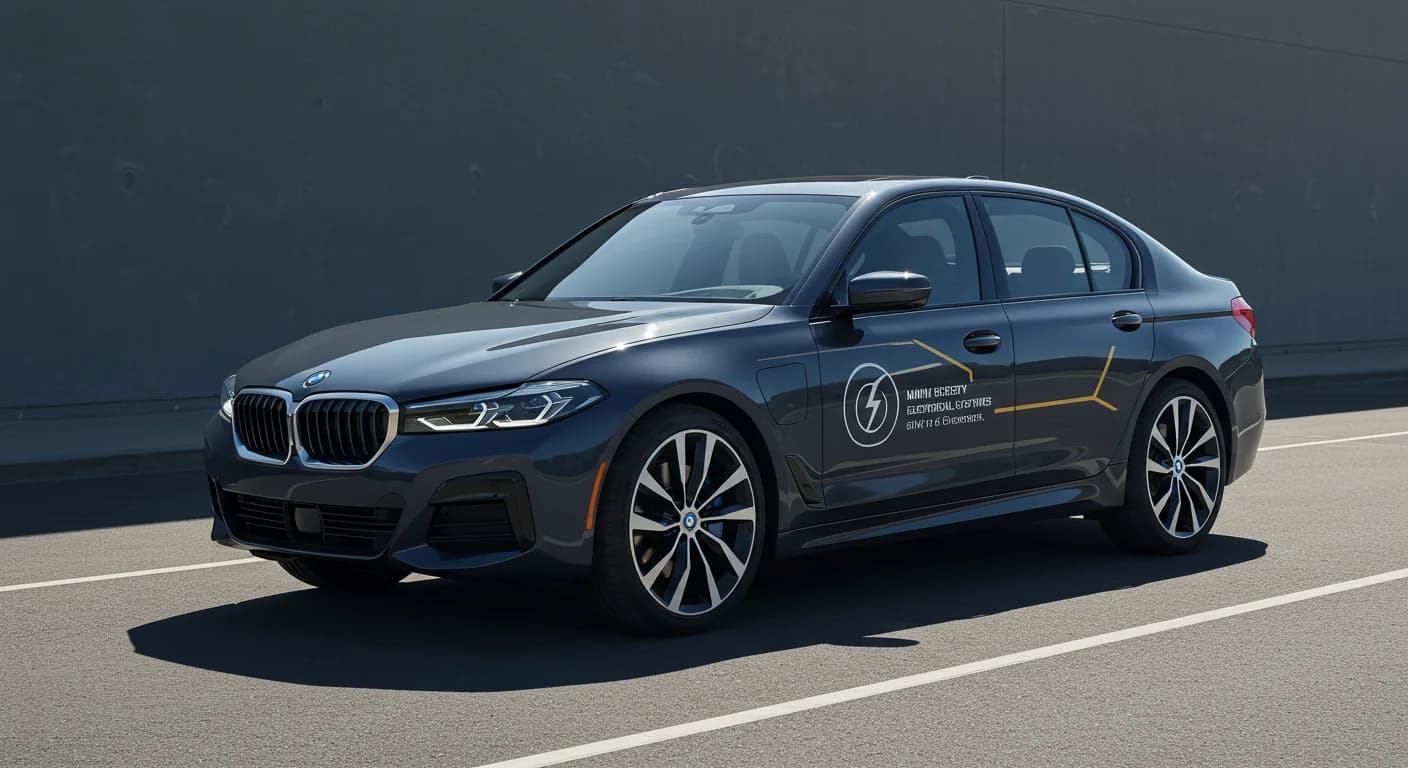
S'applique également à
- BMW 750e
- 2024
- BMW i4
- 2022–2024
- BMW i7
- 2023–2024
- BMW iX
- 2022–2024
- BMW XM
- 2023–2024
BMW has issued Technical Service Bulletin SIB 61 06 24 to assist technicians in addressing customer charging complaints for Battery Electric Vehicles (BEV) and Plug-in Hybrid Electric Vehicles (PHEV), including the 2022-2024 BMW i4, i5, i7, iX, and XM models. The primary goal of this bulletin is to provide a structured process for diagnosing whether a charging issue stems from the vehicle's internal systems or external charging infrastructure.
This informational bulletin outlines a step-by-step guide to test the charger and its associated infrastructure when a vehicle fails to charge. This applies to various charging scenarios, including home AC Level 1/Level 2 Flexible Fast Chargers or hard-wired wallboxes, as well as public AC Level 2 or DC Level 3 fast charging stations. If you are experiencing a BMW i5 charging complaint, this guide can help clarify the potential causes.
Symptoms
Owners may experience their BMW BEV or PHEV vehicle not charging at all, or the charging process may abort prematurely. These issues can occur when attempting to charge at home using a personal charger or at various public charging stations.
Important Warnings
BMW highlights specific warnings related to charging. For instance, to protect the Level 1 (120 V) Flexible Fast Charger (FFC), the device is equipped with temperature sensors in both the power supply plug and the control box. If the temperature exceeds a specified value, the power output will be temporarily switched off to prevent damage.
Furthermore, when performing home charger/infrastructure checks, it is crucial to Do NOT use extension cords for charging! This can pose a safety risk and may prevent proper charging.
Diagnosis: Identifying Charging Infrastructure Issues
To effectively diagnose a BMW i5 charging complaint, technicians are guided through a series of questions and checks to rule out the vehicle as the source of the problem. The initial step involves the Service Advisor having the customer complete a "Customer Charging Complaint Questionnaire," detailed in SI B61 07 24 Customer Charging Complaint Work Through Procedure.
General Charging Process Questions
Technicians will ask several questions to understand the nature of the charging complaint:
- Did the charging occur at a public station or a home charger?
- Is the charging error a one-time event or a recurring issue?
- Did the charging process fail to start, or did it abort mid-session?
- Were any Check Control messages displayed in the vehicle's instrument cluster? If so, which ones?
Home Charging Questions
For issues at home, the following questions are critical:
- Which specific charger did the customer use?
- What charging current limitation is set in the vehicle's settings?
- Has the customer attempted charging at a different power supply outlet?
- Have they tried using a different AC charger or adapter?
- Have both AC 120V Level 1 and AC 240V Level 2 charging methods been attempted?
Public Charging Questions
When charging at public stations, the diagnosis involves:
- Was the vehicle charged at a Level 3 DC fast charging station or a Level 2 AC charging station?
- Were there any problems with logging in or authenticating for charging?
- Is the customer's charging card activated for that specific charging station?
- Has the customer tried charging at a different public charging station?
Vehicle Settings to Check
Before testing the charger or infrastructure, technicians must verify certain vehicle settings that could impact charging:
- Charge Limit: Check the maximum charge current in the vehicle's charging settings. This may need to be reduced if the setting is overpowering the electrical installation.
- Charge Immediately: Ensure that the charging setting "Charge immediately" has been activated.
- Charging Time Window: Verify that the departure time set in the vehicle does not conflict with any charging time window set in the vehicle or app.
- Charging Precondition Settings: Attempt disabling all charging precondition settings or try charging at a different time of day to rule out potential conflicts.
Home Charger/Infrastructure Related Checks
If the vehicle's charging system is verified to be working as designed, the focus shifts to the charging equipment. Technicians will perform or advise on the following checks:
- Reset the BMW Occasional Use Charger (OUC) or Flexible Fast Charger according to its instruction manual.
- Inspect the charging plug and the high voltage charging socket on the vehicle for dirt or damage.
- Ensure the charger plug is fully inserted into the vehicle until it clicks.
- If possible, try using a different Level 1 or Level 2 charger.
- If using the Flexible Fast Charger, try using a different adapter.
- Repeat charging attempts after a 15-minute downtime.
- Try charging at another power outlet, as charging requires a dedicated circuit.
- Disconnect other electrical devices from the charging power outlet circuit.
- Test the power outlet by connecting another device, like a cell phone charger or lamp.
- Check the main circuit breakers for the power outlet used for charging.
- Check for tripped circuit protective devices (GFI outlets or GFCI-ground fault circuit interrupters).
- Do NOT use extension cords for charging!
- If all checks are verified, it might be necessary to have a qualified electrician inspect the home charger's electrical installation.
Public Charging Station Relevant Checks
For public charging issues, the following steps are recommended:
- Determine if the complaint is specific to one public charging station or multiple.
- Confirm if the customer's charging (RFID) card is activated for the station.
- Suggest using an alternative charging card, charging app, or authentication method (e.g., Click & Charge, Plug & Charge).
- Advise trying another public charging station.
- Ensure vehicle charging settings do not cause conflicts.
- Always check for debris or damage to the charging plug or vehicle charging socket.
- Verify the charging plug is correctly inserted into the vehicle until it clicks.
- Identify if the problem is specific to DC charging.
- Perform a charging test at a BMW charging station.
- If the customer reports the high-voltage battery isn't charging to 100%, confirm no charging target of less than or equal to 80% is set in the vehicle.
Mobile Service Technicians can conduct on-site vehicle tests and charging test plans while connected to the customer's hard-wired Wallbox charger or Flexible Fast Charger. This helps definitively rule out the vehicle as the source of the BMW i5 charging complaint.
Related BMW Service Information Bulletins
This bulletin references several other important SIBs for further information:
- SI B61 29 23 Differences Between Flexible Fast Charger Versions 1.0 vs 2.0
- SI B61 07 24 Customer Charging Complaint Work Through Procedure
- SI B61 25 23 BEV Reasons For No/Slow DC Charging Complaint
- SI B61 07 24 Attachment 4 GEN 5 BEV Quick Reference Guide_v2.pdf
Warranty and Claim Information
The procedure to identify and document a BEV/PHEV's infrastructure-related charging error or fault (labeled as "BEV/PHEV's Charging Infrastructure-Related Charging Error/Fault (Non-Vehicle Related Issue)") is covered under the terms of the BMW New Vehicle Limited Warranty for Passenger Cars and Light Trucks.
For this diagnostic action, the repair code is 6144900200 (Fx Gx Ix PHEV BEV service instruction reference customer charging problems (charging infrastructure) (Non-vehicle related)).
Special flat rate labor operation codes are used for claim submission:
- Work Pkg #1 (00 75 836 Plusposition): Vehicle test (including 12 V battery support) for charging infrastructure problems. This includes operations 00 00 556 and 61 21 528.
- Work Pkg #2 (00 75 255 Main work): Similar vehicle test for charging infrastructure problems, also including operations 00 00 006 and 61 21 528.
If the charging issue is caused by a verified defect in vehicle components or assembly, it falls under "BEV/PHEV's Charging Error/Fault caused by a Vehicle Component and/or Assembly Fault/Malfunction, Eligible and Covered Work/Repairs (Vehicle-related Issue)" and is covered by the BMW New Vehicle Limited Warranty. However, damage or charging issues caused by outside influences, including infrastructure problems, are not covered under the BMW limited warranties for vehicle-related repairs.
For documenting and claiming diagnosis work time, technicians are referred to SI B01 01 20 or B01 07 20. Qualifying BMW centers participating in the Servicemobile program can be reimbursed for off-site service visits at a rate of 150 percent of the published flat rate unit allowance for labor operation code 85800306SM (BMW Servicemobile RSA).
Owner Action
If you are experiencing a BMW i5 charging complaint, first review the vehicle settings mentioned above to ensure they are correctly configured. If the problem persists, contact your authorized BMW service center. Be prepared to answer questions about your charging habits, the type of charger used, and any error messages displayed. This information will help technicians quickly determine if the issue is with your vehicle or the external charging infrastructure.
NHTSA ID: 10252029
Frequently Asked Questions
- What does BMW TSB SIB 61 06 24 address?
- BMW Technical Service Bulletin SIB 61 06 24 provides a diagnostic workflow for technicians to determine if a charging complaint in BEV or PHEV vehicles, such as a BMW i5 charging complaint, is caused by the external charging infrastructure or a fault within the vehicle itself.
- How can I tell if my 2024 BMW i5 charging complaint is due to the vehicle or the infrastructure?
- The TSB outlines a series of diagnostic questions and checks for both home and public charging scenarios. These include verifying vehicle settings like 'charge limit' and 'Charge immediately', inspecting charging plugs and sockets, and testing different power outlets or charging stations. If the vehicle's internal systems are verified as functional, the issue is likely infrastructure-related.
- What vehicle settings should I check if my BMW is not charging?
- You should check the maximum 'charge limit' setting, ensure 'Charge immediately' is activated, and verify that any 'Charging time slot' or 'Departure time' settings do not conflict with your desired charging period. You might also try disabling precondition settings.
- Is an infrastructure-related charging issue covered under warranty?
- According to TSB SIB 61 06 24, the diagnostic procedure to identify an infrastructure-related charging error or fault (labeled as 'BEV/PHEV Charging Infrastructure-Related Charging Error/Fault') is covered under the BMW New Vehicle Limited Warranty. However, the repair of the external infrastructure itself is typically not covered.
- What should I do if my BMW Flexible Fast Charger stops working?
- The Flexible Fast Charger (FFC) has temperature sensors that can temporarily switch off power if it overheats. If your FFC stops working, ensure it's not overheating and check its instruction manual for reset procedures. Also, ensure you are not using extension cords, as this can cause issues.
Related Articles
2022-2024 BMW i Series Drivetrain Malfunction TSB
BMW has issued Service Information Bulletin SIB 12 05 23 to address a 'Drivetrain Malfunction' message and related isolation fault codes (0317F1, 0317F2) in 2022-2024 BMW i Series vehicles. The issue stems from metal debris in the eDrive motor's brush module, requiring a specialized cleaning…
2022-2025 BMW i4, i5, i7, iX Coolant Leak from Changeover Valve
BMW has issued Service Information Bulletin SIB 17 01 24 to address coolant leaks originating from the changeover valve(s) in certain 2022-2025 i4, i5, i7, and iX electric vehicles. This issue can lead to low heater output, a visible coolant leak, and specific fault codes.
2024 BMW iX, i5, i4, i7 High Voltage Parts Return
BMW has issued Parts Bulletin TEC837, requesting the return of specific high voltage connection part numbers for 2024 iX, i5, i4, and i7 electric vehicles. This bulletin instructs dealers to return affected inventory and previously shipped parts to the Regional Distribution Center.
2024-2025 BMW i5 Sunroof Water Drain Hose Delivery Stop
BMW has issued a delivery stop, SIB 54 06 25, for certain 2024-2025 BMW 5 Series Sedan and i5 Sedan models. The issue involves a disconnected front left sunroof water drain hose, which can lead to water ingress and damage to the vehicle's interior. Vehicles cannot be delivered until repaired.
2024-2025 BMW 5 Series / i5 Sunroof Drain Hose Delivery Stop
BMW has issued a delivery stop, SIB 54 06 25, for certain 2024-2025 BMW 5 Series and i5 vehicles due to a potential issue with the sunroof water drain hose. This means affected vehicles cannot be sold or delivered until the necessary repair is completed.
Leave a comment
Comments are moderated and may take a moment to appear. Only your first name and the initial of your last name are shown publicly.
Comments
Be the first to comment.