2025 Audi A3, S3 Seat Recognition Shift Issue
This Audi Technical Service Bulletin 2071692/4 addresses an issue where the seat occupied recognition system in 2025 Audi A3 and S3 vehicles may prevent shifting from Park (P) to Drive (D) or Reverse (R), or cause automatic shifting back to P. It clarifies the cause and advises against unnecessary…
 Sarah Mitchell2025 Audi S3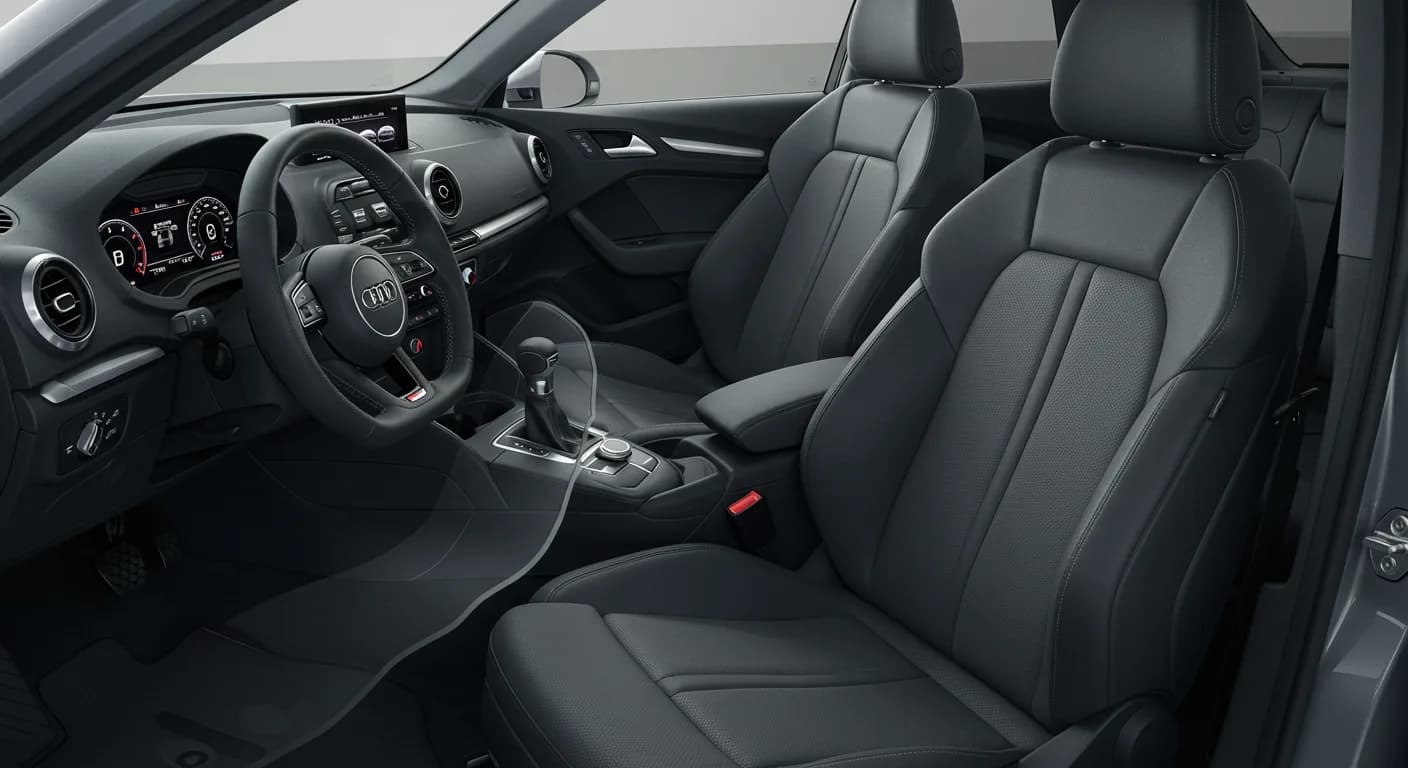
Also applies to
- Audi A3
- 2025
Symptoms
Owners of certain Audi models, including the 2025 Audi A3 and S3, may experience an issue where the vehicle's transmission cannot be shifted from Park (P) to Drive (D) or Reverse (R). In some cases, the vehicle may also automatically shift back into Park from Drive or Reverse positions. This behavior is linked to the seat occupied recognition system.
Technicians investigating this issue have noted that there is typically "No event memory entry is logged in the airbag control unit," indicating that the problem is not usually accompanied by diagnostic trouble codes (DTCs) related to the airbag system or seat sensors.
Technical Explanation: The 'Leaving Concept'
Audi vehicles, including the 2025 Audi A3 and S3, are equipped with a safety feature known as the "leaving concept." This system is designed to detect the driver's presence on the seat and authenticate them, which is crucial for activating the ignition and enabling gear selection. The system relies on several factors to determine if shifting to Drive or Reverse is permitted, including the seat occupied recognition system, whether the seat belt is fastened, and if the driver's door is closed.
A key aspect of the leaving concept is its ability to prevent unintended vehicle movement. If the system detects that the driver is not present or authenticated—for example, if a very light driver is not wearing a seat belt—it may interpret this as an unoccupied driver's seat. In such scenarios, weight shifting by the driver can temporarily reduce pressure on the seat occupied sensor, leading the system to believe the seat is empty. For safety reasons, the vehicle will then automatically shift the transmission back into Park (P).
This design is also intended to ignore very light objects or small children on the driver's seat, ensuring that the system functions correctly for adult drivers. The primary goal is to ensure the vehicle is ready to drive safely only when a recognized driver is properly seated and secured.
Important Warnings for Owners
Audi Technical Service Bulletin 2071692/4 provides critical information and warnings regarding this condition. Owners should be aware of the following:
- Do not replace the seat occupied sensor: The TSB explicitly states that "Replacing the seat occupied sensor is not the solution to this complaint if no event memory entries clearly relating to the seat occupied sensor are present." This means that if your vehicle is not logging specific fault codes for the sensor, replacing it will likely not resolve the issue.
- Avoid unnecessary repairs: There is "no reason to replace parts or attempt repairs" if the condition is due to the described leaving concept behavior. Dealers are warned that "unjustified work/replacement parts will be charged back" and "invoicing under warranty is not permitted" for such repairs.
- Wear your seat belt: Audi's customer information for this issue is direct: "Please wear a seat belt when driving." This is the primary recommendation to ensure the system correctly recognizes the driver and allows normal transmission operation.
- Informational TSB: This TSB is described as "informational only and not applicable to any Audi Warranty," meaning it clarifies a system's intended behavior rather than detailing a defect requiring a warranty repair.
What Owners Should Do
The most effective action for owners experiencing the 2025 Audi A3 S3 seat occupied recognition issue is to ensure they are consistently wearing their seat belt while driving. The system prioritizes seat belt recognition, so having the seat belt fastened, combined with the driver's door being closed, should allow the vehicle to shift from Park to Drive or Reverse without issue. If you continue to experience the problem despite always wearing your seat belt and closing the door, it is advisable to contact an authorized Audi dealership for further diagnosis. However, be aware that unnecessary parts replacements are not recommended and may not be covered under warranty, as outlined in Audi TSB 2071692/4.
Source: NHTSA ID 11009947
Frequently Asked Questions
- What is the issue described in Audi TSB 2071692/4?
- Audi Technical Service Bulletin 2071692/4 addresses a condition where the seat occupied recognition system in certain Audi models, including the 2025 Audi A3 and S3, may prevent the vehicle from shifting out of Park (P) or cause it to automatically shift back into Park from Drive (D) or Reverse (R).
- Why does my Audi A3 or S3 shift back to Park automatically?
- This can happen if the vehicle's "leaving concept" system does not detect a driver, often due to a very light driver not wearing a seat belt. For safety, the system shifts the transmission back to Park to prevent unintended vehicle movement.
- Should I replace the seat occupied sensor if I experience this problem?
- According to Audi TSB 2071692/4, replacing the seat occupied sensor is generally not the solution, especially if there are no related fault codes logged in the airbag control unit. Unjustified part replacements will not be covered under warranty.
- What is the recommended action for the 2025 Audi A3 S3 seat occupied recognition issue?
- Audi advises that drivers should always wear their seat belt and ensure the driver's door is closed. If the seat belt is fastened and the door is closed, the seat occupied recognition system should prioritize the seat belt signal, allowing normal shifting from Park.
Related Articles
2021-2025 Audi A3, S3, RS 3, Q3 Front End Creaking Noises TSB
Audi Technical Service Bulletin 2043424/19 addresses creaking and squeaking noises from the front end of 2021-2025 Audi A3, S3, RS 3, and Q3 models. The issue stems from the rear elastomer bush of the control arm on the front axle, requiring specific lithium grease application.
2024-2026 Audi A3/S3/RS3 AC Not Working TSB 2080697/1
Audi has issued Technical Service Bulletin 2080697/1 for 2024-2026 A3, S3, and RS3 models regarding an intermittent air conditioning system malfunction. This issue may store DTCs B10AE22 and U193500 in the HVAC Electronics module.
2023-2025 Audi S3, A3, A5, Q5, Q7, Q8 Analysis List
Audi has released an on-car analysis list dated December 8, 2025, detailing diagnostic information for several issues affecting 2023-2025 Audi models. These include DTC P0A8200 related to the 48V battery cooling fan, problems with B&O extendable tweeters, and vehicles showing incorrect time by one…
2025 Audi A3/S3/RS3 Reversing Camera MMI View Issue
Audi has issued TSB 2076961/2 for 2025 A3, S3, and RS3 models regarding a software issue where the reversing camera's rear corner view cannot be activated via the MMI. Owners may see soft keys with no function. A fix is anticipated by the end of 2025, and no repairs are needed currently.
2022-2025 Audi Emergency Call Fault U178500 TSB
Audi has released TSB 2073131/4 for 2022-2025 A3, S3, RS3, and Q3 models experiencing an 'Emergency call function: fault' message and DTC U178500. This bulletin details a software error in the emergency call module and outlines a temporary service procedure.
Leave a comment
Comments are moderated and may take a moment to appear. Only your first name and the initial of your last name are shown publicly.
Comments
Be the first to comment.