2021-2024 Audi Gearbox Malfunction DTCs P173500, P173600
Audi has released Technical Service Bulletin (TSB) 2070217/3 to address issues where the gearbox warning lamp illuminates, the vehicle shudders, or the 'Gearbox Malfunction' message appears. This TSB specifically covers Diagnostic Trouble Codes (DTCs) P173500 and P173600, indicating electrical…
 Marcus Weber2023 Audi S3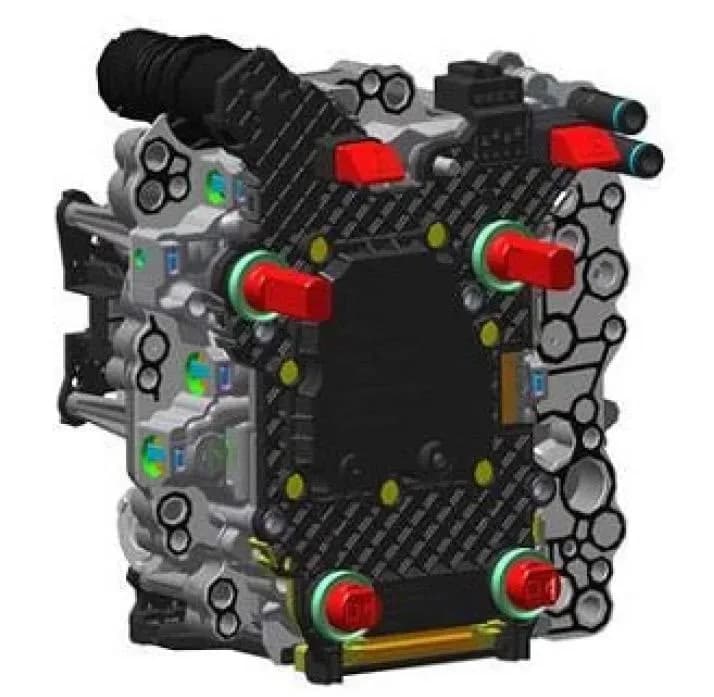
Also applies to
- Audi A3
- 2022–2024
- Audi RS 3
- 2022–2024
- Audi S3
- 2022, 2024
- Audi TT
- 2021–2023
- Audi TT RS
- 2021–2022
- Audi TTS
- 2021–2023
Audi has issued Technical Service Bulletin (TSB) 2070217/3 to address customer concerns regarding gearbox warning lights, vehicle shuddering, and the specific message "Gearbox Malfunction" appearing on the instrument cluster. This TSB, which supersedes TSB Group 35 number 24-50 dated May 7, 2024, focuses on resolving hardware issues within the transmission control unit (TCM) that lead to Diagnostic Trouble Codes (DTCs) P173500 and P173600.
This issue affects various 2021-2024 Audi models, including the A3, S3, RS 3, TT, TTS, and TT RS. If your vehicle exhibits these symptoms, it's crucial to have it diagnosed by an authorized Audi service center to determine if this TSB applies.
Symptoms
Owners may experience one or more of the following symptoms related to this gearbox issue:
- The vehicle shudders while driving.
- The gearbox warning lamp illuminates on the dashboard.
- The message "Gearbox Malfunction" appears on the instrument cluster display.
- The gearbox may enter Limp Home Mode, allowing only limited gear changes (e.g., gears 1-3-5-7 or 2-4-6).
Fault Codes / DTCs
When diagnosing this issue, technicians may find one or more of the following Diagnostic Trouble Codes (DTCs) stored in the Transmission Control Module (TCM), also known as -J217- (address word 0002):
| DTC Entry | Symptom Code | Description | Gearbox Type |
|---|---|---|---|
| P173500 | 10666 | Clutch position sensor 1, electrical malfunction | 0GC/0DL |
| P173600 | 10668 | Clutch position sensor 2, electrical malfunction | 0GC/0DL |
These codes specifically point to an electrical malfunction within the clutch position sensors, which are critical for proper gearbox operation. The presence of an Audi gearbox malfunction DTC P173500 or P173600 is a key indicator for this TSB.
Diagnosis and Trigger Conditions
Diagnosis for this issue begins with verifying the customer's reported symptoms and checking for the presence of DTCs P173500 or P173600 in the Transmission Control Module (TCM). Technicians must also check the software part number and software version number of the TCM. The repair procedure outlined in TSB 2070217/3 only applies if the installed software and hardware versions match specific criteria detailed in the bulletin.
To proceed with the diagnosis, the Offboard Diagnostic Information System (ODIS) must be used, with a baseline version (diagnosis data – didb_GFS-a) of 2023.03.01 / 2.30.5 or higher. A critical step involves ensuring that 89 values are read out and transmitted in the global variables under address DA0002 at the start of the diagnostic session. If fewer than 89 values are present, this TSB does not apply, and alternative repair methods should be pursued according to ODIS test plans and the repair manual. If the diagnostic test plan prompts for a TSB or TPI number, technicians should enter 2058356.
Repair Procedure Summary
The repair procedure outlined in Audi TSB 2070217/3 involves a detailed process to address the hardware issue in the transmission control unit. The steps are as follows:
- Initial Software/Hardware Verification: The technician first verifies the software part number and software version number of the Transmission Control Module (TCM). This is a crucial step, as the TSB only applies if these numbers fall within specified ranges. For example, a hardware part number like 0GC300044H and software version 2402 are referenced.
- Guided Fault Finding (GFF): Using the ODIS system, the technician performs Guided Fault Finding for the relevant event memory entry. This process helps confirm the issue and guides the technician through subsequent steps.
- Global Variables Check: During the diagnostic session, it's essential to confirm that 89 values are successfully read out and transmitted in the global variables under address DA0002. If this condition is not met, the TSB does not apply, and repairs must follow standard diagnostic procedures.
- Parts Ordering: Once the diagnostic log is uploaded to GFF paperless and the mechatronic unit's index is confirmed, the correct replacement parts are ordered. This includes the mechatronic unit, contact plate, various bolts, seals, and gear oil. Ordering must be done using the vehicle's VIN.
- Mechatronic Unit Removal: The mechatronic unit is carefully removed from the gearbox, following the instructions in the repair manual.
- Contact Plate Detachment: The contact plate is detached from the mechatronic unit by loosening and removing specific bolts. Extreme care is taken to ensure that the contacts on the valves are not bent or damaged during this process.
- Pressure Sensor Seal Replacement: The seals for the pressure sensors are replaced, ensuring they are correctly seated to prevent future issues.
- Reassembly of Mechatronic Unit: The mechatronic unit is reassembled with the new contact plate. It's vital to ensure all contacts are properly engaged and not bent. Bolts are tightened in a two-stage process to specific torque values (e.g., 6 Nm + 30° for short bolts, 4.5 Nm + 25° for long bolts).
- Installation and Fluid Refill: The reassembled mechatronic unit, along with a new cover, is installed back into the transmission. The transmission is then refilled with the appropriate gear oil according to the repair manual.
- New Control Unit Activation: The new control unit is activated using the Guided Function "0002 - Replace mechatronic unit (control unit)" within the diagnostic system.
- Gearbox Basic Setting: A basic setting procedure is performed for the gearbox to ensure proper calibration and function.
- Immobilizer Readaptation: After replacing the control unit, the immobilizer must be readapted. All vehicle keys must be present during this procedure to ensure successful readaptation.
Required Tools or Parts
Performing this repair requires specific tools and genuine Audi parts to ensure proper function and longevity. Key items include:
- Special Tool: VAS 6613 ESD Work Surface, essential for maintaining cleanliness and protecting sensitive electronic components during work on the mechatronic unit.
- Control Unit: Part numbers such as 0GC 927 711 G VI1 or 0GC 927 711 H VI1, depending on the vehicle configuration.
- Contact Plate: Part numbers like 0GC 927 709 A or 0BH 927 709 A.
- Bolts: Various bolts for the control unit (N 101 243 04 short, N 104 057 05 long), contact plate (N 904 552 02), mechatronic unit (N 105 540 02), and cover (N 910 327 02).
- O-rings for Pressure Sensor: WHT 004 007 B.
- Oil Seals: N 043 809 2, N 013 813 2.
- Cover for Mechatronic Unit: Part number 0GC 325 201* (specific variant depends on ETKA lookup).
- Retaining Clip: 0BH 325 147.
- Gear Oil: G 055 529 A2 or G 052 182 A2, as specified by ETKA/ELSA.
- Fasteners: General fasteners, bolts, nuts, and screws as needed per the repair manual and ETKA/ELSA.
Important Warnings for Owners
Owners and technicians should be aware of several critical points related to this TSB:
- TSB Applicability: "If the installed Software part number and Software version number is not included in the table below, then this TSB does not apply." Do not proceed with this TSB's repair if your vehicle's software/hardware does not match the specified criteria.
- Diagnostic Data Requirement: "If there are less than 89 values this TSB repair will not work, and it does not apply to the vehicle. Repairs should be made outside this TSB according to ODIS test plans and the repair manual." Accurate diagnostic data is essential.
- Immobilizer Readaptation: "The immobilizer must be readapted after replacing the control unit. For this purpose, it is essential that all vehicle keys are present at the time of the repair." Ensure all vehicle keys are available during this critical step.
- Mechatronic Unit Handling: "The sensors are on the back of the mechatronics unit and must not be touched/damaged. The mechatronic unit must not be placed down on its sensors." Proper handling is vital to prevent further damage.
- Cleanliness: "You must ensure the highest levels of cleanliness for all work on the mechatronic unit. Even the smallest dirt particles or hairs in the system can lead to restricted functions and ultimately to failure of the mechatronic unit." Contamination can cause severe issues.
- Parts Ordering Restrictions: "Parts cannot be ordered until Step 11 of this TSB has been completed and the index of the Mechatronics unit is shown in one of the lists below! It is only possible to deliver the correct control unit if the diagnostic log was sent online with the relevant DTC entry and the completed test plan." Parts ordering is conditional on diagnostic verification.
- Correct Part Index: "Only order parts for the correct index of the Mechatronics unit! If the installed mechatronics unit does not have index that matches one of the parts tables below this TSB does not apply to the vehicle!" Verify the mechatronic unit's index before ordering.
- VIN for Ordering: "Order all parts using the VIN of vehicle when ordering!" Always use the vehicle's VIN to ensure correct part selection.
Warranty Information
For vehicles still under warranty, claims related to this TSB must adhere to the Audi Warranty Policies and Procedures Manual. The TSB specifies the following details for warranty claims:
- Claim Type: Informational only if the vehicle is outside of warranty.
- Service Number: 3481.
- Damage Code: 0040.
- Labor Operations:
- Remove and install mechatronic unit: 3511 19xx.
- Repair mechatronic unit: 3511 4199 (50 Time Units).
- Charge battery: 2706 8950.
- Diagnostic Time: GFF 0150 0060 (Time stated on diagnostic protocol).
- Claim Comment: As per TSB 2070217/3.
All warranty claims are subject to review or audit by Audi Warranty.
Source: NHTSA ID: 11005872
Gallery
15 images
Frequently Asked Questions
- What does the 'Gearbox Malfunction' message mean in my Audi?
- The 'Gearbox Malfunction' message, especially when accompanied by vehicle shuddering or a gearbox warning light, often indicates an internal issue with the transmission control unit. As per Audi TSB 2070217/3, it can be linked to electrical malfunctions in the clutch position sensors, triggering DTCs like P173500 or P173600.
- What are DTC P173500 and P173600?
- DTC P173500 signifies an electrical malfunction in clutch position sensor 1, while P173600 indicates an electrical malfunction in clutch position sensor 2. Both codes point to a hardware issue within the transmission control unit that can lead to significant gearbox problems.
- Is there a specific repair for the Audi gearbox malfunction DTC P173500?
- Yes, Audi Technical Service Bulletin 2070217/3 provides a detailed repair procedure. It involves diagnosing the issue with ODIS, verifying software and hardware versions, replacing the mechatronic unit and associated components, and performing necessary calibrations like immobilizer readaptation and gearbox basic settings.
- What special tools are needed for this gearbox repair?
- The repair requires specific diagnostic equipment, including the Offboard Diagnostic Information System (ODIS) with a current baseline version. Additionally, the special tool VAS 6613 ESD Work Surface is mandatory to ensure a clean and static-free environment when working on the sensitive mechatronic unit.
- Will my Audi's immobilizer need to be reprogrammed after this repair?
- Yes, if the transmission control unit is replaced, the immobilizer must be readapted. It is crucial that all vehicle keys are present at the time of the repair for this procedure to be completed successfully.
Other revisions of this TSB
Related Articles
2023-2024 Audi A3, S3, RS 3 Driver Assist System Faults
Audi has released Technical Service Bulletin (TSB) 2079574/2 to address various driver assist system complaints in 2023-2024 Audi A3, S3, and RS 3 vehicles. Owners may see warning messages like 'Traffic sign recognition: fault' or 'Adaptive cruise assist not working' due to an intermittent front…
2017-2023 Audi A3, S3, TT Transmission Oil Leak TSB 2067365/3
Audi has released Technical Service Bulletin 2067365/3 to address oil leaks near the transmission cooler in various 2017-2023 Audi A3, S3, and TT models equipped with the DQ-381 transmission. This bulletin outlines diagnostic steps and repair procedures for technicians.
2022-2024 Audi A3, S3, RS 3 Airbag Control Module DTC P000000
Audi has released Technical Service Bulletin (TSB) 2070322/5 to address communication and configuration issues with the airbag control module (J234) in 2022-2024 A3, S3, and RS 3 models, often indicated by DTC P000000. This TSB outlines a software update remedy.
2022-2023 Audi MIB3 MMI Software Update TSB
Audi has released Technical Service Bulletin 2079134/2 addressing various MMI functionality issues and 'Emergency call fault' messages in 2022-2023 A3, S3, RS 3, e-tron GT, and RS e-tron GT models. A software update for the MIB3 system and connectivity box is available to resolve these concerns.
2023-2024 Audi S3 / A3 Driver Assist System Fault TSB 2079574/1
Audi has released Technical Service Bulletin 2079574/1 for 2023-2024 Audi S3 and A3 models experiencing various driver assist system malfunctions, including warning messages like 'Traffic sign recognition: fault'. The fix involves a software update for the front camera.
Leave a comment
Comments are moderated and may take a moment to appear. Only your first name and the initial of your last name are shown publicly.
Comments
Be the first to comment.