2022-2026 Audi e-tron GT Brake Disc Hotspots TSB
Audi Technical Service Bulletin 2073824/2 addresses customer complaints about hotspots and discoloration on the friction surface of tungsten carbide brake discs in 2022-2026 Audi e-tron GT vehicles. The TSB states this is a visual phenomenon caused by thermal stress during braking and does not…
 David Chen2026 Audi S e-tron GT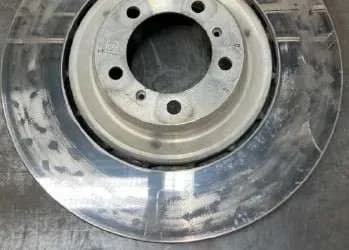
Si applica anche a
- Audi e-tron GT
- 2022–2026
- Audi RS e-tron GT
- 2022, 2023, 2024, 2026
Owners of 2022-2026 Audi e-tron GT, RS e-tron GT, and S e-tron GT models may observe cosmetic changes to their vehicle's tungsten carbide brake discs. Specifically, the friction surface of these high-performance brake discs might display hotspots or discoloration. This visual anomaly has been addressed by Audi in Technical Service Bulletin (TSB) 2073824/2.
The TSB clarifies that while these visual changes are noticeable, they are considered normal operating characteristics for the brake system. It's important for owners to understand that these cosmetic alterations do not indicate a functional defect or compromise the braking performance of the vehicle. This information is crucial for managing expectations and understanding warranty coverage.
Symptoms Owners May Notice
The primary symptom reported by customers is the presence of
Frequently Asked Questions
- What are the 'hotspots' on my Audi e-tron GT brake discs?
- Hotspots and discoloration are visual changes that can appear on the friction surface of your Audi e-tron GT's tungsten carbide brake discs. These are typically caused by thermal stress during braking, especially under varying driving conditions. Audi TSB 2073824/2 confirms these are cosmetic and do not affect brake function.
- Do these brake disc hotspots affect my vehicle's braking performance or safety?
- No, according to Audi Technical Service Bulletin 2073824/2, the hotspots and discoloration on the tungsten carbide brake discs are purely visual and do not impair the function or safety of your vehicle's braking system. Workshop findings have confirmed that there are no abnormalities in brake disc axial run-out when these visual changes are present.
- Will Audi cover the replacement of brake discs with hotspots under warranty?
- Audi Technical Service Bulletin 2073824/2 explicitly states that replacement of parts due to this phenomenon is not justified. The TSB also warns that Audi may reject warranty claims for this cosmetic issue and charge back the cost of any parts replaced. This TSB is informational and not applicable to any Audi Warranty for this specific condition.
- What should I do if I notice discoloration on my Audi e-tron GT's brake discs?
- If you observe hotspots or discoloration on your Audi e-tron GT's tungsten carbide brake discs, you should be aware that, as per TSB 2073824/2, this is considered a normal visual characteristic and not a functional defect. No measures or repairs are required for this phenomenon. If you have concerns about your brakes, it's always best to consult with an authorized Audi service center for a professional assessment, but be prepared for the TSB's guidance on this specific issue.
Related Articles
2022-2026 Audi e-tron GT 12V Battery Discharged TSB 2075846/3
Audi Technical Service Bulletin 2075846/3 addresses a discharged 12V battery condition in 2022-2026 e-tron GT and RS e-tron GT vehicles, often accompanied by DTC P1D6C00. This TSB outlines a software update procedure to resolve the issue.
2025-2026 Audi e-tron GT Active Suspension Noise TSB
Audi has released Technical Service Bulletin 2080798/1 for 2025-2026 e-tron GT and RS e-tron GT models equipped with active suspension (PR code 1P8). It addresses noises heard when driving over bumps and outlines diagnostic procedures for technicians.
2026 Audi e-tron GT Roll Stabilization Configuration Aborted TSB
Audi Technical Service Bulletin 2080608/1 addresses an issue where roll stabilization configuration for diagnostic addresses 00D4 and 00D5 is aborted on 2026 Audi e-tron GT and RS e-tron GT vehicles. This TSB provides diagnostic steps for technicians.
2021-2026 Audi Ceramic Brake Repair Advisory
Audi has released a manufacturer communication, NHTSA ID 11027374, regarding ceramic brake repairs on various 2021-2026 Audi models. Technicians are required to contact the Technical Assistance Center (TAC) before proceeding with any brake service on vehicles equipped with ceramic brakes.
2022-2026 Audi e-tron GT C1399F0 Brake-In Mode TSB
Audi Technical Service Bulletin (TSB) 2063679/6 addresses Diagnostic Trouble Code (DTC) C1399F0 in 2022-2026 Audi e-tron GT, RS e-tron GT, and S e-tron GT models. This code indicates the vehicle is in a normal brake application mode for new or replaced brake components and typically requires no…
Leave a comment
Comments are moderated and may take a moment to appear. Only your first name and the initial of your last name are shown publicly.
Comments
Be the first to comment.