2022-2026 Audi Black Trim Paint Peeling TSB 2074058/3
Audi Technical Service Bulletin 2074058/3 details paint peeling and coating damage on black exterior trims across various 2022-2026 models, including A3, S3, RS3, e-tron GT, and Q4 e-tron. The bulletin identifies aggressive cleaning solutions as the cause, noting that repairs are not covered under…
 David Chen2026 Audi S e-tron GT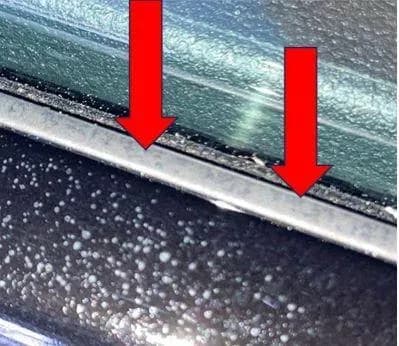
Also applies to
- Audi A3
- 2022–2025
- Audi e-tron GT
- 2022–2025
- Audi RS 3
- 2022–2024
- Audi RS e-tron GT
- 2022–2024
- Audi S3
- 2022–2025
Audi has released Technical Service Bulletin (TSB) 2074058/3 to address customer and workshop findings of paint peeling and coating flaws on black exterior trims and trim strips across several 2022-2026 models. This bulletin provides crucial information regarding the cause of this cosmetic issue, which is often observed as Audi black trim peeling.
Revision History
This Technical Service Bulletin has undergone several revisions to include updated information and additional models:
- Revision 3 (Current): Revised header to include new models.
- Revision 2 (March 4, 2025): Revised the title, header, condition, technical background, service, warranty, and additional information sections.
- Revision 1 (May 28, 2024): Initial publication of the bulletin.
Symptoms of Black Trim Damage
Owners may notice various forms of damage on their vehicle's black exterior trims. The primary symptom reported is that the "clear coat has peeled off from trim strips." Other observed issues include:
- Paint color deviation on components like the rear lid spoiler.
- Material detaching from window channel seals.
- Damaged components related to power window regulators and side windows.
- Paintwork bubbles on door trim molding strips.
- Corrosion or rust on door seals.
- Flawed coating on door window trim molding and roof trim molding.
- Spots of additional coating and a fine spray pattern, often caused by cleaning agents.
- Marks forming on neighboring rubber components due to applied liquids.
- Swelling of the coating, visible under magnification.
These symptoms can affect various body attachments and installations, including wheel housings, outer door panels, and door body seals, leading to the noticeable Audi black trim peeling.
Root Cause of the Damage
Laboratory analyses conducted by Audi have concluded that the primary cause of this trim damage is the use of aggressive cleaning solutions. These solutions, especially when applied with pressure from a high-pressure cleaner, can cause irreversible damage to the trim's coating.
Specific types of cleaning solutions identified as problematic include:
- Industrial dirt removers
- Insect removers
- Various commercially available wheel cleaners
Analysis of damaged surfaces revealed traces of phosphorus (P) and fluorine (F). These elements are not naturally present in the conventional anodizing and additional coating layers used by Audi, confirming that external cleaning agents are responsible for the damage. The duration and method of application of these cleaning solutions significantly impact the severity of the damage, leading to the Audi black trim peeling observed.
Important Warnings for Owners
Audi Technical Service Bulletin 2074058/3 explicitly states that this issue does not constitute a fault covered by warranty. This means that any repairs or replacements needed due to paint peeling or coating damage on black exterior trims, caused by aggressive cleaning solutions, will likely be at the owner's expense.
Owner Action
If you are experiencing Audi black trim peeling or other related damage, it is recommended to:
- Avoid aggressive cleaning solutions: Refrain from using harsh chemicals, industrial dirt removers, insect removers, or certain wheel cleaners on your vehicle's black exterior trims.
- Use appropriate cleaning methods: When cleaning your vehicle, use mild, pH-neutral car wash soaps and soft cloths or sponges. Avoid high-pressure washing directly on the trim components.
- Consult your dealer: If your vehicle's black trims are already damaged, contact an authorized Audi service center. While the issue is not covered under warranty, they can provide options for replacement parts.
This TSB serves as an informational guide for technicians and owners, highlighting the importance of proper vehicle care to prevent such cosmetic damage.
Source: NHTSA ID: 11023764, Transaction No. 2074058/3
Gallery
5 images
Frequently Asked Questions
- What causes the black trim paint to peel on my Audi?
- According to Audi TSB 2074058/3, the paint peeling and coating damage on black exterior trims are caused by the use of aggressive cleaning solutions, such as industrial dirt removers, insect removers, and certain wheel cleaners, especially when applied with high pressure.
- Is the Audi black trim peeling covered under warranty?
- No, Audi Technical Service Bulletin 2074058/3 explicitly states that this issue does not constitute a fault covered by warranty. Repairs for this type of damage will likely be at the owner's expense.
- How can I prevent my Audi's black trim from peeling?
- To prevent your Audi's black trim from peeling, avoid using aggressive cleaning solutions, high-pressure washers, industrial dirt removers, insect removers, or harsh wheel cleaners directly on the trim. Opt for mild, pH-neutral car wash soaps and gentle cleaning methods.
- Which Audi models are affected by TSB 2074058/3 for black trim peeling?
- TSB 2074058/3 applies to various 2022-2026 Audi models, including the A3, S3, RS 3, Q4 e-tron, Q4 Sportback e-tron, e-tron GT, RS e-tron GT, and A6 e-tron.
Related Articles
2022-2026 Audi e-tron GT 12V Battery Discharged TSB 2075846/3
Audi Technical Service Bulletin 2075846/3 addresses a discharged 12V battery condition in 2022-2026 e-tron GT and RS e-tron GT vehicles, often accompanied by DTC P1D6C00. This TSB outlines a software update procedure to resolve the issue.
2025-2026 Audi e-tron GT Active Suspension Noise TSB
Audi has released Technical Service Bulletin 2080798/1 for 2025-2026 e-tron GT and RS e-tron GT models equipped with active suspension (PR code 1P8). It addresses noises heard when driving over bumps and outlines diagnostic procedures for technicians.
2026 Audi e-tron GT Roll Stabilization Configuration Aborted TSB
Audi Technical Service Bulletin 2080608/1 addresses an issue where roll stabilization configuration for diagnostic addresses 00D4 and 00D5 is aborted on 2026 Audi e-tron GT and RS e-tron GT vehicles. This TSB provides diagnostic steps for technicians.
2021-2026 Audi Ceramic Brake Repair Advisory
Audi has released a manufacturer communication, NHTSA ID 11027374, regarding ceramic brake repairs on various 2021-2026 Audi models. Technicians are required to contact the Technical Assistance Center (TAC) before proceeding with any brake service on vehicles equipped with ceramic brakes.
2022-2026 Audi e-tron GT C1399F0 Brake-In Mode TSB
Audi Technical Service Bulletin (TSB) 2063679/6 addresses Diagnostic Trouble Code (DTC) C1399F0 in 2022-2026 Audi e-tron GT, RS e-tron GT, and S e-tron GT models. This code indicates the vehicle is in a normal brake application mode for new or replaced brake components and typically requires no…
Leave a comment
Comments are moderated and may take a moment to appear. Only your first name and the initial of your last name are shown publicly.
Comments
Be the first to comment.