2022-2026 Audi Trim Peeling: TSB 2074058/2 Info
Audi Technical Service Bulletin 2074058/2 details the issue of paint peeling on black trim and trim strips for 2022-2026 A3, S3, RS 3, Q4 e-tron, and e-tron GT models. This TSB explains that aggressive cleaning solutions are the cause and that the issue is not covered by warranty.
 David Chen2026 Audi S e-tron GT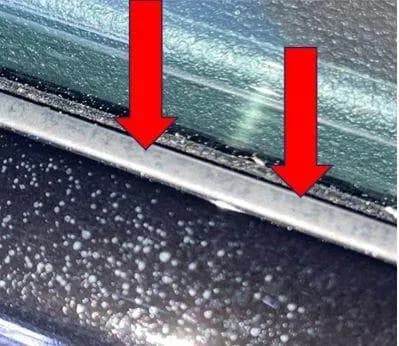
S'applique également à
- Audi A3
- 2022–2025
- Audi e-tron GT
- 2022–2025
- Audi RS 3
- 2022–2024
- Audi RS e-tron GT
- 2022–2024
- Audi S3
- 2022–2025
Audi has released Technical Service Bulletin (TSB) 2074058/2 to provide information regarding paint peeling on black trims and trim strips across various 2022-2026 Audi models. This bulletin clarifies the cause of the Audi black trim peeling issue and its implications for owners.
The affected vehicles include the 2022-2025 Audi A3, S3, and RS 3, the 2022-2025 Audi Q4 e-tron and Q4 Sportback e-tron, and the 2022-2026 Audi e-tron GT, RS e-tron GT, and S e-tron GT models.
Symptoms of Trim Damage
Owners may observe several types of damage on their vehicle's black trims and trim strips. Common complaints include the clear coat peeling from trim strips, a general appearance of coating flawed, or material detaching from the surface. The TSB also notes instances of corrosion or rust forming on door seals.
Other visual indicators of damage include paint color deviation on components like the rear lid spoiler, and paintwork bubbles on door trim molding strips. The bulletin includes photographic examples (Figure 1 and 2) showing the clear coat peeled off from the trim. Additional coating spots (Figure 3) and marks on neighboring rubber components (Figure 4 and 5) caused by applied liquids are also documented. Microscopic views (Figure 6) reveal spots of swelling on the affected surfaces.
Root Cause of the Peeling
Laboratory analyses conducted by Audi have concluded that the primary cause of the Audi black trim peeling is the use of overly aggressive cleaning solutions. These solutions, often combined with high-pressure cleaning, can irreversibly damage the vehicle's coating.
Specifically, industrial dirt removers, insect removers, and wheel cleaners are identified as culprits. The TSB explains that the application method, duration, and subsequent high-pressure cleaning contribute to the damage. Molecular analysis of the damaged surfaces revealed traces of phosphorus (P) and fluorine (F), elements not found in conventional anodizing or coating layers but commonly present in commercial cleaning products.
Important Owner Information
Audi has explicitly stated that this issue does not constitute a fault which is covered by warranty. This means that any damage resulting from the use of aggressive cleaning solutions will not be repaired under the vehicle's warranty.
Owners should be aware that no production solution is applicable, as the damage is attributed to external factors rather than a manufacturing defect. This information is crucial for owners experiencing Audi black trim peeling as it directly impacts potential repair costs.
Preventing Black Trim Damage
To prevent damage to black trims and trim strips, owners should exercise caution when cleaning their vehicles. It is recommended to avoid aggressive cleaning solutions such as industrial dirt removers, insect removers, and certain wheel cleaners. Always use car care products specifically designed for automotive finishes and follow the manufacturer's instructions carefully.
When washing, avoid using high-pressure cleaners directly on trim components, or maintain a safe distance and pressure to prevent coating damage. Regular, gentle cleaning with appropriate products can help maintain the appearance and integrity of your Audi's black trim.
Source: NHTSA ID: 11016529, TSB ID: 2074058/2
Galerie
5 images
Frequently Asked Questions
- What does Audi TSB 2074058/2 address?
- Audi TSB 2074058/2 addresses the issue of paint peeling on black trims and trim strips on various 2022-2026 Audi models, including the A3, S3, RS 3, Q4 e-tron, and e-tron GT series.
- What causes the Audi black trim peeling according to the TSB?
- The TSB states that the primary cause of the Audi black trim peeling is the use of aggressive cleaning solutions, such as industrial dirt removers, insect removers, and wheel cleaners, especially when combined with high-pressure cleaning.
- Is the black trim paint peeling covered under Audi's warranty?
- No, Audi Technical Service Bulletin 2074058/2 explicitly states that this issue does not constitute a fault covered by warranty, meaning repairs for this type of damage are not covered.
- How can I prevent paint peeling on my Audi's black trim?
- To prevent paint peeling on your Audi's black trim, avoid using aggressive cleaning solutions like industrial dirt removers, insect removers, and certain wheel cleaners. Always use car-specific cleaning products and avoid high-pressure washing directly on trim components.
Related Articles
2022-2026 Audi e-tron GT 12V Battery Discharged TSB 2075846/3
Audi Technical Service Bulletin 2075846/3 addresses a discharged 12V battery condition in 2022-2026 e-tron GT and RS e-tron GT vehicles, often accompanied by DTC P1D6C00. This TSB outlines a software update procedure to resolve the issue.
2025-2026 Audi e-tron GT Active Suspension Noise TSB
Audi has released Technical Service Bulletin 2080798/1 for 2025-2026 e-tron GT and RS e-tron GT models equipped with active suspension (PR code 1P8). It addresses noises heard when driving over bumps and outlines diagnostic procedures for technicians.
2026 Audi e-tron GT Roll Stabilization Configuration Aborted TSB
Audi Technical Service Bulletin 2080608/1 addresses an issue where roll stabilization configuration for diagnostic addresses 00D4 and 00D5 is aborted on 2026 Audi e-tron GT and RS e-tron GT vehicles. This TSB provides diagnostic steps for technicians.
2021-2026 Audi Ceramic Brake Repair Advisory
Audi has released a manufacturer communication, NHTSA ID 11027374, regarding ceramic brake repairs on various 2021-2026 Audi models. Technicians are required to contact the Technical Assistance Center (TAC) before proceeding with any brake service on vehicles equipped with ceramic brakes.
2022-2026 Audi e-tron GT C1399F0 Brake-In Mode TSB
Audi Technical Service Bulletin (TSB) 2063679/6 addresses Diagnostic Trouble Code (DTC) C1399F0 in 2022-2026 Audi e-tron GT, RS e-tron GT, and S e-tron GT models. This code indicates the vehicle is in a normal brake application mode for new or replaced brake components and typically requires no…
Leave a comment
Comments are moderated and may take a moment to appear. Only your first name and the initial of your last name are shown publicly.
Comments
Be the first to comment.