2022-2026 Audi e-tron GT Brake Disc Surface Cracks TSB
Audi Technical Service Bulletin 45 24 50 2065341/3 addresses owner concerns about surface cracks on the tungsten carbide brake discs of 2022-2026 Audi e-tron GT and RS e-tron GT models, confirming these are normal 'relaxation cracks' and do not affect brake performance.
 Sarah Mitchell2026 Audi S e-tron GT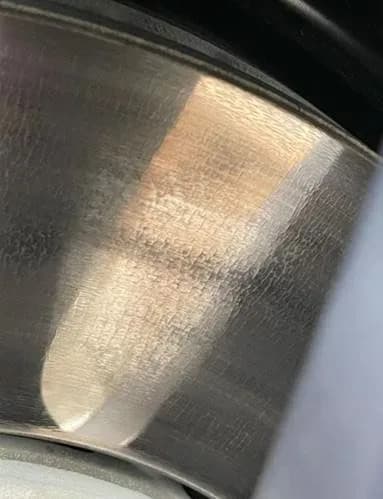
Also applies to
- Audi e-tron GT
- 2022–2025
- Audi RS e-tron GT
- 2022–2024
Audi has released Technical Service Bulletin (TSB) 45 24 50 2065341/3 to address customer inquiries regarding the appearance of surface cracks on the tungsten carbide brake discs of certain e-tron GT models. This TSB clarifies that these visible marks are a normal characteristic of the brake system and do not indicate a fault or compromise vehicle safety or performance. Owners searching for information about Audi e-tron GT brake disc surface cracks can find reassurance in this bulletin.
What are "Brake Discs Surface Cracks"?
Owners may observe "Cracks on the friction surface of the tungsten carbide brake disc." These are not signs of damage or defect. The TSB explains that the tungsten carbide brake disc features a hard metal layer applied using a specialized process.
During normal operation, the brake system experiences different temperatures and thermal expansions between this hard metal layer and the base disc. To compensate for these expansions, a network of fine surface cracks, referred to as "relaxation cracks," forms on the disc surface. These Audi e-tron GT brake disc surface cracks are a natural occurrence.
Important Information for Owners
Audi explicitly states that these relaxation cracks are normal and have no negative impact on the functions or comfort of the brake system. Therefore, if you notice these cracks on your vehicle's brake discs, there is no need for concern or immediate action.
Furthermore, this TSB is purely informational. It is not applicable to any Audi Warranty, meaning that the presence of these normal surface cracks will not be covered under warranty for replacement or repair, as they are not considered a defect.
TSB History and Revisions
Technical Service Bulletin 45 24 50 2065341/3 was initially published on December 13, 2021, as Revision 1. It superseded Technical Service Bulletin Group 45 number 23-34, which was dated June 29, 2023. The latest revision, Revision 3, was issued on September 10, 2024, primarily to update the header with added model year information.
What to Do if You Notice Cracks
If you observe Audi e-tron GT brake disc surface cracks on your vehicle, you can have the condition confirmed by an authorized Audi dealership. However, based on the information in TSB 45 24 50 2065341/3, no repair or service action is necessary as these cracks are a normal characteristic of the brake system.
Source: NHTSA ID: 11009352
Frequently Asked Questions
- Are the surface cracks on my Audi e-tron GT brake discs dangerous?
- No, according to Audi Technical Service Bulletin 45 24 50 2065341/3, the 'relaxation cracks' on the tungsten carbide brake discs of 2022-2026 Audi e-tron GT and RS e-tron GT models are normal and have no negative impact on the brake system's function or comfort.
- What causes the 'Brake discs surface cracks' on Audi e-tron GT models?
- These surface cracks are caused by different thermal expansions between the hard metal layer and the base disc of the tungsten carbide brake disc during vehicle operation. They are a natural result of the manufacturing process and are referred to as 'relaxation cracks'.
- Will Audi fix the brake disc surface cracks under warranty?
- No, Audi Technical Service Bulletin 45 24 50 2065341/3 states that this information is for clarification only and is not applicable to any Audi Warranty. Since the cracks are considered a normal condition, they will not be covered for repair or replacement.
Related Articles
2022-2026 Audi e-tron GT 12V Battery Discharged TSB 2075846/3
Audi Technical Service Bulletin 2075846/3 addresses a discharged 12V battery condition in 2022-2026 e-tron GT and RS e-tron GT vehicles, often accompanied by DTC P1D6C00. This TSB outlines a software update procedure to resolve the issue.
2025-2026 Audi e-tron GT Active Suspension Noise TSB
Audi has released Technical Service Bulletin 2080798/1 for 2025-2026 e-tron GT and RS e-tron GT models equipped with active suspension (PR code 1P8). It addresses noises heard when driving over bumps and outlines diagnostic procedures for technicians.
2026 Audi e-tron GT Roll Stabilization Configuration Aborted TSB
Audi Technical Service Bulletin 2080608/1 addresses an issue where roll stabilization configuration for diagnostic addresses 00D4 and 00D5 is aborted on 2026 Audi e-tron GT and RS e-tron GT vehicles. This TSB provides diagnostic steps for technicians.
2021-2026 Audi Ceramic Brake Repair Advisory
Audi has released a manufacturer communication, NHTSA ID 11027374, regarding ceramic brake repairs on various 2021-2026 Audi models. Technicians are required to contact the Technical Assistance Center (TAC) before proceeding with any brake service on vehicles equipped with ceramic brakes.
2022-2026 Audi e-tron GT C1399F0 Brake-In Mode TSB
Audi Technical Service Bulletin (TSB) 2063679/6 addresses Diagnostic Trouble Code (DTC) C1399F0 in 2022-2026 Audi e-tron GT, RS e-tron GT, and S e-tron GT models. This code indicates the vehicle is in a normal brake application mode for new or replaced brake components and typically requires no…
Leave a comment
Comments are moderated and may take a moment to appear. Only your first name and the initial of your last name are shown publicly.
Comments
Be the first to comment.