2023-2024 Audi e-tron GT High-Voltage Battery Software Update
Audi has released Technical Service Bulletin 931D, an update for the high-voltage battery diagnostic software in 2023-2024 e-tron GT and RS e-tron GT models. This update addresses potential irregularities indicated by a warning lamp in the instrument cluster.
 Sarah Mitchell2023 Audi RS e-tron GT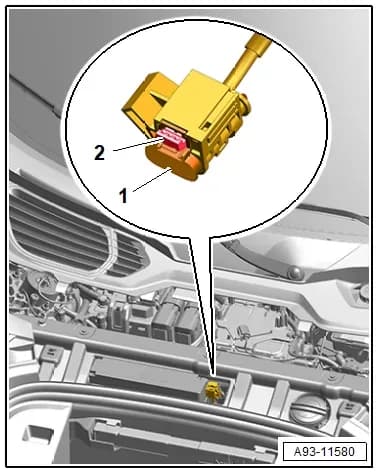
También aplica a
- Audi e-tron GT
- 2023–2024
- Audi RS e-tron GT
- 2024
Introduction to the 931D Update
Audi has issued Technical Service Bulletin (TSB) 931D to update the high-voltage battery diagnostic software in specific 2023-2024 Audi e-tron GT and RS e-tron GT models. This update, identified as 931D, is part of Audi's quality assurance process to enhance the monitoring and diagnostic capabilities of the high-voltage battery system.
The primary goal of this software revision is to improve the detection of potential irregularities within the high-voltage battery. By updating the diagnostic software, the system can more accurately identify and signal any issues, typically through a "warning lamp in the instrument cluster."
Symptoms
Owners of affected 2023-2024 Audi e-tron GT vehicles may notice a "warning lamp in the instrument cluster" illuminating. This warning indicates that the vehicle's high-voltage battery diagnostic system has detected potential irregularities. The TSB aims to refine the software responsible for detecting and reporting these conditions.
Diagnosis
To determine if your Audi e-tron GT high-voltage battery software requires this update, an authorized Audi dealer will check the ELSA Campaign/Action Information screen. The vehicle must display the 931D code in this system, indicating eligibility for the update. Additionally, the vehicle must be within its New Vehicle Limited Warranty period.
Important Warnings and Owner Information
Owners should be aware of several critical points regarding this update:
- Dealer Verification is Key: The ELSA system is the only valid source for verifying vehicle eligibility for this update. Other systems are not considered valid and may lead to non-payment of a claim.
- No Customer Notification: Audi is NOT notifying consumers directly about this software update. Owners must proactively inquire with their dealer.
- Radiator Fan Safety: During the update process, the "Radiator Fan(s) may cycle ON high speed." There is a serious risk of personal injury if contact is made with spinning fan blades. Technicians are instructed to keep hands and all objects away from the radiator fan(s) during the update.
- Warranty Claim Reimbursement: A warranty claim for this update may not be reimbursed if the Software Version Management (SVM) process is not completed in its entirety, or if the update fails and ODIS feedback is not sent prior to further diagnosis.
- Connectivity Requirements: The VAS Diagnostics Interface MUST ONLY be connected to the tester with a USB cable. Performing a software update using a Bluetooth or Wi-Fi connection significantly increases the risk of losing connection, potentially damaging the control module. It also extends the time required for the update.
- Do Not Use GFF: Technicians are explicitly instructed to "DO NOT USE Guided Fault Finding (GFF)" to perform this flash, as it will take longer and requests for additional time will not be considered.
Repair Procedure Summary
The repair involves updating the high-voltage battery diagnostic software using the Audi diagnostic system. The general procedure is as follows:
- Preparation: Ensure the ODIS software is up to date. Connect a battery charger capable of maintaining 100 A and ensuring charging voltage above 14V throughout the update. All vehicle consumers (lights, AC, heated seats) must be switched off. The screen saver and power saving settings on the diagnostic tester must be disabled. The VAS Diagnostic Tester must be plugged in via its power adapter and connected to the vehicle via a USB cable.
- Vehicle Setup: Move the selector lever to 'P' and open the hood. Disconnect the High-Voltage System Maintenance Connector - TW - and ensure the hood remains open during the flash.
- Software Update: Launch the diagnostic tester in 'FLASH' operating mode. Select "SVM – Code Input" and enter the SVM code 93SWA799. Follow the on-screen prompts to perform the software update.
- Post-Update: Reconnect the High-Voltage System Maintenance Connector - TW -. Ensure the diagnostic log is sent to GFF Paperless when exiting the FLASH program.
Required Tools or Parts
Authorized Audi service facilities will require specific tools to perform this software update:
- Battery Tester/Charger: -VAS5908- (or an equivalent charger with a current rating of at least 100A).
- Diagnostic Tester: -VAS6150X/VAS6160X- (or an equivalent diagnostic tool).
Warranty Information
This update, identified by Service Number 931D, is covered under the New Vehicle Limited Warranty. Dealers should enter the claim as soon as possible after completion to prevent duplicate work. The Damage Code is 0099, and the Parts Vendor Code is 002. For sold vehicles, the Claim Type is 7 10, and for unsold vehicles, it is 7 90. Labor is marked as causal. The labor operations are 0151 00 10 (Software update - setup + battery charger) and 0151 00 60 (Software update - GFF Operations).
Source: NHTSA ID: 11021431
Galería
4 imágenes
Frequently Asked Questions
- What is the Audi 931D update for?
- The Audi 931D update is a software enhancement for the high-voltage battery diagnostic system (NVLW) in certain 2023-2024 Audi e-tron GT and RS e-tron GT models. It improves the detection of potential battery irregularities and prevents a "warning lamp in the instrument cluster" from illuminating.
- What symptoms might I notice if my Audi e-tron GT needs this update?
- The primary symptom indicating a need for this update is the illumination of a "warning lamp in the instrument cluster" related to the high-voltage battery. The update aims to refine the diagnostic software that triggers this warning.
- How do I know if my 2023-2024 Audi e-tron GT is affected by TSB 931D?
- To determine if your vehicle is affected, an authorized Audi dealer must check the ELSA Campaign/Action Information screen. Your vehicle must show the 931D code and be within its New Vehicle Limited Warranty period to be eligible for this specific Audi e-tron GT high-voltage battery software update.
- Will I be notified by Audi about this 931D software update?
- No, Audi is not directly notifying consumers about this software update. Owners should contact their authorized Audi dealer to inquire about the 931D update and schedule service if their vehicle is eligible.
- Is there any cost for the Audi 931D high-voltage battery software update?
- No, this software update, identified by Service Number 931D, is performed free of charge under the vehicle's New Vehicle Limited Warranty at an authorized Audi dealership.
Related Articles
2022-2024 Audi e-tron GT / RS e-tron GT Door Paint Damage TSB
If your 2022-2024 Audi e-tron GT or RS e-tron GT has paint damage on the front door, it may be due to the door colliding with the wing panel trim. Technical Service Bulletin 2072290/2 describes the cause and repair procedure for this issue.
2022-2024 Audi e-tron GT Radiator Fan Stuck DTC P2B3000
Audi Technical Service Bulletin 2073599/4 details issues with radiator fans getting stuck (DTCs P2B3000, P2B3200) in 2022-2024 Audi e-tron GT and RS e-tron GT vehicles. This can lead to reduced heating, cooling, drive power, and charging capacity due to foreign objects.
2023 Audi e-tron GT Charging Port Door Not Opening TSB
Audi Technical Service Bulletin (TSB) 2070578/3 provides diagnostic and repair information for 2023 Audi e-tron GT and RS e-tron GT vehicles where the charging port door fails to open or close, or displays incorrect status messages. The issue is typically linked to a faulty charging port door…
2022-2024 Audi e-tron GT High-Voltage Charger Conversion TSB
Audi has issued Technical Service Bulletin (TSB) 11022683 for 2022-2024 e-tron GT and RS e-tron GT models. This bulletin provides information on converting the high-voltage battery charger from a 22kW to an 11kW configuration.
2022-2024 Audi e-tron GT High-Voltage Battery Replacement TSB
Audi Technical Service Bulletin 2077772/1 addresses the required work when replacing the high-voltage battery in 2022-2024 e-tron GT models. This TSB outlines the new battery part number, necessary attachments, and specific SVM codes for re-energizing the system.
Leave a comment
Comments are moderated and may take a moment to appear. Only your first name and the initial of your last name are shown publicly.
Comments
Be the first to comment.