2022-2024 Audi e-tron GT AC, Gearbox, Charging Issues TSB 91VT
Audi has released Technical Service Bulletin 91VT to address multiple issues in 2022-2024 e-tron GT and RS e-tron GT models, including air conditioning malfunctions, gearbox lock problems, and high-voltage battery charging issues. This customer satisfaction package involves sensor…
 Sarah Mitchell2023 Audi RS e-tron GT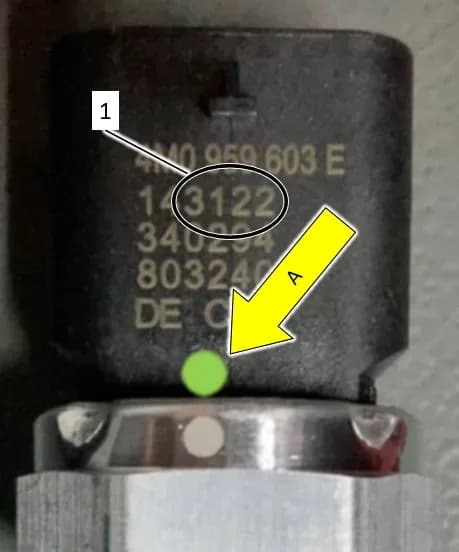
Also applies to
- Audi e-tron GT
- 2022–2024
- Audi RS e-tron GT
- 2022, 2024
Audi has released Technical Service Bulletin (TSB) 91VT, titled "91VT UPDATE Customer Satisfaction Package – (NVLW)", to address several potential issues affecting 2022-2024 Audi e-tron GT and RS e-tron GT vehicles. This proactive update aims to prevent problems related to the air conditioning system, gearbox locking mechanism, and high-voltage battery charging. Owners experiencing symptoms such as non-functional AC, a gearbox warning message, or charging difficulties should consult an authorized Audi dealer for this update.
The TSB 91VT was originally published on September 4, 2024, and was revised on October 2, 2024, as Revision 2. This revision updated the applicable vehicles chart, claiming and parts information, and work instructions. Revision 1 was the original publication on September 4, 2024. This update ensures that your Audi e-tron GT AC gearbox charging systems operate correctly and reliably.
Symptoms
Owners of affected vehicles may experience one or more of the following conditions, categorized by specific criteria:
- Air Conditioning Malfunction (Criteria K1): On Audi vehicles from a certain production period, the air conditioning pressure temperature sensors (G395, G826, G827) may fail. As a result, the air conditioning does not work. This is a common concern for the Audi e-tron GT AC gearbox charging system.
- Gearbox Lock Issues (Criteria 01): After turning off the engine by pushing the start/stop button, the gearbox lock could possibly not be in the end position. This can result in the lock no longer releasing and a warning message appearing on the instrument cluster: "gearbox error, max 120km/h, go to workshop."
- High-Voltage Battery Charging Problems (Criteria 02 & 03): These issues can manifest as an unauthorized display of the Turtle LED for a short time when the ignition (KL15) is off (indicating the HV system is in the state "not ready to drive"). Other symptoms include a charging duration loop at less than 100% or a charging abort indicated by a red LED. In such cases, fast charging may no longer be possible.
Important Warnings for Owners and Technicians
This TSB includes critical warnings to ensure safety and proper repair procedures. Owners should be aware of these points, and technicians must adhere strictly to them:
- Refrigerant Handling: During the inspection of refrigerant pressure/temperature sensors, technicians are explicitly instructed: "Do not recover the refrigerant charge during the inspection section." If sensor replacement is necessary, a significant safety warning is issued: "Danger of frostbite due to refrigerant coming out under pressure. Frostbite on the skin and other parts of the body is possible." Technicians must wear safety gloves and protective eyewear, and carefully evacuate or drain refrigerant.
- Software Update Precautions: Audi emphasizes specific procedures for software updates. "DO NOT USE Guided Fault Finding (GFF) to perform this flash. Using GFF will cause the flash to take longer. Requests for additional time will be denied if the GFF log shows the update was performed using Bluetooth or WiFi." Furthermore, "The VAS Diagnostics Interface MUST ONLY be connected to the tester with a USB cable." Failure to follow these instructions can lead to control module damage and non-payment of warranty claims.
- Battery Charger Voltage: A critical warning states: "If the software update is performed with an insufficient charging voltage, damage to one or more control units may occur." The battery charger must be set to 14.8 Volts during the update process, and voltage must remain above 12.5 volts.
- Radiator Fan Risk: "Radiator Fan(s) may cycle ON high speed during the Update Process! There is a serious risk that personal injury may result if contact is made with spinning fan blades. Keep hands and all objects away from Radiator Fan(s) during Update Process!"
- Prerequisite Service Action: "Service Action 93P9 must be performed before completing this software update." This indicates a mandatory precursor step.
- Failed Software Update: "If the software update fails for any reason, ODIS feedback must be sent prior to further diagnosis. This ensures the failure/error is reported. Failure to do so may result in non-payment of consequential requests for additional time or parts."
- Dealer Inventory: The procedure must be performed on applicable vehicles in dealer inventory prior to sale.
- TAC Case Avoidance: If the error message "Configuration on control unit 0046 – convenience system central module could not be performed" is displayed during flashing, technicians are advised to select option #1 and the "Complete/Next tab" and "DO NOT create a TAC case as this is not required."
Diagnosis
For the Audi e-tron GT AC gearbox charging issues, diagnosis depends on the specific criteria identified:
- For AC issues (K1): Technicians will inspect the G395, G826, and G827 refrigerant pressure/temperature sensors. They will visually check for a green dot on each sensor. If any sensor lacks a green dot, its production date will be checked. Sensors produced on or before calendar week 31 of 2021 require replacement. The production date format is typically week/year.
- For gearbox and charging issues (01, 02, 03): The primary diagnostic step involves verifying the vehicle's eligibility for the 91VT update using the ELSA Campaign/Action Information screen. The status must show "open." A full diagnostic scan using Guided Fault Finding (GFF) is performed before the software update, and the diagnostic protocol must be sent online. The diagnostic session should be saved for later use if needed.
Repair Procedure Summary
The repair for the Audi e-tron GT AC gearbox charging problems involves either sensor replacement or software updates, depending on the identified criteria. The procedure is divided into sections based on the criteria.
Criteria K1: Air Conditioning Sensor Inspection and Replacement (Sections B & C)
- Inspection (Section B): Technicians will access the G395, G826, and G827 refrigerant pressure/temperature sensors. The TSB provides images (labeled 1, 2, 3) illustrating the locations of these sensors. Crucially, they are inspected without removal or refrigerant recovery. A green dot on all three sensors indicates they do not require replacement. If a green dot is absent, the production date (e.g., calendar week 31 of 2022 in the example image) is checked. Sensors produced on or before calendar week 31 of 2021 require replacement.
- Replacement (Section C): If sensor replacement is necessary, the refrigerant circuit must be evacuated or drained. The affected sensor(s) (part number 4M0-959-603-E) are then replaced. After replacement, the A/C system is recharged with R1234yf refrigerant and G-052-535-1M-DSP oil.
- Reassembly: The vehicle is reassembled in reverse order of removal. Specific torque specifications must be observed: wheel bolts to 160 Nm, luggage compartment light bracket bolt to 3 Nm, luggage compartment bolts to 8 Nm, and wiper arm nuts to 30 Nm.
Criteria 01, 02, and 03: Combined Software Update (Sections D & E)
Before performing any software update, several critical conditions must be met to prevent damage to control modules:
- The ODIS software on the diagnostic tester (VAS6150X/VAS6160X) must be completely up to date.
- A battery charger (VAS5908 or equivalent, rated at least 90A) must be connected to the vehicle battery, maintaining voltage above 12.5 volts (preferably 14.8 volts) throughout the update. Control modules damaged by insufficient voltage will not be covered under warranty.
- The screen saver and power-saving settings on the diagnostic tester must be off to prevent it from entering power save mode during the update.
- The VAS Diagnostic Tester must be plugged in using its supplied power adapters and connected to the vehicle via a USB cable. Bluetooth or Wi-Fi connections are strictly prohibited due to increased risk of connection loss and potential control module damage.
- All vehicle consumers (air conditioning, heater blower motor, lights, heated seats, etc.) must be switched off.
- A full diagnostic scan must be performed using GFF, and the diagnostic protocol sent online. The diagnostic session should be saved.
- A bus sleep procedure must be performed for at least five minutes with the 12V charger disconnected. This involves closing all doors, hood, and rear lid, locking the vehicle, and waiting for all interior lighting to go off.
- The selector lever must be in 'P' (Park).
- The software update should only begin when the voltage displayed on the ODIS tester is above 14V.
Software Update Procedure:
- Operating Mode: Use the FLASH operating mode in ODIS, with the communication path set to CAN.
- SVM Code Input: Select "SVM – Code Input" and enter the appropriate SVM code.
- For Criteria 01 (convenience system control module software update) and 02 (high-voltage battery control module software update), the SVM code is SWVGTA001.
- For Criteria 03 (convenience system control module and high-voltage battery control module software update), the SVM code is 91VTA396.
- On-Screen Prompts: Follow the on-screen prompts during the update process.
- Post-Update Steps: After the software update, check the instrument cluster for any fault messages or warning lamps. Perform another bus sleep for at least five minutes with the 12V charger disconnected. If any warnings related to the parking brake position are present, a parking brake calibration must be performed. This involves resuming the previous GFF session, opening guided functions for diagnostic address 0003, and performing the test plan "0003 – calibrate parking brake." The battery charger must be restored to its original voltage value after the update.
- Error Handling: If the "High-voltage charging active - precondition not met" error message appears after the software update, the high voltage system must be deactivated, the software update performed again, and then the high-voltage system reactivated.
- Diagnostic Log: Ensure the diagnostic log is sent to GFF Paperless after completion.
Required Parts
To address the Audi e-tron GT AC gearbox charging issues, the following parts may be required:
- 4M0-959-603-E: AC pressure sensor (up to 3 units)
- G-052-535-1M-DSP: Oil for refrigerant compressor (up to 1.6 ml)
- R1234yf: A/C Refrigerant (up to 98g, locally sourced). This is listed as outside material, with specific cost guidance for USA and Canada.
Initial parts allocation for these items is listed as "NO," meaning dealers must order them as needed. Campaign parts should always be ordered as per the parts information in this circular.
Required Special Tools
Technicians will use specific tools for this service action, ensuring proper execution of the repairs:
- VAS5908: Battery Tester/Charger (or equivalent charger with a current rating of at least 90A)
- VAS6150X/VAS6160X: Diagnostic Tester (or equivalent)
- T40284: Socket - 24mm (or equivalent)
- VAS6122: Engine Bung Set (or equivalent)
- ROB1234YFX or VAS581005: R1234yf Air Conditioning Service Unit (or equivalent)
- T40233: Removal Wedge (or equivalent)
- VAS6845: Scraper Set (or equivalent)
- T40280: Omega Clip Tool (or equivalent)
- T40394: Puller - Windshield Wiper (or equivalent)
Warranty Information
This Customer Satisfaction Package is covered under warranty. The Service Number for this action is 91VT, with a Damage Code of 0099 and Parts Vendor Code 002. Claim types are "Sold vehicle: 7 10" and "Unsold vehicle: 7 90." The Causal Indicator varies:
- For VINs without criteria K1: Mark labor as causal.
- For VINs with criteria K1: Mark labor as causal if all SENSORS are OK. Mark any SENSOR* as causal if any sensors are NOT OK.
Important Note: "Do not claim wash/loaner under this action." Dealers must attach an ELSA screen print showing the "open" status to the repair order. If a customer declines campaign work, refer to the "Customer Declines Campaign/Update Repair" section in the Campaign/Update Policy and Procedures Manual.
Labor Operations:
- 0150 00 60: GFF/Guided functions (Time stated on diagnostic protocol). This includes GFF time for pre-flash scan, parking brake position detection, and HV system disabling if necessary.
- 0151 00 10: GFF/Guided functions (includes setup + battery charge) (SEE ELSA for time units).
- 0151 00 60: Software update (Time stated on diagnostic protocol).
- 0150 00 99: Pre and Post flash bus sleep (20 time units).
- 9310 83 00: Disable HV system voltage deactivate and activate (SEE ELSA for time units). This is added only if high-voltage system deactivation is required for the software update.
For Criteria K1 (sensor inspection/replacement), additional labor operations apply:
- 4405 19 51: 1 Wheel remove+reinstall (SEE ELSA for time units).
- 6644 19 50: Cowl panel trim remove+reinstall (SEE ELSA for time units).
- 7007 19 50: Storage compartment remove+reinstall (SEE ELSA for time units).
- 8709 01 99: Check 3 pressure sensors (15 time units).
- 8709 20 50: 3 Pressure switch remove+reinstall (SEE ELSA for time units). Note: This operation includes 4405 19 51 and 7007 19 50; these cannot be claimed separately if 8709 20 50 is claimed.
- 8709 19 50: Pressure switch remove+reinstall (if G395 replaced) (SEE ELSA for time units).
- 8709 19 51: Pressure switch remove+reinstall (if G826 replaced) (SEE ELSA for time units).
- 8709 19 52: Pressure switch remove+reinstall (if G827 replaced) (SEE ELSA for time units).
- 8703 17 00: Refrigerant drain+fill (SEE ELSA for time units).
What Owners Should Do
If you own a 2022-2024 Audi e-tron GT or RS e-tron GT and experience any of the described symptoms related to your Audi e-tron GT AC gearbox charging systems, contact an authorized Audi dealer. They can verify if your vehicle is eligible for this 91VT update and perform the necessary inspections, sensor replacements, or software updates free of charge under the New Vehicle Limited Warranty. Audi requires customer notification in writing, recording all work performed on the repair order.
Source: NHTSA ID: 11009982
Gallery
14 images
Frequently Asked Questions
- What is Audi TSB 91VT?
- Audi TSB 91VT is a Customer Satisfaction Package aimed at preventing and resolving issues with the air conditioning system, gearbox lock, and high-voltage battery charging in certain 2022-2024 Audi e-tron GT and RS e-tron GT vehicles. It involves sensor inspection/replacement and software updates, ensuring proper function of the Audi e-tron GT AC gearbox charging systems.
- What are the common symptoms addressed by TSB 91VT?
- Common symptoms include the air conditioning not working due to sensor failure, a warning message like "gearbox error, max 120km/h, go to workshop" appearing, or problems with high-voltage battery charging such as the Turtle LED displaying incorrectly, charging loops, or charging aborts (red LED).
- Are there any specific warnings I should be aware of regarding this Audi e-tron GT AC gearbox charging update?
- Yes, there are several warnings. Technicians must not use Bluetooth or Wi-Fi for software updates and must connect the diagnostic tool via USB. There's also a risk of frostbite if refrigerant is handled improperly during sensor replacement, and radiator fans may run at high speed during the update process, posing a safety risk. Additionally, a prerequisite Service Action 93P9 must be completed first, and technicians are warned against using Guided Fault Finding (GFF) for flashing.
- Will I be charged for the repairs under TSB 91VT?
- No, this is a Customer Satisfaction Package and the repairs are typically covered under the New Vehicle Limited Warranty. You should not be charged for the inspection, sensor replacement, or software updates if your vehicle is eligible. Dealers are instructed to verify eligibility through the ELSA system.
- What parts and tools are involved in the repair for the Audi e-tron GT AC gearbox charging issues?
- The repair may involve replacing AC pressure sensors (part number 4M0-959-603-E), refrigerant oil (G-052-535-1M-DSP), and R1234yf refrigerant. Special tools include specific battery chargers (VAS5908), diagnostic testers (VAS6150X/VAS6160X), and various other tools like sockets (T40284), removal wedges (T40233), and an A/C service unit (ROB1234YFX or VAS581005).
Related Articles
2022-2024 Audi e-tron GT / RS e-tron GT Door Paint Damage TSB
If your 2022-2024 Audi e-tron GT or RS e-tron GT has paint damage on the front door, it may be due to the door colliding with the wing panel trim. Technical Service Bulletin 2072290/2 describes the cause and repair procedure for this issue.
2022-2024 Audi e-tron GT Radiator Fan Stuck DTC P2B3000
Audi Technical Service Bulletin 2073599/4 details issues with radiator fans getting stuck (DTCs P2B3000, P2B3200) in 2022-2024 Audi e-tron GT and RS e-tron GT vehicles. This can lead to reduced heating, cooling, drive power, and charging capacity due to foreign objects.
2023 Audi e-tron GT Charging Port Door Not Opening TSB
Audi Technical Service Bulletin (TSB) 2070578/3 provides diagnostic and repair information for 2023 Audi e-tron GT and RS e-tron GT vehicles where the charging port door fails to open or close, or displays incorrect status messages. The issue is typically linked to a faulty charging port door…
2022-2024 Audi e-tron GT High-Voltage Charger Conversion TSB
Audi has issued Technical Service Bulletin (TSB) 11022683 for 2022-2024 e-tron GT and RS e-tron GT models. This bulletin provides information on converting the high-voltage battery charger from a 22kW to an 11kW configuration.
2023-2024 Audi e-tron GT High-Voltage Battery Software Update
Audi has released Technical Service Bulletin 931D, an update for the high-voltage battery diagnostic software in 2023-2024 e-tron GT and RS e-tron GT models. This update addresses potential irregularities indicated by a warning lamp in the instrument cluster.
Leave a comment
Comments are moderated and may take a moment to appear. Only your first name and the initial of your last name are shown publicly.
Comments
Be the first to comment.