2022-2024 Audi e-tron GT Knocking Brake Pedal Noise TSB
Audi has issued Technical Service Bulletin (TSB) 2071255/1 for 2022-2024 e-tron GT and RS e-tron GT models regarding a knocking noise when releasing the brake pedal. This TSB clarifies that the noise is a normal characteristic during the vehicle's break-in period.
 Ahmet Topcu2023 Audi RS e-tron GT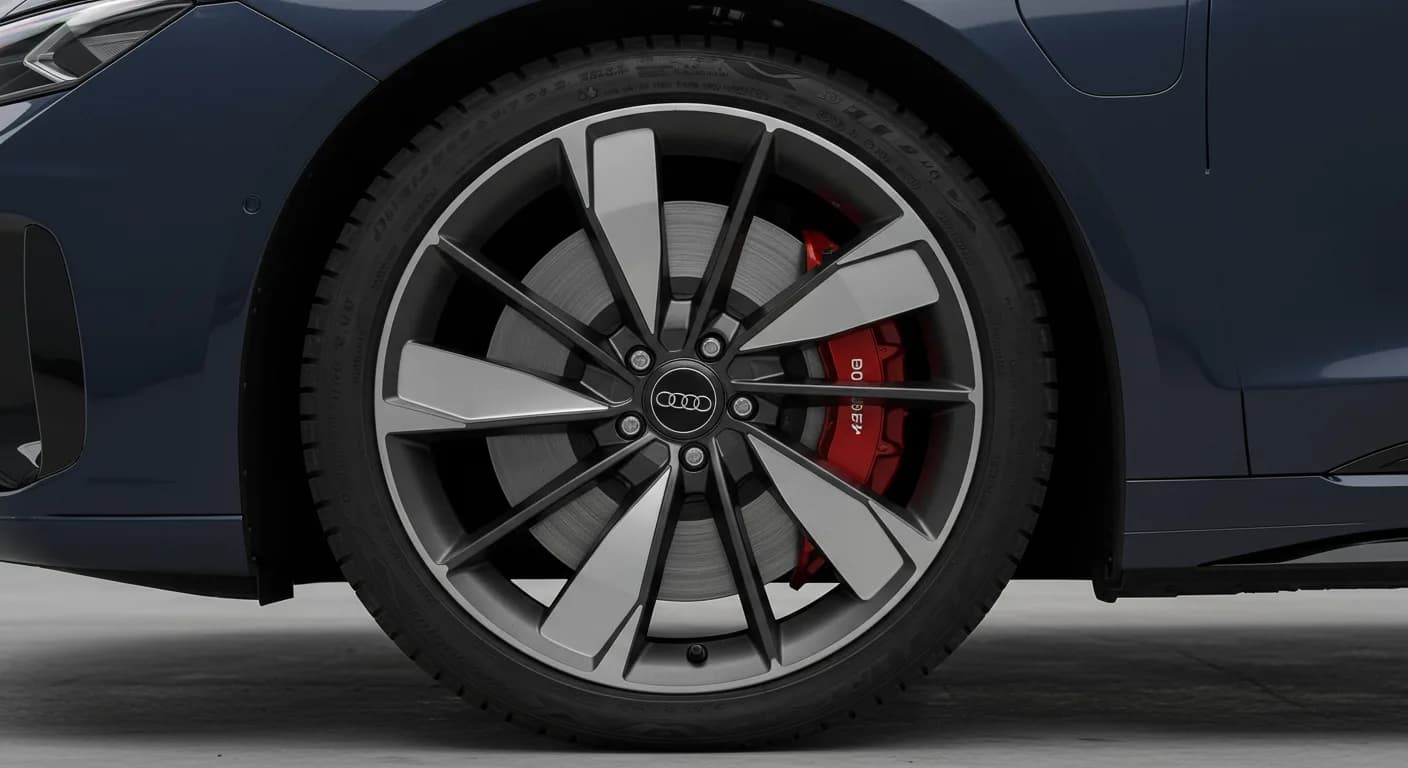
Also applies to
- Audi e-tron GT
- 2022–2024
- Audi RS e-tron GT
- 2022, 2024
Owners of 2022-2024 Audi e-tron GT and RS e-tron GT models may notice a specific knocking noise when releasing the brake pedal. This condition, described in Audi Technical Service Bulletin (TSB) 47 23 24 2071255/1, issued on August 18, 2023, is a normal characteristic during the vehicle's initial break-in period and does not indicate a fault. This TSB, also referenced as 2071255, provides crucial information for owners and technicians.
Symptoms and Conditions
Drivers may report an audible knocking noise when releasing the brake pedal. Workshop findings confirm that this noise can be consistently reproduced. The condition is specifically observed when the vehicle's "break-in mode" is active, which results in the temporary deactivation of the recuperation function.
Technical Background
Audi's TSB 2071255/1 explains the underlying reason for this sound. During the break-in mode, the vehicle's energy recuperation system is intentionally deactivated. This means that the hydraulic brake system is the sole method of retardation (slowing down the vehicle). The audible operation noise that originates from the brake master cylinder when the brake pedal is released is then perceived as a distinct knocking sound. This is not a malfunction but rather a characteristic sound of the hydraulic system operating under these specific conditions without the assistance of recuperation.
Important Information for Owners
Audi emphasizes several key points for owners regarding this Audi e-tron GT knocking brake pedal phenomenon:
- "No measures or replacement parts are required. This scenario represents normal behavior."
- "This TSB is informational only and not applicable to any Audi Warranty."
- The document explicitly states "Production Solution: Not applicable" and "Required Parts and Tools: Not applicable," reinforcing that no repair or parts are needed.
These statements confirm that the knocking noise is an expected operational characteristic during the break-in period and should not be considered a defect requiring warranty service.
Resolution and Owner Action
The knocking noise when releasing the brake pedal is temporary and will resolve itself. The break-in mode automatically ends based on the driver's profile, typically after the vehicle has been driven for up to 1000 miles. Once the break-in period concludes, the recuperation function is reactivated. At this point, the knocking noise will either cease entirely or occur at a significantly reduced level.
If you own a 2022-2024 Audi e-tron GT or RS e-tron GT and experience this Audi e-tron GT knocking brake pedal noise, there is no need for concern or immediate action. No service appointment or repair is necessary for this condition, as it is not a fault and will resolve on its own as your vehicle accumulates mileage. Your dealer will not perform any warranty repair for this specific noise, as it is considered normal behavior.
Source: NHTSA ID: 10241237, TSB 47 23 24 2071255/1
Frequently Asked Questions
- Is a knocking noise when releasing the brake pedal normal in my Audi e-tron GT?
- Yes, Audi Technical Service Bulletin (TSB) 2071255/1 confirms that a knocking noise when releasing the brake pedal is a normal characteristic during the vehicle's break-in mode for 2022-2024 Audi e-tron GT and RS e-tron GT models.
- What causes the Audi e-tron GT knocking brake pedal noise during break-in?
- During the break-in period, the vehicle's recuperation function is deactivated, meaning the hydraulic brake system is solely responsible for retardation. The audible operation noise from the brake master cylinder during this time is perceived as a knocking noise.
- Do I need to get my Audi e-tron GT serviced for this brake pedal noise?
- No, according to TSB 2071255/1, no measures or replacement parts are required. This condition is considered normal behavior and will typically resolve itself once the break-in mode ends, usually after up to 1000 miles of driving.
- Will the knocking noise when releasing the brake pedal go away?
- Yes, the noise is expected to disappear or significantly reduce once the break-in mode automatically ends, which typically occurs after approximately 1000 miles of driving. At this point, recuperation is reactivated.
Related Articles
2022-2024 Audi e-tron GT / RS e-tron GT Door Paint Damage TSB
If your 2022-2024 Audi e-tron GT or RS e-tron GT has paint damage on the front door, it may be due to the door colliding with the wing panel trim. Technical Service Bulletin 2072290/2 describes the cause and repair procedure for this issue.
2022-2024 Audi e-tron GT Radiator Fan Stuck DTC P2B3000
Audi Technical Service Bulletin 2073599/4 details issues with radiator fans getting stuck (DTCs P2B3000, P2B3200) in 2022-2024 Audi e-tron GT and RS e-tron GT vehicles. This can lead to reduced heating, cooling, drive power, and charging capacity due to foreign objects.
2023 Audi e-tron GT Charging Port Door Not Opening TSB
Audi Technical Service Bulletin (TSB) 2070578/3 provides diagnostic and repair information for 2023 Audi e-tron GT and RS e-tron GT vehicles where the charging port door fails to open or close, or displays incorrect status messages. The issue is typically linked to a faulty charging port door…
2022-2024 Audi e-tron GT High-Voltage Charger Conversion TSB
Audi has issued Technical Service Bulletin (TSB) 11022683 for 2022-2024 e-tron GT and RS e-tron GT models. This bulletin provides information on converting the high-voltage battery charger from a 22kW to an 11kW configuration.
2023-2024 Audi e-tron GT High-Voltage Battery Software Update
Audi has released Technical Service Bulletin 931D, an update for the high-voltage battery diagnostic software in 2023-2024 e-tron GT and RS e-tron GT models. This update addresses potential irregularities indicated by a warning lamp in the instrument cluster.
Leave a comment
Comments are moderated and may take a moment to appear. Only your first name and the initial of your last name are shown publicly.
Comments
Be the first to comment.