2024-2026 Audi Q8 AC Cooling Output Insufficient TSB
Audi Technical Service Bulletin 87 25 98 2064077/6 details issues with insufficient air conditioning cooling output and evaporator leaks in various 2024-2026 Audi models, including the Q8. Learn about symptoms, diagnosis, and the repair process.
 Marcus Weber2025 Audi Q8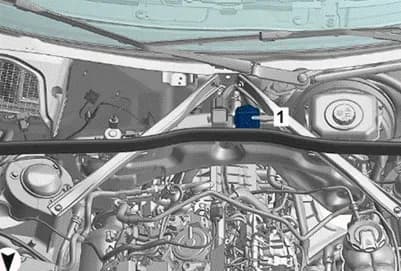
S'applique également à
- Audi A4
- 2021–2025
- Audi A4 allroad
- 2021–2025
- Audi A5
- 2021–2024
- Audi A6
- 2021–2025
- Audi A6 allroad
- 2021–2025
- Audi A7
- 2021–2025
- Audi A7 e
- 2021–2022
- Audi A8 L e
- 2021
- Audi e-tron GT
- 2022–2025
- Audi Q5
- 2021–2025
- Audi Q5 e
- 2021, 2023, 2024, 2025
- Audi Q7
- 2021–2025
- Audi Q8
- 2021–2024
- Audi RS 5
- 2021–2024
- Audi RS 6 Avant
- 2021–2025
- Audi RS 7
- 2021–2025
- Audi RS e-tron GT
- 2022–2024
- Audi RS Q8
- 2021–2025
- Audi S e-tron GT
- 2026
- Audi S4
- 2021–2025
- Audi S5
- 2021–2024
- Audi S6
- 2021–2025
- Audi S7
- 2021–2025
- Audi S8
- 2021–2025
- Audi SQ5
- 2021–2025
- Audi SQ7
- 2021–2025
- Audi SQ8
- 2021–2025
▸ Afficher 21 de plus▾ Afficher moins
Audi Technical Service Bulletin (TSB) 87 25 98 2064077/6, issued on January 23, 2025, addresses concerns regarding insufficient air conditioning cooling output and potential leaks in the air conditioning system evaporator for various 2024-2026 Audi models, including the Audi Q8. This bulletin supersedes TSB Group 87 number 24-81 dated July 27, 2024, providing updated information and procedures for diagnosing and repairing these issues. Owners experiencing an Audi Q8 AC leak or poor cooling should be aware of this service information.
Symptoms of Insufficient AC Cooling
Owners of affected Audi vehicles may notice one or both of the following conditions:
- "The air conditioning does not cool the interior."
- "The cooling output of the air conditioning system is insufficient."
Upon inspection, technicians often find that the refrigerant circuit is not filled with the required amount of refrigerant, indicating a leak. The evaporator of the air conditioning system is identified as a potential source for such leaks, though it is not easily accessible from outside the vehicle.
Diagnosis and Leak Detection
Diagnosing an evaporator leak requires specific procedures since the component is not directly accessible. Technicians utilize several methods to detect leaks:
- Electronic Leak Detector: An electronic leak detector can be used to check for refrigerant presence at the center vents. This involves setting the blower to the lowest level and directing air distribution to the dash panel vents. Figure 2 in the TSB illustrates this process.
- Leak Detection Additive: If a leak detection additive is introduced into the refrigerant circuit, its deposits may become visible on the condensation drain after the air conditioner has operated at high load for a sufficient period. These deposits can also be observed on the vehicle's underbody, as shown in Figures 3 and 4 of the bulletin.
- Forming Gas Leak Test: For refrigerant circuits using R134a, R1234yf, and R744, a leak test with forming gas (calibration gas) can be performed. Detailed instructions for this procedure and necessary tools are available in the training module ATP 611 05_2022, titled "SoST - Leak test on the refrigerant circuit R134a, R1234yf and R744 in the Audi Knowledge Tank (AKT)."
Important Warnings for Technicians
This TSB includes critical warnings that technicians must follow during diagnosis and repair:
- WARNING: "For vehicles with refrigerant R744 only the "Leak test with forming gas" method is allowed."
- NOTICE: "Should the evaporator for the Q5 be confirmed leaking by way of this diagnostic procedure and replacement of the evaporator is performed it is necessary to loosen and refasten the Relay and Fuse Carrier 3 -SR3- (shown in figure 5, position 1) in the course of the repair. During reassembly of the vehicle, it is critically important that this relay and fuse carrier is reinstalled in its correct original position. Failure to reinstall the Relay and Fuse Carrier 3 precisely will result in water intrusion and subsequent component damage."
Repair Procedure Summary
If a leak is confirmed in the evaporator, the primary repair involves replacing the evaporator. After the replacement, it is crucial to thoroughly check the entire refrigerant circuit for any additional leaks. Any further leaks must be addressed according to the instructions provided in the Workshop Manual. This repair addresses the root cause of the Audi Q8 AC leak and ensures proper cooling function.
Warranty Information
For warranty claims related to this issue, the Service Number is 8760 and the Damage Code is 0050. Specific labor operations include:
- Check evaporator: Labor operation 8760 0199, covering the time necessary for diagnosis.
- Remove and install evaporator: Labor operation 8760 19xx, which refers to the Standard Repair Time (SRT) for associated operations.
- GFF / Guided Functions: Labor operation 0150 0060, for time stated on the diagnostic protocol.
Warranty claims must adhere to the Audi Warranty Policies and Procedures Manual. If the vehicle is outside of any warranty, this Technical Service Bulletin is for informational purposes only. The claim comment for this TSB is "As per TSB 2064077/6."
NHTSA ID: 11013743
Galerie
2 images
Frequently Asked Questions
- Why is my 2024-2026 Audi Q8's AC not cooling properly?
- Your Audi Q8's air conditioning may not be cooling properly due to a leak in the air conditioning system evaporator, as detailed in Audi Technical Service Bulletin 87 25 98 2064077/6.
- What is Audi TSB 87 25 98 2064077/6 about?
- Audi TSB 87 25 98 2064077/6 addresses insufficient air conditioning cooling output caused by leaks in the evaporator for various 2024-2026 Audi models, including the Q8. It outlines diagnostic steps and the repair procedure.
- How is an AC evaporator leak diagnosed in an Audi?
- Diagnosis involves using an electronic leak detector at the center vents, checking for leak detection additive deposits at the condensation drain or underbody, and performing a forming gas leak test for refrigerants like R134a, R1234yf, and R744.
- Are there any special warnings for this AC repair?
- Yes, for vehicles using R744 refrigerant, only the 'Leak test with forming gas' method is allowed. Additionally, if the evaporator is replaced, it's critical to correctly reinstall the Relay and Fuse Carrier 3 -SR3- to prevent water intrusion and component damage.
Related Articles
2024-2026 Audi MMI Weather Widget 'An error has occurred' TSB
Audi Technical Service Bulletin 2081500/1 addresses the 'An error has occurred' message on the MMI weather widget in 2024-2026 Audi models. This issue typically indicates a missing data plan for the Audi Application Store.
2018-2026 Audi V6 TFSI Drive System Malfunction TSB
Audi Technical Service Bulletin 2081342/1 addresses a "Drive system fault active in instrument cluster" message and associated knock sensor DTCs (P032700, P033200, P032800, P033300) in 2018-2026 V6 TFSI models. This issue is often caused by temporary moisture absorption in the knock sensor housing.
2024-2026 Audi Q8 48V Starter Generator DTCs P0A1A00 P19F800
Audi has released Technical Service Bulletin (TSB) 2076994/7 to address issues with the 48V starter generator (BSG) in 2024-2026 Audi Q8, A6, A7, Q7, and A6 allroad models equipped with MHEV. Owners may experience an illuminated engine warning lamp and various diagnostic trouble codes (DTCs)…
2025 Audi Q8 Bluetooth/Smartphone Interface Connection TSB
Audi Technical Service Bulletin 2079837/2 addresses customer complaints regarding slow or interrupted Bluetooth and Audi smartphone interface connections in 2025 Audi models, including the Q8. The issue stems from a software fault in the emergency call module control unit (DA 0075). The…
2023-2025 Audi On-Car Analysis List for Technicians
Audi's TSB 2066297 outlines an on-car analysis list for technicians, addressing common concerns such as the 48V battery cooling fan DTC P0A8200, B&O extendable tweeter operational issues, and PPE/PPC vehicle time synchronization problems for 2023-2025 Audi models.
Leave a comment
Comments are moderated and may take a moment to appear. Only your first name and the initial of your last name are shown publicly.
Comments
Be the first to comment.