2021-2023 Audi Hard Brake Pedal While Starting TSB
Audi has released Technical Service Bulletin (TSB) 2055646/4 to address a condition where certain 2021-2023 Audi vehicles may exhibit a hard brake pedal when attempting to start the vehicle. This issue is typically caused by dirt particles affecting the non-return valve in the brake servo vacuum…
 Ahmet Topcu2022 Audi Q8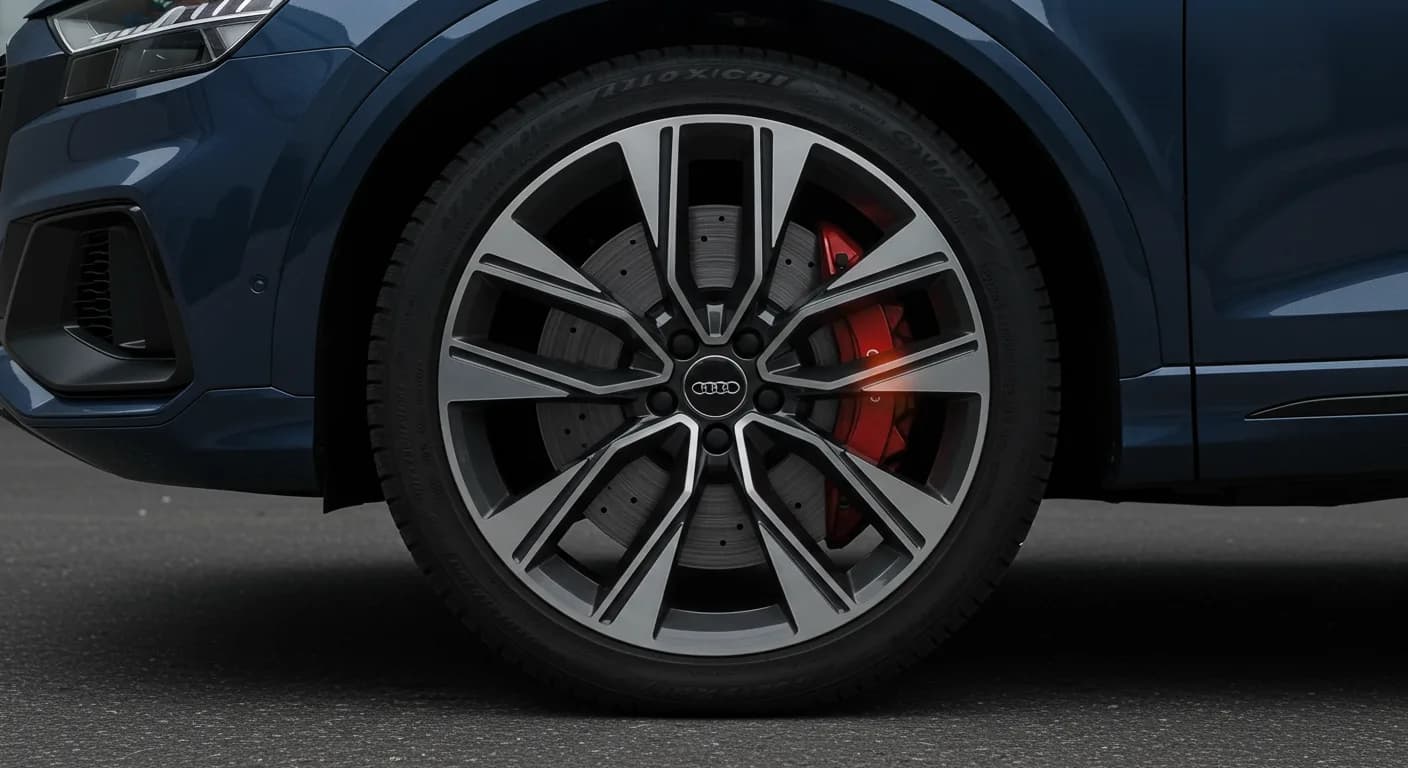
Also applies to
- Audi A4
- 2021
- Audi A4 allroad
- 2021
- Audi A5
- 2021
- Audi A6
- 2021
- Audi A6 allroad
- 2021
- Audi A7
- 2021
- Audi A7 e
- 2021
- Audi Q5
- 2021
- Audi Q7
- 2021–2023
- Audi Q8
- 2021, 2023
- Audi RS 5
- 2021
- Audi RS 6 Avant
- 2021
- Audi RS 7
- 2021
- Audi S5
- 2021
- Audi S6
- 2021
- Audi S7
- 2021
- Audi SQ5
- 2021
▸ Show 11 more▾ Show fewer
Symptoms
Owners of affected 2021-2023 Audi vehicles may notice a specific issue: "After a short stationary period, the vehicle sporadically does not start and there is a hard brake pedal concern." This means that when you attempt to start your car, the brake pedal feels unusually stiff, and the engine may not engage as expected. This "Audi hard brake pedal starting" issue can be intermittent.
Technical Background
The root cause of the "Audi hard brake pedal starting" problem lies within the brake system's vacuum circuit. Dirt particles can accumulate in the non-return valve located in the vacuum hose for the brake servo. This contamination prevents the vacuum in the brake servo from being maintained properly when the vehicle is parked.
Under normal conditions, a vacuum pressure of 600 to 950 millibars (mbar) is expected. However, with a compromised non-return valve, the vacuum can drop by up to 400 mbar within 12 hours, depending on factors like parking position or user behavior. When starting the vehicle, insufficient brake force due to this vacuum loss can prevent the brake light switch from authorizing ignition, leading to the hard brake pedal and no-start condition.
Diagnosis and Repair Procedure
Audi Technical Service Bulletin 2055646/4 outlines the steps technicians should follow to diagnose and repair this issue. The procedure involves a thorough inspection and potential replacement of components:
- Component Inspection: Technicians will check the vacuum hose, sensor G608, connectors, seals, and other valves for any signs of damage.
- Leak Detection: A detailed check for leaks will be performed according to the procedures outlined in the Elsa repair manual, specifically under "Brake System >> 47 Hydraulic Components >> Vacuum System."
- Vacuum Hose Examination: The vacuum hose and its connection points to check valves will be inspected for small cracks or other damage.
- Documentation: If any damage, cracks, or leaks are identified, photographic evidence will be taken and uploaded to the DOC-IT system.
- Component Replacement: Any necessary components found to be damaged or leaking will be replaced following the guidelines in the Elsa Repair Manual, "Brake System >> 47 Hydraulic Components >> Vacuum System."
Required Parts and Tools
For this repair, specific parts are required, and their exact numbers should be confirmed using the ETKA parts catalog:
- Vacuum hose with non-return valve and pressure sensor: One unit is required. The specific part number should be referenced in ETKA.
- Fasteners, Bolts, Nuts, and Screws: As needed for the repair, these should also be sourced via ETKA or Elsa.
Warranty Information
This repair, identified by Service Number 4777 and Damage Code 0010, is typically covered under Audi's warranty programs:
- Standard Warranty: Covered for up to 48 months or 50,000 miles under Claim Type 110.
- CPO Vehicles: Covered for Certified Pre-Owned (CPO) vehicles under Claim Type G10, subject to owner verification.
Labor operations associated with this repair include "Vacuum hose remove + reinstall" (4777 1950), "Brace remove + reinstall" (4086 1999 if applicable), and "Cowl panel trim remove + reinstall" (6644 19XX). Diagnostic time (GFF) and road test times are not subject to additional allowance. All warranty claims must adhere to the Audi Warranty Policies and Procedures Manual, and claims are subject to audit by Audi Warranty.
Important Warnings
Owners should be aware that "If the vehicle is outside any warranty, this Technical Service Bulletin is informational only." This means that if your Audi is no longer under its standard or CPO warranty, you may be responsible for the cost of diagnosis and repair for the hard brake pedal starting issue.
Bulletin History
This Technical Service Bulletin, 47 22 16 2055646/4, was issued on August 11, 2022. It supersedes a previous bulletin, Group 47 number 22-12, dated June 9, 2022, with updates including added model years and revised service procedures.
NHTSA ID: 10217691
Frequently Asked Questions
- What is the issue described in Audi TSB 2055646/4?
- Audi Technical Service Bulletin 2055646/4 addresses a condition where certain 2021-2023 Audi vehicles may experience a "hard brake pedal while attempting to start the vehicle" and may sporadically fail to start.
- What causes the Audi hard brake pedal starting issue?
- The hard brake pedal starting issue is caused by dirt particles affecting the non-return valve in the brake servo's vacuum hose. This prevents the brake system from maintaining adequate vacuum pressure when the vehicle is parked, leading to insufficient brake force for starting.
- How is the hard brake pedal starting problem repaired?
- The repair involves inspecting the vacuum hose, sensor G608, connectors, seals, and valves for damage or leaks. If issues are found, the necessary components, primarily the vacuum hose with the non-return valve and pressure sensor, are replaced according to Audi's repair manual procedures.
- Is the repair for the hard brake pedal starting issue covered under warranty?
- Yes, for vehicles within the standard 48 months/50,000 miles warranty or covered under a Certified Pre-Owned (CPO) warranty, this repair is typically covered. If the vehicle is outside of these warranty periods, the Technical Service Bulletin serves as informational guidance, and costs may apply.
Related Articles
2021-2024 Audi Coolant Pump Leak & DTC P0299 TSB
This Audi Technical Service Bulletin 2070349/6 addresses coolant loss, warning lights, and DTC P0299 related to the mechanical coolant pump in 2021-2024 Audi models with 2.9L or 3.0L V6 TFSI engines. Learn about symptoms, diagnosis, and repair procedures.
2021-2026 Audi Q8 Rear Compartment Noise TSB 2067759/4
Audi has issued Technical Service Bulletin (TSB) 2067759/4 for 2021-2026 Audi Q8 vehicles experiencing a ticking or thumping noise in the rear passenger compartment, especially at idle. The noise is caused by vibrations from the activated charcoal filter solenoid valve (N80) against the EVAP line.
2021-2026 Audi Tensioner Part Number Update SM 63-2025
Audi Special Notice SM 63-2025 informs dealers about an updated tensioner part number. Old part 059-109-467-BB must be returned by December 16, 2025, and replaced with new part 059-109-467-BD to ensure proper inventory.
2022-2024 Audi MLBevo Emergency Call System Warning TSB
Audi Technical Service Bulletin 2079649/1 details a software issue causing an 'Emergency call function: fault' warning in the instrument cluster of 2022-2024 MLBevo vehicles. This TSB provides a software update solution for intermittent communication errors.
2022-2025 Audi Q7/Q8 Third Row Seat Malfunction TSB
Owners of 2022-2025 Audi Q7, SQ7, Q8, SQ8, and RS Q8 vehicles may experience a third row seat malfunction where seats do not fold or lock. Audi TSB 2079211/1 explains this is often due to external blockages and is not covered under warranty.
Leave a comment
Comments are moderated and may take a moment to appear. Only your first name and the initial of your last name are shown publicly.
Comments
Be the first to comment.