2021-2023 Audi Oil Leak Detection TSB 2060750/3
This Audi Technical Service Bulletin (TSB) 2060750/3 outlines a procedure for identifying engine oil leaks in 2021-2023 Audi models using a fluorescent UV additive. It helps diagnose issues such as oil smells, visible oil marks, or engine oil loss.
 Ahmet Topcu2021 Audi Q8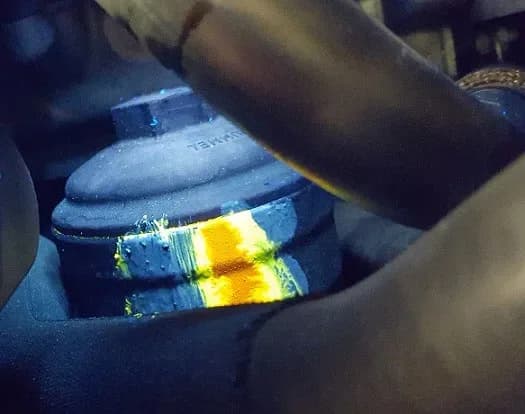
Also applies to
- Audi A3
- 2022–2023
- Audi A4
- 2021–2023
- Audi A5
- 2021–2023
- Audi A6
- 2021–2023
- Audi A6 allroad
- 2021
- Audi A7
- 2021–2023
- Audi A7 e
- 2021–2022
- Audi A8 L e
- 2021
- Audi Q3
- 2021–2023
- Audi Q5
- 2021
- Audi Q7
- 2021–2023
- Audi R8
- 2021–2023
- Audi RS 5
- 2021–2023
- Audi RS 6 Avant
- 2021–2022
- Audi RS Q8
- 2021–2023
- Audi S3
- 2022–2023
- Audi S4
- 2021–2023
- Audi S5
- 2021–2023
- Audi S6
- 2021–2023
- Audi S8
- 2021
- Audi SQ5
- 2021–2023
- Audi SQ7
- 2021–2023
- Audi SQ8
- 2021–2023
- Audi TT
- 2021–2023
- Audi TTS
- 2022–2023
▸ Show 19 more▾ Show fewer
Owners of 2021-2023 Audi vehicles experiencing symptoms of an oil leak may benefit from the diagnostic procedure outlined in Technical Service Bulletin (TSB) 2060750/3. This bulletin, issued on March 3, 2022, provides guidance for using a fluorescent UV additive to precisely identify the origin of engine oil leaks.
This TSB supersedes an earlier bulletin, Group 17 number 21-12, dated February 2, 2021, with updates including revised service steps and expanded vehicle data to cover newer model years.
Symptoms of an Audi Oil Leak
Audi owners might notice several indicators pointing to an engine oil leak. These observations are crucial for technicians to begin the diagnostic process. Common customer complaints include:
- "There may be a smell in the engine compartment."
- "An oil leak is present in the front end of the car or in the area of the engine compartment."
- "Oil marks may be found under the car."
- "There is engine oil loss."
Upon inspection, technicians often confirm these concerns with a finding that "An oil leak can be found in the engine area."
Understanding the Audi Oil Leak Detection Process
To accurately pinpoint the source of an engine oil leak, Audi technicians utilize a fluorescent yellow leak search additive. This pigment mixes with the engine oil and becomes visible when a UV lamp is shone on the leak point, causing it to glow brightly. This method is highly effective for Audi oil leak detection.
The intensity of the leak can vary; some leaks might be evident at idle speed, while very small leaks may require a test drive to become apparent. The additive is safe for use in both gasoline and diesel engines and does not necessitate an oil change after its application.
Important Warnings for Owners
Owners and technicians should be aware of specific advisories related to this Audi oil leak detection procedure:
- Do not use this additive for locating transmission leaks; it is specifically designed for engine oil.
- Engine cleaning before following the instructions is not necessary.
- There is no danger of damaging the engine if extra additive is put in, though recommended quantities should generally be followed.
Repair Procedure Summary
The diagnostic procedure for Audi oil leak detection involves two main steps for technicians:
- Additive Application: One bottle of leak search additive (part number G 052 940 A1) is added to the engine via the oil filler neck. This quantity is sufficient for up to 5 quarts of engine oil. For engines requiring larger oil quantities, double the additive amount should be used.
- Leak Identification: The engine is then run, and a UV lamp (such as VAS 231005 or equivalent) is used to scan the engine area. The fluorescent additive will glow under the UV light, clearly indicating the precise location of the oil leak.
Required Parts and Tools
To perform the Audi oil leak detection procedure outlined in TSB 2060750/3, specific items are required:
- Leak search additive: Part number G 052940A1
- UV lamp: Tool number VAS231005 (WVA-074) or equivalent
- Fasteners, Bolts, Nuts, and Screws: As needed, per the repair manual (refer to ETKA for details).
Warranty Information
It is important for owners to note that Technical Service Bulletin 2060750/3 is informational only. This means the procedures described within it are not applicable to any Audi Warranty coverage. Owners should consult with their dealership regarding any potential costs associated with diagnosing or repairing oil leaks.
Source: NHTSA ID: 10208894
Frequently Asked Questions
- What are the common signs of an Audi engine oil leak?
- Common signs include a "smell in the engine compartment," visible "oil marks under the car," "engine oil loss," or an "oil leak in the front end of the car or in the area of the engine compartment."
- How do technicians find an Audi oil leak using TSB 2060750/3?
- Technicians add a fluorescent UV leak search additive (part number G 052 940 A1) to the engine oil. After running the engine, they use a special UV lamp (VAS 231005) to illuminate the engine bay, causing the additive at the leak point to glow brightly.
- Is the UV additive safe for my Audi's engine?
- Yes, the TSB states that the additive is suitable for both gasoline and diesel engines, and there is no danger of damaging the engine if extra additive is put in. An oil change is not required after its use.
- Does this TSB mean my oil leak repair is covered under warranty?
- No, Technical Service Bulletin 2060750/3 is informational only and explicitly states it is not applicable to any Audi Warranty. You should discuss warranty coverage for your specific repair with your Audi dealership.
- Can this method be used to find transmission fluid leaks?
- No, the TSB specifically warns: "Do not use for locating transmission leaks." This additive and method are intended only for engine oil leaks.
Related Articles
2021-2025 Audi Engine Control Module Software Update 53ZC
Audi has issued an update to its Engine Control Module (ECM) software campaign 53ZC / WARR EXT – U82, dated March 20, 2026. This dealer communication indicates that additional vehicles have been added to the affected chart for this important software update. Owners of 2021-2025 Audi Q8, A7, A6…
2021-2025 Audi Fuel System DTCs P014800 and P008700
Audi Technical Service Bulletin (TSB) 2079461/3 details diagnostic and repair procedures for 2021-2025 Audi vehicles experiencing a 'MIL light on' or 'limp-home function' due to fuel system DTCs P014800 or P008700. This bulletin guides technicians on diagnosing and potentially replacing the…
2021-2025 Audi Black Trim Discoloration TSB
Audi has issued Technical Service Bulletin 2078651/4 to address red, purple, gray, or metallic discoloration on black exterior trim strips in 2021-2025 Audi models. This TSB explains the cause (paint UV resistance issue) and outlines the replacement procedure for affected components.
2021 Audi Virtual Cockpit Display Fault TSB 2078439/2
Audi TSB 2078439/2 addresses issues with the virtual cockpit display in 2021 A6, A7, A8, Q7, Q8 models, including a black screen or "Instrument cluster: fault" message, often accompanied by DTC B200049.
2021-2026 Audi TFSI Engine Oil Leak TSB 2053278/10
Audi has released Technical Service Bulletin 2053278/10 to address oil leaks from the cylinder head on 2.9 and 3.0 TFSI engines in various 2021-2026 models. Learn about symptoms, diagnosis, and the recommended repair process.
Leave a comment
Comments are moderated and may take a moment to appear. Only your first name and the initial of your last name are shown publicly.
Comments
Be the first to comment.