2017-2026 Audi Q7/SQ7 Second Row Seat Noise TSB
If your 2017-2026 Audi Q7 or SQ7 has a creaking or rattling noise from the second-row seats, Technical Service Bulletin 2060719/5 details a repair procedure. The noise is caused by friction between the seat lock handle and the locking mechanism. This TSB outlines how technicians should adjust the…
 Sarah Mitchell2022 Audi Q7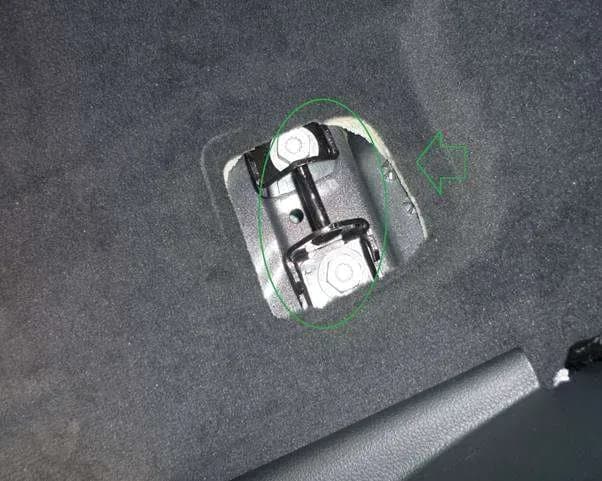
Also applies to
- Audi Q7
- 2021, 2023, 2025, 2026
- Audi SQ7
- 2021, 2022, 2023, 2025, 2026
Owners of 2017-2026 Audi Q7 and SQ7 models may experience a distinctive creaking or rattling sound emanating from the second-row seats while driving. This specific issue is detailed in Audi Technical Service Bulletin (TSB) 2060719/5, which provides a comprehensive guide for diagnosing and resolving the noise complaint. The TSB, released on November 25, 2025, aims to help technicians accurately identify the source of the noise and apply the correct repair.
Symptoms of Second Row Seat Noise
Owners typically report hearing a persistent noise from the rear of the vehicle. The primary symptom is described as: "The rear right or left seat creaks/rattles when driving." This Audi Q7 second row seat noise is particularly noticeable under certain driving conditions. Workshop findings further specify that: "The seat frame creaks/rattles when driving on uneven roads." This indicates that vibrations and movement, common on less-than-perfect road surfaces, exacerbate the problem, making the noise more pronounced.
Technical Background of the Issue
The root cause of the creaking and rattling noise in the second-row seats of affected Audi Q7 and SQ7 vehicles is identified as excessive friction. Specifically, the TSB explains that "Too much friction between the lock handle on the seat frame and the bottom-side striker transfers vibrations to the locking mechanism on poor roads, which leads to creaking/rattling noises." This constant friction and subsequent vibration transfer create the audible disturbance that owners experience. The interaction between these components, designed to secure the seat, inadvertently generates unwanted noise due to a slight misalignment or tolerance issue.
Important Warnings for Owners
Audi provides crucial guidance for both technicians and owners regarding this TSB. A significant "NOTICE" states: "Try to reproduce the customer complaint (based on the description/cause of the issue), so that it can be clearly assigned to this TSB. Perform the described repair only if all specified criteria (model/type) apply exactly. Otherwise, this solution will not eliminate the problem, and repeat repairs may be necessary. In such a case, we may reject the warranty claim and charge back the cost of the parts." This warning emphasizes the importance of accurate diagnosis and adherence to the specified repair procedure to avoid unnecessary costs and ensure an effective fix for the Audi Q7 second row seat noise.
Furthermore, regarding warranty coverage, the TSB clarifies: "If the vehicle is outside any warranty, this Technical Service Bulletin is informational only." This means that for vehicles no longer under warranty, owners may be responsible for the cost of the diagnosis and repair. It is always advisable to confirm your vehicle's warranty status with an authorized Audi service center before proceeding with any repairs.
Repair Procedure Summary
The repair procedure outlined in TSB 2060719/5 focuses on adjusting the outer locking plate to alleviate the friction causing the noise. The steps are as follows:
Fold the affected seat forward: The initial step in addressing the Audi Q7 second row seat noise involves preparing the vehicle for service. Technicians are instructed to fold the affected second-row seat forward. This action provides necessary access to the seat's anchoring points and the locking mechanism that requires adjustment. Figure 1 of the TSB visually presents the 'Affected second-row seat' in its standard position, while Figure 2 clearly illustrates the 'Affected seat unlatched and tilted forward,' demonstrating the required position for the subsequent repair steps.
Remove the outer cover: Once the seat is folded, the next critical step is to remove the outer cover that conceals the seat fastener. This fastener is located in the floor, specifically on the door end of the seat. The TSB includes visual aids for this process: Figure 3 shows the 'Outer and inner locking plate with covers installed,' providing a reference for the assembly before disassembly. Figure 4, titled 'Remove the outer cover for the seat fastener in the floor on the door end,' guides the technician through the precise removal of this cover, exposing the underlying components for adjustment. This removal is crucial to access the locking plate.
Adjust the outer locking plate: The core of the repair for the Audi Q7 second row seat noise involves a precise adjustment of the outer locking plate. After removing the cover, Figure 5, 'Outer locking plate with cover removed,' shows the exposed mechanism. Technicians are directed to adjust this outer locking plate, situated in the floor, towards the rear of the vehicle. The adjustment must be precise, moving the plate by approximately 1.2 millimeters (which is equivalent to -3/64 inches). Figure 6, labeled 'Adjustment of the outer console,' provides a detailed diagram illustrating the direction of travel for this adjustment and highlights the components to be adjusted versus those that should remain untouched. This minute adjustment is designed to reduce the friction between the lock handle on the seat frame and the bottom-side striker, thereby eliminating the source of the creaking and rattling noises.
Required Documentation for Warranty Claims
For any warranty claims related to this Audi Q7 second row seat noise issue, specific documentation is required. When billing for the repair, technicians must attach photos that clearly demonstrate the complaint to Audi's DOC-IT system. To ensure a proper reference to the vehicle and the issue, the images or videos must:
- Include the Vehicle Identification Number (VIN) and the date.
- Must not be edited in any way.
- Should be in focus and taken with sufficient lighting. High resolution is not necessary, but clarity is key.
- If applicable, the location of the problem should be marked to provide a clear reference for parts analysis. It is also crucial to ensure that the photo documentation does not show any individuals, faces, license plates, or sensitive customer data.
Warranty Information and Labor Codes
For the repair of the Audi Q7 second row seat noise, specific labor operations and codes are provided for warranty claims. The Service Number designated for this repair is 7255, and the associated Damage Code is 0020. Technicians will use the following Labor Operations depending on the scope of the repair:
- For 'Rework 1 second row seat frame,' the Labor Operation code is
7255 4999, which is allocated 20 Technical Units (TU). - For 'Rework 2 second row seat frames,' the Labor Operation code is
7255 5099, allocated 30 Technical Units (TU).
The claim comment explicitly states, 'As per TSB 2060719/4,' indicating that this current bulletin (2060719/5) supersedes or references a previous version of the TSB. All warranty claims must be submitted in strict accordance with the Audi Warranty Policies and Procedures Manual and are subject to review and audit by Audi Warranty to ensure compliance and proper execution.
Revision History
Technical Service Bulletin 2060719/5 has undergone several revisions to ensure accuracy and completeness:
- Revision 5: Service instructions were modified to refine the repair process.
- Revision 4 (August 19, 2025): The header was revised, and additional model years were included in the scope.
- Revision 3 (November 11, 2024): This was a significant update, involving revisions to the title, header, condition description (including customer statement and workshop findings), technical background, production solution, service instructions, and warranty information. This revision also added more model years to the bulletin's applicability.
Additional Information
Audi emphasizes that 'All part and service references provided in this TSB (2060719) are subject to change and/or removal.' Therefore, it is crucial for service personnel to 'Always check with your Parts Department and/or ETKA for the latest information and parts bulletins.' Additionally, technicians are advised to 'check the Repair Manual for fasteners, bolts, nuts, and screws that require replacement during the repair' to ensure all components are properly secured and maintained.
NHTSA ID: 11026209
Gallery
5 images
Frequently Asked Questions
- What causes the second row seat noise in my Audi Q7 or SQ7?
- The noise, described as a creak or rattle, is caused by excessive friction between the lock handle on the seat frame and the bottom-side striker. This friction transfers vibrations to the locking mechanism, especially when driving on uneven roads, leading to the audible disturbance.
- How does Audi TSB 2060719/5 fix the second row seat noise?
- Audi Technical Service Bulletin 2060719/5 outlines a repair procedure that involves folding the affected second-row seat forward, removing the outer cover of the seat fastener, and then precisely adjusting the outer locking plate in the floor by approximately 1.2mm (-3/64 inches) towards the rear of the vehicle to reduce friction.
- Can I get this repair done under warranty for my Audi Q7 or SQ7?
- Warranty claims for this second row seat noise issue (TSB 2060719/5) are subject to Audi's warranty policies and procedures. If your vehicle is outside of warranty, this bulletin serves as informational guidance only, and you may be responsible for the repair costs, especially if the issue cannot be properly reproduced and verified by the technician.
- What are the labor codes associated with the second row seat noise repair?
- The labor operations for this repair, as per TSB 2060719/5, include Service Number 7255 and Damage Code 0020. Specific labor operation codes are 7255 4999 for reworking one second-row seat frame (20 Technical Units) and 7255 5099 for reworking two second-row seat frames (30 Technical Units).
Related Articles
2022-2023 Audi Q7/Q5/Q3 MIL On for DTC P240700
Audi has issued Technical Service Bulletin 2071770/8 for 2022-2023 Q3, Q5, Q5 PHEV, and Q7 models experiencing a Check Engine Light (MIL) and diagnostic trouble code P240700. This TSB addresses an overly sensitive OBD diagnostic system related to the EVAP emission control system.
2021-2024 Audi Technical Analysis List for Various Issues
This Audi On-Car Analysis List, dated July 15, 2024, provides guidance for technicians on diagnosing and addressing various common issues across 2021-2024 Audi models. Topics include airbag warning lights (DTCs B101704, B103604, B12251B), MIB3 system problems, roof panel button malfunctions, noisy…
2022-2023 Audi Q3, Q5, Q7 MIL On DTC P240700
Audi has released Technical Service Bulletin (TSB) 2071770/7 for 2022-2023 Q3, Q5, and Q7 models experiencing a Malfunction Indicator Lamp (MIL) illumination with DTC P240700. This is due to overly sensitive OBD diagnostics for the EVAP system.
2022-2023 Audi Q5 PHEV, Q3, Q7 MIL On with DTC P240700
Audi has released Technical Service Bulletin 2071770/6 to address a Malfunction Indicator Lamp (MIL) illumination accompanied by Diagnostic Trouble Code P240700 (EVAP emission control system leakage diagnosis pump current fluctuating) in 2022-2023 Audi Q5 PHEV, Q3, and Q7 models. A software update…
2022-2023 Audi Q5 Q3 Q7 MIL On for DTC P240700
If your 2022-2023 Audi Q5 e-quattro, Q3, or Q7 has an illuminated Malfunction Indicator Lamp (MIL) and stores DTC P240700, Audi Technical Service Bulletin 2071770/6 provides a software update solution for the EVAP system leakage diagnosis pump current fluctuating.
Leave a comment
Comments are moderated and may take a moment to appear. Only your first name and the initial of your last name are shown publicly.
Comments
Be the first to comment.