2025 Audi HomeLink Malfunction Software Update
Audi has issued Service Action 96RG for certain 2025 models to address a HomeLink malfunction. Owners may find their HomeLink system cannot be programmed or does not react when buttons are pressed. A software update is available free of charge to resolve this issue.
 David Chen2025 Audi Q5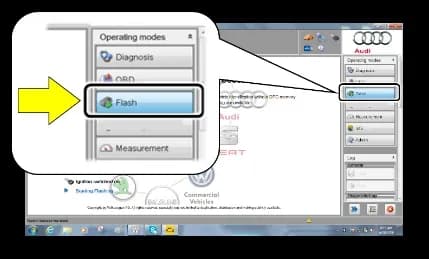
Also applies to
- Audi A4
- 2025
- Audi A4 allroad
- 2025
- Audi S4
- 2025
- Audi SQ5
- 2025
Symptoms
Owners of certain 2025 Audi models may experience an issue where the HomeLink system does not function correctly. Specifically, the vehicle's HomeLink system "cannot be programmed and there is no reaction when the HomeLink buttons in the rearview mirror are pressed." This means drivers are unable to set up their garage door openers or other HomeLink-compatible devices, and pressing the integrated buttons yields no response. This Audi HomeLink malfunction is a software-related issue affecting the vehicle's Central Electrical System.
Service Action 96RG Details
Audi has initiated Service Action 96RG to resolve the Audi HomeLink malfunction. This service action involves a software update for the vehicle's Central Electrical System. Owner notifications are scheduled to begin in December 2024. The campaign is valid for free-of-charge repairs until December 10, 2029. After this date, any repair costs would be the owner's responsibility.
Important Warnings for Owners and Technicians
Audi has issued several critical warnings related to this service action to ensure proper repair and safety:
- Dealer Inventory: Dealers are required to ensure that every affected inventory vehicle has this campaign completed before it is delivered to consumers. This prevents new owners from experiencing the HomeLink malfunction.
- Radiator Fan Safety: During the software update process, the radiator fan(s) may cycle ON at high speed. There is a serious risk that personal injury may result if contact is made with spinning fan blades. Keep hands and all objects away from Radiator Fan(s) during the Update Process!
- Diagnostic Procedure: Technicians are explicitly instructed: "DO NOT USE Guided Fault Finding (GFF) to perform this flash." Using GFF will prolong the flash process, and requests for additional time will not be considered. The update must be performed through "Audi Flashing."
- Connectivity: The VAS Diagnostics Interface MUST ONLY be connected to the tester with a USB cable. Performing a software update using a Bluetooth or Wi-Fi connection significantly increases the risk of losing connection, potentially damaging the control module and extending the update time. Requests for additional time or parts will be denied if the GFF log indicates the update was performed wirelessly.
- Battery Voltage: The vehicle battery charger must remain connected throughout the software update, ensuring battery voltage stays above 12.5 volts. Failure to maintain adequate voltage can cause the update to fail and damage the control module. "Control modules damaged by insufficient voltage will not be covered."
- Warranty Reimbursement: The Software Version Management (SVM) Process must be completed in its entirety so the database receives the update confirmation response. "A warranty claim may not be reimbursed if there is no confirmation response to support the claim." Additionally, "If the software update fails for any reason, ODIS feedback must be sent prior to further diagnosis. This ensures the failure/error is reported. Failure to do so may result in non-payment of consequential requests for additional time or parts."
- Pre-existing Conditions: "Diagnosis and repair of pre-existing conditions in the vehicle are not covered under this action."
- Improper Repair: "Damages resulting from improper repair or failure to follow these work instructions are the dealer's responsibility and are not eligible for reimbursement under this action."
Required Tools and Equipment
To perform the software update for the Audi HomeLink malfunction, technicians will use specialized equipment:
- Battery Tester/Charger: A VAS 5908 or an equivalent charger capable of providing at least 90A is required to maintain stable battery voltage during the update.
- Diagnostic Tester: A VAS6150X or VAS6160X diagnostic tester, or an equivalent, is necessary to perform the software update.
Repair Procedure Summary
The repair involves updating the software of the vehicle's Central Electrical System control module. This process is initiated by entering the VIN into the Elsa system and checking the campaign status, which must show as "open." Technicians must print the Elsa screen showing the action "open on the day of repair" and keep it with the repair order. If multiple campaigns are available, the oldest campaign should be performed first, unless otherwise specified.
Before launching the VAS Diagnostic Tester and starting the update, several conditions must be met:
- Software Updates: The ODIS software on the diagnostic tester must be completely up to date. Technicians should refer to the "Current ODIS Service Version" circular found in Elsa2Go Service References.
- Power Management: The battery charger must be connected to the vehicle battery and remain connected for the entire duration of the software update, maintaining voltage above 12.5 volts. Screen saver and power saving settings on the diagnostic tester must be turned off to prevent interruption.
- Tester Connection: The VAS Diagnostic Tester must be plugged in using its supplied power adapters and connected to the vehicle's diagnostic interface via a USB cable. Bluetooth or Wi-Fi connections are strictly prohibited for this update.
The update itself follows the Software Version Management (SVM) process. Technicians must switch off all vehicle consumers, such as air conditioning, heater blower motor, lights, and heated seats. The selector lever must be in the 'P' position. The operating mode on the diagnostic tester should be set to 'FLASH'. Technicians will then select "SVM – Code Input" and enter the SVM code 09A061, following the on-screen prompts. The diagnostic log must be sent to GFF Paperless after completion to ensure proper record-keeping and warranty eligibility. For detailed SVM instructions, technicians should consult Technical Bulletin 2011732 for US vehicles or 2037026 for Canadian vehicles.
Warranty and Claim Information
This service action is covered under warranty. The specific details for claim entry are as follows:
- Service Number: 96RG
- Damage Code: 0099
- Parts Vendor Code: 002
- Claim Type: For sold vehicles, use 7 10; for unsold vehicles, use 7 90.
- Causal Indicator: Mark labor as causal.
- Labor Operations:
- 0151 00 10: Software update (setup + battery charger) – Time units are determined by ELSA.
- 0151 00 60: Software update (GFF Operations) – Time units are based on the diagnostic protocol.
Dealers are instructed "Do not claim wash/loaner under this action." Upon successful completion of the campaign, the technician should stamp the repair order using item numbers AUD4927ENG (English) or AUD4927FRE (French), which are available through the Compliance Label Ordering Portal.
What Owners Should Do
If you own an affected 2025 Audi model and are experiencing an Audi HomeLink malfunction, you should contact an authorized Audi dealer as soon as possible to schedule the software update. This repair will be performed free of charge. You can visit www.audiusa.com (for US owners) or www.audi.ca (for Canadian owners) to locate a dealer or check your vehicle's eligibility using the Recall/Service Campaign Lookup tool and your Vehicle Identification Number (VIN).
Source: NHTSA ID 11012553
Gallery
4 images
Related Articles
2025 Audi Q5 Health Check: Service Bulletins and Common Issues
The 2025 Audi Q5 has no reported recalls, owner complaints, or federal investigations. However, a series of manufacturer service bulletins address various electrical system, software, and component-related issues, providing insights into potential concerns for owners.
2025 Audi Q5/SQ5 Door Won't Open from Outside TSB
A Technical Service Bulletin (TSB 2079914/3) has been issued for 2025 Audi Q5 and SQ5 vehicles addressing an intermittent issue where a door cannot be opened from the outside. This can be due to software or hardware issues, sometimes accompanied by DTC B122D29.
2025 Audi Q5/SQ5 Engine Warning Lamp TSB 2081184/1
A Technical Service Bulletin (TSB 2081184/1) has been issued for 2025 Audi Q5 and SQ5 models regarding an illuminated engine warning lamp or non-functional air conditioning. This issue is linked to DTCs U366500, P2D8800, or P2D8B00, caused by an incorrectly fitted earth connection.
2025 Audi Q5/SQ5 Headlight Defective Warning TSB 2078609/5
Owners of 2025 Audi Q5 and SQ5 vehicles may see a "Left/right main beam headlight defective" warning message and DTC C12FC01. This TSB addresses the software issue causing the warning.
2025 Audi Q5/SQ5 Door Cannot Be Opened From Outside
This Technical Service Bulletin (TSB 2079914/2) addresses an issue in 2025 Audi Q5 and SQ5 vehicles where one of the doors cannot be opened intermittently from the outside, often accompanied by DTC B122D29. The TSB outlines diagnostic steps and repair procedures.
Leave a comment
Comments are moderated and may take a moment to appear. Only your first name and the initial of your last name are shown publicly.
Comments
Be the first to comment.