2019-2022 Audi Q5/SQ5 MMI Screen Noise TSB 2061722/3
Audi has issued Technical Service Bulletin 2061722/3 to address squeaking and rattling noises originating from the MMI screen area in 2019-2022 Q5 and SQ5 models. The repair involves installing felt strips to prevent relative movement.
 David Chen2021 Audi Q5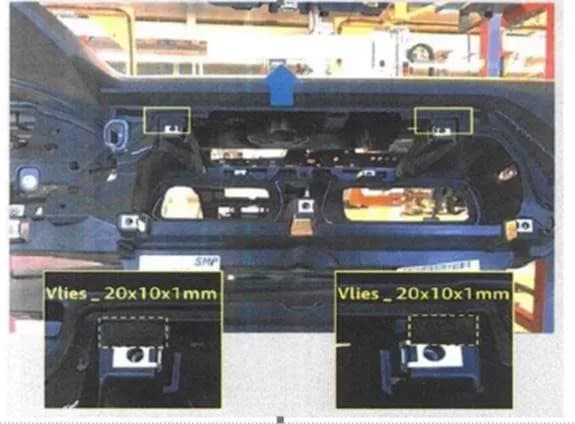
Also applies to
- Audi SQ5
- 2021–2022
Owners of certain 2019-2022 Audi Q5 and SQ5 models may notice an annoying squeaking or rattling sound coming from the MMI screen area. Audi has released Technical Service Bulletin (TSB) 2061722/3 to provide a specific repair procedure for this issue. This bulletin, which supersedes an earlier version (68 21 31 dated January 14, 2021), details how technicians can eliminate these noises by addressing the movement of the multimedia display unit.
Symptoms
Drivers of affected Audi Q5 and SQ5 vehicles commonly report hearing "squeaking and rattling noises from the center of the dash panel when driving on rough roads." Workshop findings confirm that "the noises originate from the area of the MMI screen." This persistent Audi Q5 MMI screen noise can detract significantly from the driving experience.
Technical Background
The root cause of the Audi Q5 MMI screen noise has been identified as "relative movement between the MMI screen and its mounting surfaces in the dash panel." This slight play allows the screen to rub against surrounding components, generating the audible squeaks and rattles. Audi implemented a production solution with "improved tolerances in series production in CW 03/2022," meaning vehicles manufactured after this period may be less prone to this specific issue.
Repair Procedure Summary
To resolve the MMI screen noise, technicians will follow a precise repair procedure outlined in TSB 2061722/3.
- Initial Assessment: The first step involves checking the gap between the MMI screen and the center vent using a feeler gauge. An ideal gap is 1.0 mm. If the measured gap is less than 0.5 mm, the repair must be performed. (Figure 1 in the TSB illustrates this measurement point).
- MMI Screen Removal: The MMI screen must be carefully removed from the dash panel. This step requires consulting the Audi Elsa repair manual for specific instructions.
- Felt Strip Application: Two pieces of felt tape, measuring 20x10x1 mm, are then attached to the MMI screen mounting surfaces within the dash panel. (Figure 2 in the TSB provides a visual guide for the precise placement of these felt strips).
- MMI Screen Reinstallation: After applying the felt strips, the MMI screen is reinstalled into the dash panel, again following the procedures in the Elsa repair manual.
- Post-Repair Verification: The gap between the MMI screen and the center vent is rechecked to ensure it is now at least 0.5 mm.
- Test Drive: Finally, a test drive is conducted to verify that the squeaking and rattling noises have been eliminated.
Required Parts and Tools
The primary material needed for this repair is a specific felt strip.
- Felt Strips: Part number 533867910A (dimensions: 20x10x1 mm). A quantity of 0.1 is specified, indicating a small amount is needed per vehicle.
- Fasteners: Any necessary fasteners, bolts, nuts, and screws should be sourced according to the ETKA/ELSA repair manual.
- Special Tools: A feeler gauge is required for accurate gap measurement. Standard workshop tools for trim removal and installation will also be used.
Warranty Information
This repair falls under specific warranty claim types.
- Claim Type 110: Applies to vehicles within 6 months or 6,000 miles.
- Claim Type 1AM: Applies to vehicles exceeding 6 months or 6,000 miles.
The "Service Number" for this operation is 6822, and the "Damage Code" is 0020. All warranty claims must adhere to the Audi Warranty Policies and Procedures Manual and are subject to review.
Important Warnings
Owners should be aware that if their vehicle is outside of any applicable warranty period, this Technical Service Bulletin is for "informational only." In such cases, the cost of the repair may not be covered by Audi.
NHTSA ID: 10214747
Gallery
1 image
Related Articles
2021 Audi Q5 Health Check: Service Bulletins and Common Issues
The 2021 Audi Q5 has no recalls, owner complaints, or federal investigations. However, Audi has issued numerous service bulletins addressing common issues such as slow window operation, cylinder head oil leaks, airbag warning lights, and MMI screen noises. Owners should be aware of these potential…
2021-2024 Audi Q5 Door Window Moves Slowly TSB
Audi has released Technical Service Bulletin (TSB) 2071472/3 to address customer complaints regarding door windows that move slowly, are not smooth, or cannot be closed properly in certain 2021-2024 Audi Q5, Q5 e, and SQ5 models. The TSB indicates that the root cause is often an incorrectly…
2021-2024 Audi Q5 Cylinder Head Oil Leak TSB 2072716/6
Audi has issued Technical Service Bulletin (TSB) 2072716/6 for 2021-2024 Audi Q5 vehicles equipped with the 2.0L TFSI engine. This TSB addresses instances of oil residue and leaks found around the cylinder head cover, often due to loose bolts. The repair involves checking and re-tightening or…
2021-2025 Audi Q5 Front Seat Squeaking Noise TSB
Audi has issued manufacturer communication 11013724 to address a squeaking noise originating from the front seat height adjuster in 2021-2025 Audi Q5, Q5 e, and SQ5 models. This technical service bulletin provides guidance for technicians to diagnose and resolve the issue.
2021-2023 Audi Q5/SQ5 Panoramic Sunroof Water Leak TSB
Audi TSB 2075969/2 details how water can enter the cabin of 2021-2023 Audi Q5 and SQ5 vehicles through the panoramic sliding sunroof. This issue, often resulting in soaked carpets, is typically caused by kinked or blocked water drain hoses. The bulletin outlines inspection and repair procedures…
Leave a comment
Comments are moderated and may take a moment to appear. Only your first name and the initial of your last name are shown publicly.
Comments
Be the first to comment.