2024-2025 Audi Q5 HYBRID Battery Charger Software Update
Audi Service Action 93SG addresses an erroneous warning message and charging issues in 2024-2025 Audi Q5 HYBRID models. A software update for the high-voltage battery charger control module resolves the problem, which prevents 100% charging with a 110V cable.
 Ahmet Topcu2024 Audi Q5 e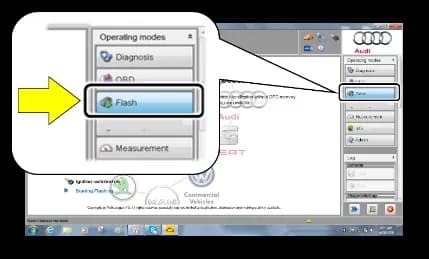
Also applies to
- Audi Q5 e
- 2025
Audi has released Service Action 93SG to address a software issue affecting the high-voltage (HV) battery charger in certain 2024-2025 Audi Q5 HYBRID models. This action aims to correct an erroneous warning message that may appear in the instrument cluster and resolve a related charging limitation. The core problem is an overly sensitive diagnostic software in the HV battery charging control unit, which can lead to a stored fault and prevent the vehicle from charging to 100% capacity with a 110V cable. Owners experiencing these symptoms should have their vehicle inspected and updated under this service action, which involves an update to the Audi Q5 HYBRID battery charger software.
Symptoms
Owners of affected 2024-2025 Audi Q5 HYBRID vehicles may notice an "erroneous warning message" appearing in the instrument cluster. This message is typically accompanied by a fault stored in the control unit for high-voltage battery charging. A key functional symptom is the inability to charge the vehicle to 100% capacity when using a 110V charging cable.
Fault Codes / DTCs
This software update specifically addresses issues related to "DTC B200000: Control module faulty (symptom 1049088) active/static", which is stored in diagnostic address 00C6. This fault code indicates a problem with the control module itself, triggered by the diagnostic software's sensitivity.
Diagnosis / Trigger Conditions
The root cause of the issue is an overly sensitive diagnostic software within the high-voltage battery charger control module. This software incorrectly flags a fault, leading to the warning message and charging limitation. The condition is not related to a hardware failure but rather a software misinterpretation. The update to the Audi Q5 HYBRID battery charger software corrects this sensitivity.
Important Warnings and Owner Information
- Free Repair Expiration: This service action is available free of charge only until October 29, 2029. If the work is performed after this date, normal costs will apply.
- Inventory Vehicles: Dealers must ensure that every affected inventory vehicle has this campaign completed before delivery to consumers.
- Radiator Fan Safety: During the update process, radiator fan(s) may cycle on at high speed. Keep hands and all objects away from the radiator fan(s) to prevent personal injury.
- Warranty Claim Requirement: The Software Version Management (SVM) process must be completed entirely for the database to receive the update confirmation. Warranty claims may not be reimbursed without this confirmation.
- High-Voltage Battery Protection: The high-voltage cable must be removed before entering the SVM code on vehicles with high-voltage components. Charging the high-voltage battery during a software update can damage high-voltage components.
- Software Update Failure: If the software update fails for any reason, ODIS feedback must be sent prior to further diagnosis. Failure to do so may result in non-payment for consequential requests for additional time or parts.
- Improper Repair: Damages resulting from improper repair or failure to follow these work instructions are the dealer's responsibility and are not eligible for reimbursement under this action.
- Pre-existing Conditions: Diagnosis and repair of pre-existing conditions in the vehicle are not covered by this service action.
- ODIS Patches: Any ODIS "Hot-Fix" patches installed on the scan tool must be removed before beginning this operation, as they may affect the update process.
- Diagnostic Tester Usage: Do not use Guided Fault Finding (GFF) to perform this flash, as it will take longer. Also, the VAS Diagnostic Tester should never be used on battery power alone during the update, as it could power off and damage the control module. Performing the update via Bluetooth or Wi-Fi connections increases the risk of losing connection and damaging the control module, and will result in denied requests for additional time or parts.
- Battery Voltage: The vehicle battery charger must be connected, and battery voltage must remain above 12.5 volts (or higher, if directed) throughout the software update. Failure to maintain sufficient voltage can cause the update to fail and damage the control module.
Repair Procedure Summary
To resolve the issue, a software update is performed on the high-voltage battery charging control module. The repair procedure, identified by Service Action 93SG, involves several key steps:
- Vehicle Verification: Technicians must first check the vehicle's VIN in the Elsa system to confirm eligibility and that the campaign status is "open." An Elsa screen print showing the action as "open on the day of repair" must be attached to the repair order.
- Preparation: Before launching the VAS Diagnostic Tester and starting the update, technicians must ensure the ODIS software is up to date (referencing Technical Bulletin 2011732 for US or 2037026 for Canada). The battery charger, such as the -VAS5908-, must be connected to the vehicle battery and remain connected throughout the update to maintain voltage above 12.5V. All vehicle consumers (e.g., air conditioning, lights, heated seats) must be switched off, and screen saver and power saving settings on the diagnostic tester must be disabled. The high-voltage cable must be removed before entering the SVM code.
- Software Update Execution: The update is performed using a VAS Diagnostic Tester (e.g., -VAS6150X- or -VAS6160X-), which must be plugged in via a USB cable. The selector lever should be in 'P' (Park). The technician will use the 'FLASH' operating mode with a communication path of 'DoIP'. They will select "SVM – Code Input" and enter the SVM code 93SGA591. The new software part number is 9Y0915681Q with version 3323 for diagnostic address 00C6. After completion, the diagnostic log must be sent to GFF Paperless.
- Post-Update: If the "DTC B200000: Control module faulty (symptom 1049088) active/static" fault remains after the flash, technicians are instructed to refer to attachment tabs in ELSA Pro or Elsa2Go for further instructions and contact Audi Warranty with the post-flash log.
- Campaign Stamp: Once the campaign is completed, the technician should stamp the repair order using item# AUD4927ENG or AUD4927FRE.
Required Tools or Parts
- Battery Tester/Charger: -VAS5908- (or an equivalent charger with a current rating of at least 90A).
- Diagnostic Tester: -VAS6150X- or -VAS6160X-.
- Software Version Management (SVM) Code: 93SGA591.
- New Software Part Number: 9Y0915681Q, Version 3323.
- Technical Bulletins: 2011732 (US) and 2037026 (Canada) for SVM operating instructions.
Warranty Information
This service action is covered under warranty. The Service Number for this action is 93SG. The Damage Code is 0099, and the Parts Vendor Code is 002. For sold vehicles, the Claim Type is 7 10, and for unsold vehicles, it is 7 90. Labor is marked as causal. The labor operations and time units are as follows:
| Labor Op | Time Units | Description |
|---|---|---|
| 0151 00 10 | SEE ELSA | Software update (setup + battery charger) |
| 0151 00 60 | Time stated on diagnostic protocol | Software update (GFF Operations) |
Owner Action
If you own a 2024-2025 Audi Q5 HYBRID, you should contact your authorized Audi dealer as soon as possible to schedule this service. The work takes approximately one hour and will be performed free of charge until October 29, 2029. You can visit www.audiusa.com to locate a dealer or check your vehicle's eligibility using your VIN. This service action ensures the correct Audi Q5 HYBRID battery charger software is installed, preventing erroneous warnings and charging limitations.
NHTSA ID: 10255866
Gallery
4 images
Other revisions of this TSB
- 2021-2025 Audi Emergency Call System Fault TSBB200000
- 2022-2025 Audi e-tron Emergency Call System Fault TSBB200000
- 2023-2026 Audi Emergency Call System Fault B200000 TSBB200000
- 2020-2026 Audi Emergency Call Fault B200000B200000
- 2022-2026 Audi Emergency Call System Fault TSBB200000
- 2021-2026 Audi Emergency Call System Fault TSB 2059528/14B200000
- 2021-2026 Audi Emergency Call System Fault B200000B200000
- 2024-2025 Audi A5 Steering Warning Lamp TSBB200000
Related Articles
2024-2025 Audi Q5 e 12V Battery Discharge TSB 2074126/5
Audi has issued Technical Service Bulletin 2074126/5 for 2024-2025 Q5 e models, addressing 12V battery discharge caused by high-voltage charging unit bus wake-ups. This bulletin describes symptoms and a temporary workaround while a permanent solution is developed.
2024-2025 Audi Q5 e Engine Warning Lamp TSB 2080142/1
Audi has issued Technical Service Bulletin 2080142/1 for 2024-2025 Audi Q5 e PHEV vehicles, addressing an engine warning lamp (MIL) illumination caused by a software issue affecting the refrigerant pressure sensor. This can lead to various diagnostic trouble codes (DTCs), including P2CD400…
2021-2025 Audi Q5/A7 e Gearbox Malfunction TSB 2070965/5
Owners of 2021-2025 Audi Q5 e and A7 e vehicles may experience a "Gearbox malfunction message" and DTC P288200. Audi Technical Service Bulletin 2070965/5 outlines a software update for the transmission control module to resolve excessive engine disconnect clutch slippage.
2024-2025 Audi Q5 e 12V Battery Discharge TSB 2074126/4
Audi has released Technical Service Bulletin (TSB) 2074126/4 for 2024-2025 Q5 e models addressing a 12V battery discharge issue. This occurs due to bus wake-ups by the high-voltage charging unit. Owners may experience a discharged battery after the vehicle has been stationary or during…
2021-2025 Audi PHEV Exhaust Emissions Warning Lamp TSB
Audi TSB 2079117/1 addresses the exhaust emissions warning lamp (MIL) activating in 2021-2025 Audi A7, A8, and Q5 PHEV models. This can be triggered by specific refrigerant pressure sensor fault codes (P053100, P0EBF00, P251600, P0EC400, P1C5E00) due to a software issue, often without an actual…
Leave a comment
Comments are moderated and may take a moment to appear. Only your first name and the initial of your last name are shown publicly.
Comments
Be the first to comment.