2021-2024 Audi PHEV Fuel Tank Flap Cannot Be Opened TSB
Audi has issued Technical Service Bulletin 93 24 87 2074708/1 for 2021-2024 Audi Q5 e, A7 e, and A8 L e plug-in hybrid vehicles where the fuel tank flap cannot be opened. Learn why this happens and the proper steps to release it.
 Marcus Weber2021 Audi Q5 e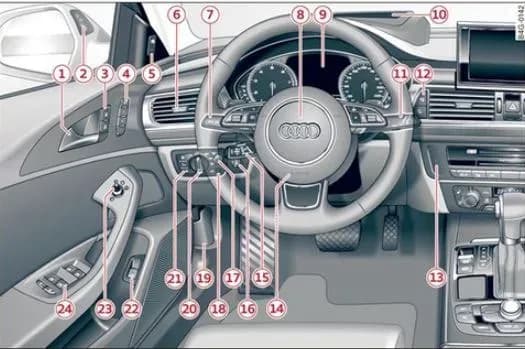
Also applies to
- Audi A7 e
- 2021–2022
- Audi A8 L e
- 2021
- Audi Q5 e
- 2023–2024
Symptoms
Owners of certain 2021-2024 Audi plug-in hybrid (PHEV) vehicles may encounter an issue where the Audi PHEV fuel tank flap cannot be opened. The primary complaints are that the "Tank flap cannot be opened" and the "tank flap cannot be released with remote control key." These conditions are consistent with workshop findings.
Diagnosis / Trigger Conditions
This condition occurs in plug-in hybrid vehicles due to the nature of electric driving. When the vehicle operates purely on electric power, hydrocarbons can form. This poses a risk of overloading the activated charcoal filter, which is designed to bind these hydrocarbons.
To prevent this, PHEV vehicles are equipped with a pressure vessel. During purely electric driving, a valve closes, sealing off the line to the activated charcoal filter. This closure leads to pressure building up within the fuel tank. When this pressure is present, the fuel tank flap becomes permanently locked and cannot be opened manually until the pressure is released.
Operating the Fuel Tank Flap
To properly open the Audi PHEV fuel tank flap and release the built-up pressure, a specific procedure must be followed as detailed in Audi Technical Service Bulletin 93 24 87 2074708/1. First, you need to locate the button designed to open the tank flap. This button is typically found within the door trim. The bulletin illustrates this button, labeling it as number 22 in Figure 1, which shows the dashboard and door panel, and Figure 2, which provides a closer detail of the button itself. It's worth noting that depending on your specific vehicle model, the button for the automatically operated rear lid might be situated in the same general area.
Pressing this button initiates a crucial bleeding procedure for the tank system. This process is necessary to equalize the pressure within the fuel tank. After the system has successfully bled, the fuel tank flap will automatically open by approximately 10-15 mm within a few seconds. Once it has partially opened, you can then fully open it by hand to access the fuel filler neck.
It is important to be aware that a limited amount of time is available for refueling once the button has been pressed and the flap has opened. If this time limit is exceeded, the valve located in the fuel filler neck will close again, preventing further refueling. Should this occur, you will simply need to press the button again to restart the bleeding and opening process, allowing you to continue refueling your vehicle.
Important Warnings
Audi states that this Technical Service Bulletin 93 24 87 2074708/1 is for informational purposes only. It is not applicable to any Audi Warranty coverage. This means that any costs associated with diagnosing or addressing this specific operational characteristic would typically not be covered by warranty.
What Owners Should Know
Owners are strongly encouraged to consult their vehicle's Owner's Manual for additional information and guidance regarding the proper operation of the Audi PHEV fuel tank flap and refueling procedures for their plug-in hybrid vehicle. Understanding this procedure is key to avoiding frustration at the pump and ensuring correct operation of your vehicle's fuel system.
Source: NHTSA ID: 11005967
Gallery
1 image
Related Articles
2021-2022 Audi Q5 e Electrical System Malfunction TSB
Audi has issued TSB 2081028/1 for 2021-2022 Q5 e models regarding an 'electrical system malfunction' warning light and a no-drive condition. This document details common diagnostic trouble codes (DTCs) such as U01A000 and advises technicians to contact the Technical Assistance Center.
2021-2024 Audi Q5 e High-Voltage Battery Deterioration TSB
This Technical Service Bulletin (TSB) 2079556/1 addresses issues in 2021-2024 Audi Q5 e PHEV models where the MIL light illuminates due to deterioration in various high-voltage battery modules, indicated by DTCs such as P0A7F00, P0EDD00, P0EDE00, P0EDF00, P0EE000, P0EE100, P2CCC00, and P2CCD00…
2021, 2023-2024 Audi Q5 e 3-Phase Wire Chafing TSB
Audi has released Technical Service Bulletin 2077614/2 for 2021, 2023-2024 Audi Q5 e vehicles, addressing potential chafing of the 3-phase wiring in the front underbody area on the passenger side. This issue, typically found during routine service, involves the high-voltage wiring contacting the…
2021-2023 Audi Q5 e / A7 e Electrical System Fault TSB
Audi has released Technical Service Bulletin 2068630/5 to address an "Electrical System fault" that may appear in the instrument cluster of 2021-2023 Audi Q5 e and A7 e models. This issue is often linked to Diagnostic Trouble Code (DTC) U041300 and can prevent the vehicle from starting. The repair…
2020-2023 Audi e-tron Models myAudi App AC Timeout TSB
Audi Technical Service Bulletin 2076636/2 details a solution for 2020-2023 Audi e-tron models where the myAudi app times out when attempting to start the auxiliary air conditioner. This issue is often accompanied by error messages like 'Auxiliary air conditioner could not be started: Timeout' with…
Leave a comment
Comments are moderated and may take a moment to appear. Only your first name and the initial of your last name are shown publicly.
Comments
Be the first to comment.