2021-2026 Audi Steering Wheel & Vehicle Vibrations TSB
Audi Technical Service Bulletin 2074846/3 addresses customer complaints of steering wheel and vehicle vibrations in 2021-2026 Audi models. The TSB details diagnostic steps for radial force variation and flat spots on tires, and outlines repair procedures.
 Marcus Weber2021 Audi e-tron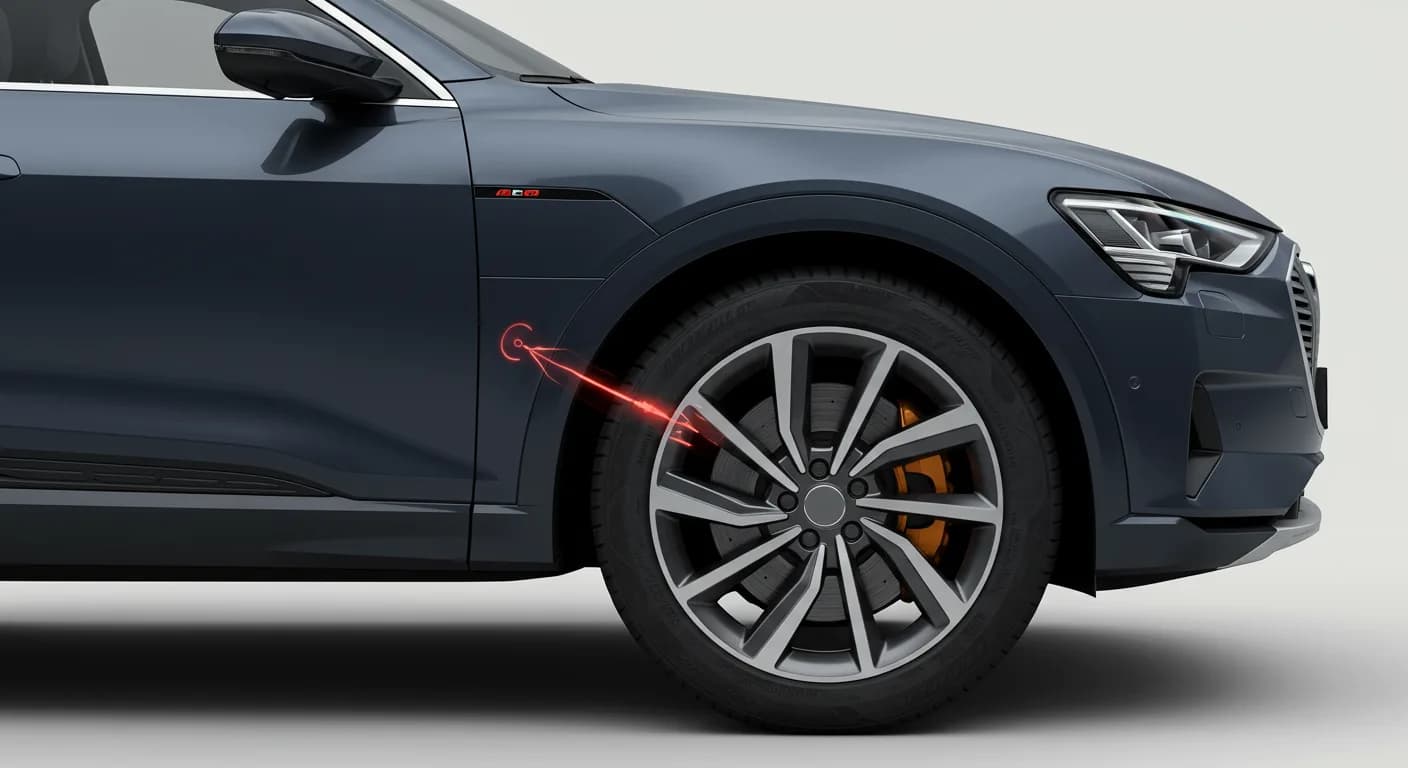
Also applies to
- Audi A3
- 2022–2026
- Audi A4
- 2021–2025
- Audi A4 allroad
- 2021–2025
- Audi A5
- 2021–2024
- Audi A6
- 2021–2025
- Audi A6 allroad
- 2021–2026
- Audi A7
- 2021–2025
- Audi A7 e
- 2021–2022
- Audi A8 L e
- 2021
- Audi e-tron
- 2022–2023
- Audi e-tron GT
- 2022–2026
- Audi e-tron Sportback
- 2021–2022
- Audi Q3
- 2021–2025
- Audi Q5
- 2021–2025
- Audi Q5 e
- 2021, 2023, 2024, 2025
- Audi Q7
- 2021–2026
- Audi Q8
- 2021–2026
- Audi R8
- 2021–2023
- Audi RS 3
- 2022–2026
- Audi RS 5
- 2021–2024
- Audi RS 6 Avant
- 2021–2026
- Audi RS 7
- 2021–2026
- Audi RS e-tron GT
- 2022, 2023, 2024, 2026
- Audi RS Q8
- 2021–2026
- Audi S e-tron GT
- 2026
- Audi S3
- 2022–2026
- Audi S4
- 2021–2025
- Audi S5
- 2021–2024
- Audi S6
- 2021–2025
- Audi S7
- 2021–2025
- Audi S8
- 2021–2026
- Audi SQ5
- 2021–2025
- Audi SQ7
- 2021–2026
- Audi SQ8
- 2021–2026
- Audi TT
- 2021–2023
- Audi TT RS
- 2021–2022
- Audi TTS
- 2021–2023
▸ Show 31 more▾ Show fewer
Symptoms of Audi Vehicle Vibrations
Owners of 2021-2026 Audi vehicles, including the 2021 Audi e-tron, may report experiencing noticeable vibrations. These vibrations typically occur at speeds between 35 and 70 mph. Drivers and passengers might feel these vibrations in various parts of the vehicle, including the seat surface, the vehicle floor, the footwell, the pedal cluster, or the steering wheel itself. The TSB notes that these vibrations can sometimes intensify during braking or acceleration, or they may only manifest during specific driving phases.
Understanding the Causes: Radial Force Variation and Flat Spots
Audi TSB 2074846/3 identifies two primary causes for these vibrations:
Radial Force Variation
Tires are not perfectly uniform; they possess softer and stiffer areas in their radial direction due to manufacturing characteristics. This variation in stiffness leads to what is known as radial force variation. When a tire rolls, the compression force it exerts changes, causing vibrations. To accurately measure this, a vibration control system like the VAS6230(A) is used. The TSB specifies that the tire's peak-to-peak radial force value "must be 120N or less," and the first harmonic vibration, which is the most significant contributor to vibrations, "must be 80N or less."
Flat Spots Caused by Storage
Even after a relatively short period of being stationary (just a few hours), tires can develop temporary flat spots, especially when they cool down after being warm. The severity of these flat spots varies depending on the tire type, dimensions, and manufacturer. These flat spots can significantly distort radial force variation measurements. The TSB emphasizes that it is "very important to drive them out prior to every wheel balancing procedure." Owners should also be aware that "Flat spots are normal and not faults covered under warranty." For more detailed information, technicians are directed to the "Workshop Manual > Wheels and tires/Flat spots caused by storage or handling."
Important Warnings for Owners and Technicians
This Technical Service Bulletin contains several critical advisories:
- Tire Replacement: If the first harmonic vibration of the radial force cannot be brought to the specified limit of 80N by matching, a new tire must be used. This indicates that balancing alone may not always resolve the issue, and tire replacement becomes necessary.
- Wheel Tightening: When tightening the wheel on the vibration control system, technicians must ensure that the flange and wheel contact surfaces are clean, the wheel is correctly centered, and that a suitable taper and tensioning device is used. Audi specifically recommends the use of a "five-finger tensioning device" for optimal results.
- Warranty Coverage: "If the vehicle is outside of any warranty, this Technical Service Bulletin is informational only." Furthermore, "Only repairs on components which were part of the vehicle when it was delivered can be claimed under warranty." Owners should understand that flat spots are generally not covered under warranty.
Repair Procedure Summary
Addressing the 2021 Audi e-tron steering wheel vibrations and other vehicle vibrations involves a precise, multi-step process outlined in TSB 2074846/3. This procedure ensures accurate diagnosis and effective resolution of tire-related vibration issues:
- Perform a Test Drive: Conduct a test drive of up to 20 miles, covering various speed ranges up to 65 mph. This step is crucial to verify the customer's complaint and identify the specific conditions under which the vibrations occur.
- Raise the Vehicle: Immediately after the test drive, raise the vehicle to ensure the wheels are off the ground, preparing it for wheel removal.
- Mount Wheels on Vibration Control System: After removing the wheels from the vehicle, mount them onto the specialized
VAS6230(A)vibration control system. This system is designed to simulate road conditions and measure tire characteristics accurately. - Measure, Balance, and Match Wheels: Using the instructions provided by the
VAS6230(A)equipment, measure, balance, and, if necessary, match the wheels. The goal is to bring the radial force variation within the specified limits: a peak-to-peak value of 120N or less, and a first harmonic vibration of 80N or less. - Fit Wheels to Vehicle: Reinstall the wheels onto the vehicle, following the specific instructions provided by the Hunter equipment to ensure proper mounting and torque.
- Restore Tire Pressure: Adjust the tire pressure in all wheels to the manufacturer's recommended specifications for the vehicle.
- Assess Vehicle Performance: Conduct a final assessment of the vehicle in the speed range where the original complaints occurred to confirm that the vibrations have been resolved.
Required Tools and Parts
To perform the diagnostic and repair procedures described in TSB 2074846/3, specific specialized tools are required:
- VAS 6230 (GSP9700): This is a Road Force Measurement System, essential for accurately diagnosing radial force variation in tires and ensuring precise balancing and matching.
- VAS 6243: This is a Clamping Plate, used to properly secure wheels to the vibration control system during the measurement and balancing process, ensuring accurate readings and safe operation.
Warranty Information and Revision History
For eligible vehicles, repairs performed under TSB 2074846/3 may be covered under warranty, provided the vehicle is still within its warranty period. The Service Number for this issue is 4440, and the Damage Code is 0013. Technicians will use specific labor operation codes for billing, which are detailed as follows:
| Labor Operation | Code | Description |
|---|---|---|
| 1 wheel balanced | 4405 9300 |
See SRT with associated operations |
| 1 wheel matched | 4405 9351 |
See SRT with associated operations |
| 2/3/4 wheels balanced | 4405 940x |
See SRT with associated operations |
| 2/3/4 wheels matched | 4405 945x |
See SRT with associated operations |
| Replace 1 tire | 4440 5550 |
See SRT with associated operations |
| Replace 2/3/4 tires | 4440 565X |
See SRT with associated operations |
| Road test, prior to the service procedure | 0121 0002 |
10 TU |
| Road test after the service procedure | 0121 0004 |
10 TU |
| GFF | No allowance |
0 TU |
Warranty claims must adhere to the Audi Warranty Policies and Procedures Manual. It's crucial that VAS6230 logs for each wheel, along with information sheets, are marked with the Vehicle Identification Number (VIN) and attached to the warranty claim for proper processing. The claim comment should reference "As per TSB 2074846/3".
This TSB has undergone several revisions:
- Revision 3: Updated the header to reflect model year changes.
- Revision 2: Revised warranty information, specifically updating labor operations.
- Revision 1 (September 18, 2024): Also revised warranty information and labor operations.
- Initial Publication (August 9, 2024): The original release of the bulletin.
The TSB is officially released for publishing on October 17, 2025.
Production Solution
Audi implemented a production solution for this issue, with 100% wheel balancing being performed from week 01/2008 onwards. This indicates that newer vehicles should ideally have reduced instances of these vibration issues from the factory due to improved manufacturing processes.
What Owners Should Do
If you own a 2021-2026 Audi, such as a 2021 Audi e-tron, and are experiencing steering wheel vibrations or other vehicle vibrations, it is recommended to contact your authorized Audi dealership. Clearly describe the symptoms you are experiencing, including the speeds at which the vibrations occur and where they are felt. The dealership technicians can then follow the precise procedures outlined in TSB 2074846/3 to diagnose and resolve the issue, utilizing specialized equipment like the VAS 6230 Road Force Measurement System. Remember that while flat spots are a common cause, they are generally not covered under warranty.
Source: NHTSA ID: 11025340, Transaction No. 2074846/3
Frequently Asked Questions
- What are the common symptoms of vehicle vibrations addressed by Audi TSB 2074846/3?
- Owners may experience vibrations in the steering wheel, seat, vehicle floor, footwell, or pedal cluster, typically between 35 and 70 mph. These vibrations might become more pronounced during braking or acceleration.
- What causes the 2021 Audi e-tron steering wheel vibrations according to this TSB?
- The primary causes are radial force variation in tires, where tires have uneven stiffness, and temporary flat spots that can develop when a vehicle is parked for a period, especially after the tires have been warm. The TSB specifies radial force limits of 120N peak-to-peak and 80N for the first harmonic vibration.
- Is the repair for these vibrations covered under warranty?
- Repairs are generally covered if your vehicle is still within its warranty period. However, "Flat spots are normal and not faults covered under warranty." Also, "If the vehicle is outside of any warranty, this Technical Service Bulletin is informational only." Only repairs on components originally part of the vehicle when delivered are covered.
- What tools do technicians use to diagnose and fix these vibration issues?
- Technicians use specialized equipment such as the `VAS 6230 (GSP9700)` Road Force Measurement System and the `VAS 6243` Clamping Plate to accurately measure tire uniformity and perform precise balancing and matching according to the procedures in TSB 2074846/3.
- What should I do if my Audi is experiencing these vibrations?
- You should contact an authorized Audi dealership. They will follow the diagnostic and repair procedures outlined in TSB 2074846/3, including a test drive, wheel measurement, balancing, and matching, to address the vibrations in your vehicle.
Related Articles
2021 Audi e-tron Electrical Malfunction and Power Loss
A 2021 Audi e-tron owner reported a severe 'Electrical Malfunction' resulting in complete loss of power on the highway. The issue has persisted despite dealer attempts to fix it over five months, posing significant safety risks.
2021-2026 Audi UTR Troubleshooting & FAQs TSB 2081409/1
This Audi Technical Service Bulletin (TSB 2081409/1) provides comprehensive answers to frequently asked questions and troubleshooting steps for the Audi Universal Traffic Recorder (UTR) accessory, covering topics like SD card compatibility, video playback, Wi-Fi issues, and more.
2021-2025 Audi Emergency Call System Fault TSB
Audi has released Technical Service Bulletin 2059528/18 to address an "Emergency call function: malfunction! Function unavailable. Please contact service" warning, often accompanied by a red SOS LED and DTC B200000. This issue affects various 2021-2025 Audi models and is due to a software problem…
2021-2026 Audi Adaptive Light System Fault C12B3FA TSB
Audi has released Technical Service Bulletin 2054202/7 to address an intermittent 'Audi adaptive light: system fault' message and DTC C12B3FA in various 2021-2026 models. This TSB outlines diagnosis and resolution for driver assistance system malfunctions.
2021-2026 Audi Parking Aid False Warnings TSB 2024323/12
This Technical Service Bulletin (TSB 2024323/12) details diagnostic and repair procedures for 2021-2026 Audi vehicles experiencing false parking aid warnings. Learn about environmental factors, sensor checks, and proper installation to resolve issues like 'Parking aid does not work / warning is…
Leave a comment
Comments are moderated and may take a moment to appear. Only your first name and the initial of your last name are shown publicly.
Comments
Be the first to comment.