2022-2026 Audi Brake Disc Corrosion TSB 2067132/3
Audi has released Technical Service Bulletin (TSB) 2067132/3 to address customer complaints of corrosion, scoring, and noises on steel brake discs in 2022-2026 Audi models. This TSB clarifies the causes and service recommendations for brake disc issues.
 Marcus Weber2022 Audi e-tron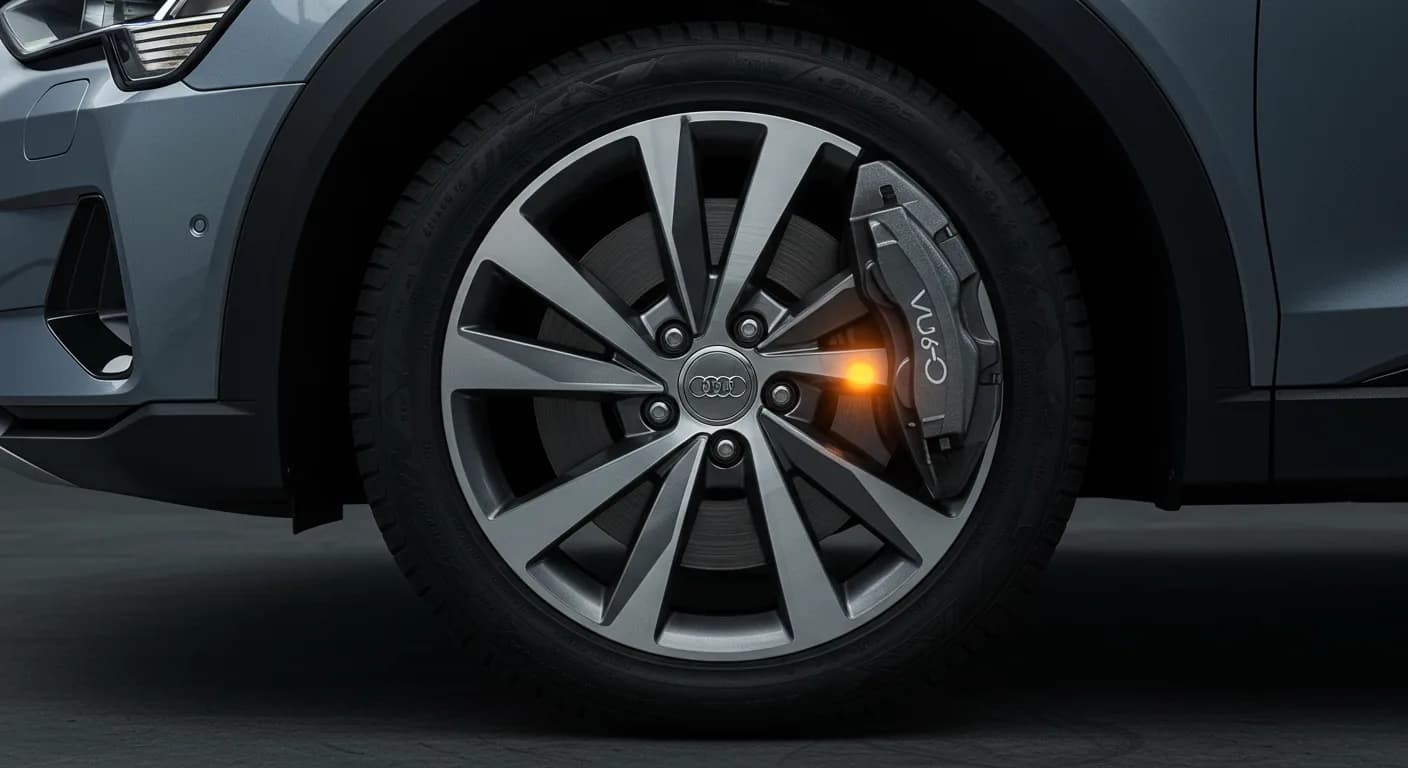
Also applies to
- Audi A3
- 2022–2026
- Audi A4
- 2021–2025
- Audi A4 allroad
- 2021–2025
- Audi A5
- 2021–2024
- Audi A6
- 2021–2025
- Audi A6 allroad
- 2021–2026
- Audi A7
- 2021–2025
- Audi A7 e
- 2021–2022
- Audi A8 L e
- 2021
- Audi e-tron
- 2021, 2023
- Audi e-tron GT
- 2022–2026
- Audi e-tron Sportback
- 2021–2022
- Audi Q3
- 2021–2025
- Audi Q5
- 2021–2025
- Audi Q5 e
- 2021, 2023, 2024, 2025
- Audi Q7
- 2021–2026
- Audi Q8
- 2021–2026
- Audi R8
- 2021–2023
- Audi RS 3
- 2022–2026
- Audi RS 5
- 2021–2024
- Audi RS 6 Avant
- 2021–2026
- Audi RS 7
- 2021–2026
- Audi RS e-tron GT
- 2022, 2023, 2024, 2026
- Audi RS Q8
- 2021–2026
- Audi S e-tron GT
- 2026
- Audi S3
- 2022–2026
- Audi S4
- 2021–2025
- Audi S5
- 2021–2024
- Audi S6
- 2021–2025
- Audi S7
- 2021–2025
- Audi S8
- 2021–2026
- Audi SQ5
- 2021–2025
- Audi SQ7
- 2021–2026
- Audi SQ8
- 2021–2026
- Audi TT
- 2021–2023
- Audi TT RS
- 2021–2022
- Audi TTS
- 2021–2023
▸ Show 31 more▾ Show fewer
Audi has issued Technical Service Bulletin (TSB) 2067132/3 to provide guidance on customer complaints related to corrosion, scoring, and noises originating from the friction surface of steel brake discs. This bulletin applies to various 2022-2026 Audi models and aims to help technicians diagnose and address these concerns. Owners experiencing Audi steel brake disc corrosion should pay close attention to this information.
The TSB, which has a release date of October 21, 2025, details the conditions under which such brake issues occur and outlines the recommended service procedures. Owners experiencing symptoms related to brake disc corrosion should be aware of the information contained in this bulletin.
Symptoms and Customer Complaints
Owners of affected 2022-2026 Audi vehicles may notice the following conditions, which are also categorized in the TSB's 'New customer code' section:
- "Rust layer on the brake disc"
- "Noises and/or vibrations when braking"
These symptoms are often described by customers with more specific complaint types:
- "chassis -> brake system -> brake rotor appearance, surface -> scoring/corrosion"
- "chassis -> brake system -> brake rotor appearance, surface -> material detaching"
- "chassis -> brake system noises, vibrations"
- "chassis -> brake system -> brake rotor appearance, surface -> corrosion/rust"
Workshop findings typically confirm these complaints, indicating a visible rust layer or audible noises and vibrations during braking.
Technical Background and Causes of Corrosion
Technical Service Bulletin 2067132/3 explains that corrosion on the friction surface of steel brake discs is a common occurrence influenced by environmental factors. Moisture and road salt are primary contributors to this issue. This is particularly noticeable if the vehicle is left stationary for extended periods or if the brakes are used lightly on short journeys, which can lead to insufficient "brake cleaning" – the process where brake pads naturally scrub the disc surface.
Audi brake discs are manufactured from "flake graphite cast iron," a material that, by its nature, is not inherently resistant to corrosion when exposed to environmental elements like water, salt, snow, and dirt. The TSB explicitly states that it is not possible to apply an anti-corrosion coating directly to the friction surfaces of the brake discs. The document includes visual aids, Figure 1 and Figure 2, which provide examples of excessively rusted disc brakes and rusted disc brake surfaces, respectively.
Proper maintenance of the brake discs, as outlined in the Owner's Manual, is crucial to mitigate Audi steel brake disc corrosion. This includes regularly removing corrosion through normal braking and avoiding overuse by intensive braking, which can also contribute to issues.
Service Recommendations and Repair Procedure
When addressing complaints related to brake disc corrosion or noise, TSB 2067132/3 recommends a specific service procedure for technicians:
- Perform an extensive test drive: The technician should conduct a thorough test drive that includes several braking operations. The purpose of this step is to allow the brake pads to clean the entire surface of the brake disc through friction.
- Check pad contact: After the test drive, the technician must verify that the brake pads are making correct and full contact with the disc. Proper contact ensures that the entire friction surface is being cleaned effectively during braking.
- Consider replacement if necessary: If the customer's complaint persists even after the brake discs have been intensively "braked clean" through the test drive and inspection, replacing the brake parts (discs and potentially pads) is presented as the only remaining option to resolve the issue.
- Educate the customer: Technicians are advised to explain to the customer the importance of maintaining the brakes according to the guidelines provided in the Owner's Manual. This education helps prevent future occurrences of brake disc corrosion by emphasizing regular use and proper braking habits.
Important Warnings for Owners
Owners should be aware of several critical points regarding this TSB 2067132/3 and the issue of Audi steel brake disc corrosion:
- Future Release Date: This TSB is officially listed as "Released for publishing" with a specific release date of October 21, 2025. This means the information is prepared and finalized but may not be actively implemented or widely communicated by dealerships until that future date.
- Warranty Coverage: This TSB is explicitly stated as "informational only and not applicable to any Audi Warranty." Furthermore, the document clarifies that "Issues of this kind caused by insufficient brake cleaning are not a fault covered under warranty." This is a crucial point: owners are generally responsible for the costs associated with diagnosing and repairing brake disc corrosion if it is attributed to insufficient brake cleaning or environmental factors, as these are not considered manufacturing defects.
- Checking for Updates: All parts and service references provided in this TSB (Transaction No. 2067132) are subject to change. Owners and technicians should always check with their Parts Department and/or ETKA for the latest information and parts bulletins, as well as the Repair Manual for any fasteners, bolts, nuts, and screws that require replacement during a repair.
Revision History
This Technical Service Bulletin 2067132/3 has undergone several revisions to update its content and scope:
- Revision 3: This revision included a revised header, adding model years, and updated service information.
- Revision 2 (September 15, 2023): This revision also involved a revised header, specifically adding more model years to the bulletin's applicability.
- Revision 1 (May 23, 2022): This marks the initial publication of the Technical Service Bulletin.
Source: NHTSA ID: 11025330
Frequently Asked Questions
- What is Audi TSB 2067132/3 about?
- Audi Technical Service Bulletin 2067132/3 addresses customer complaints regarding corrosion, scoring, material detaching, noises, and vibrations on the friction surface of steel brake discs in various Audi models from 2022 to 2026.
- Will Audi cover brake disc corrosion under warranty?
- According to TSB 2067132/3, issues like brake disc corrosion caused by insufficient brake cleaning are generally not covered under Audi's warranty. The TSB is informational only and does not apply to warranty claims, as such issues are not considered manufacturing faults.
- What causes the steel brake discs to corrode on my Audi?
- The TSB explains that corrosion on the friction surface of steel brake discs can occur due to moisture and road salt, especially if the vehicle is stationary for long periods or if the brakes are used lightly, leading to insufficient brake cleaning. The "flake graphite cast iron" material used for the discs is not inherently resistant to corrosion.
- What should I do if my Audi has "Rust layer on the brake disc" or "Noises and/or vibrations when braking"?
- If you experience a "Rust layer on the brake disc" or "Noises and/or vibrations when braking," Audi TSB 2067132/3 suggests having a technician perform an extensive test drive with several brake operations to clean the discs. If the complaint persists after the discs have been "braked clean," replacement of the brake discs may be the only option. It's also important to maintain brakes according to your Owner's Manual.
- When was Audi TSB 2067132/3 released?
- Audi TSB 2067132/3 has an official release date of October 21, 2025. It was initially published on May 23, 2022, and has undergone revisions, with the latest significant revision occurring on September 15, 2023.
Related Articles
2022 Audi e-tron Problems: Electrical System & Braking Concerns
The 2022 Audi e-tron has faced significant owner complaints regarding its electrical system, including sudden power loss and charging hazards, as well as various braking malfunctions. This profile details these issues and relevant service bulletins.
2022-2026 Audi Guided Fault Finding Reporting Obligation
Audi has issued Technical Service Bulletin TPI 2033392, also known as Transaction No. 2081531/1, regarding a reporting obligation for technicians when Guided Fault Finding produces an unexpected result. This TSB outlines the process for contacting Audi Product Support for diagnostic assistance.
2022-2026 Audi Infotainment System Complaints
Audi has released Technical Service Bulletin (TSB) 2081405/1 to address various customer complaints regarding infotainment systems in 2022-2026 Audi vehicles. This TSB helps technicians diagnose issues often caused by external media or mobile devices, rather than vehicle technology.
2018-2026 Audi Models Cracking Noise TSB 2061464/11
Audi Technical Service Bulletin 2061464/11 describes a cracking noise from the front or rear axle when changing direction in various 2018-2026 Audi models. The issue is due to stub axle movement and is resolved by bonding the stub axle to the wheel bearing with locking fluid.
2022-2026 Audi Parking Aid False Warnings TSB 2024323/13
Audi has released Technical Service Bulletin 2024323/13 to address customer complaints of false parking aid warnings. This bulletin details various environmental and vehicle-specific conditions that can cause the parking aid system to issue alerts even when no obstacles are present. It provides…
Leave a comment
Comments are moderated and may take a moment to appear. Only your first name and the initial of your last name are shown publicly.
Comments
Be the first to comment.