2019-2025 Audi Apple CarPlay / Android Auto Issues TSB
This Audi Technical Service Bulletin (TSB 2076466/1) addresses common complaints regarding Apple CarPlay and Android Auto not working properly across a wide range of 2019-2025 Audi models. It provides a comprehensive diagnostic checklist for technicians.
 Ahmet Topcu2023 Audi e-tron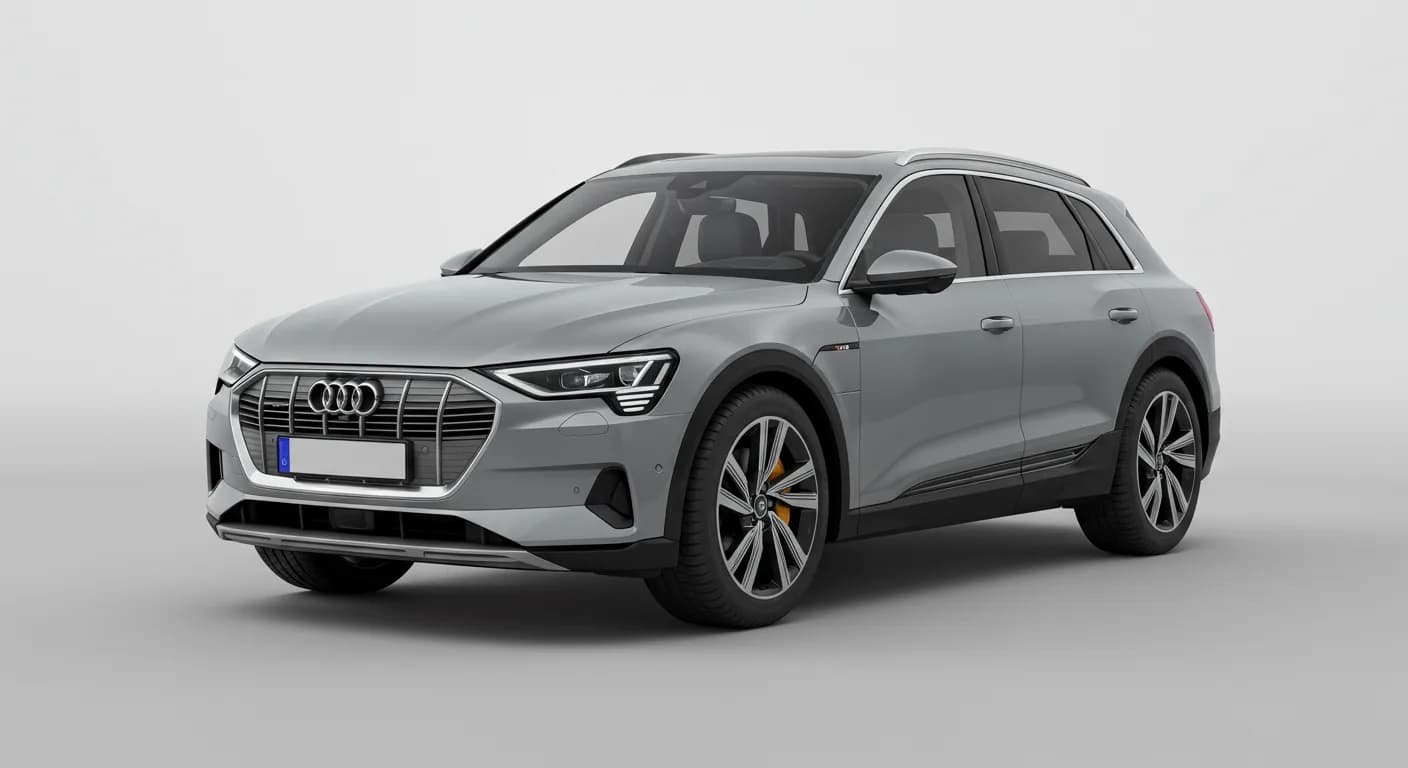
Also applies to
- Audi A3
- 2022–2025
- Audi A4
- 2021–2025
- Audi A4 allroad
- 2021–2025
- Audi A5
- 2025
- Audi A6
- 2021–2025
- Audi A6 allroad
- 2021–2025
- Audi A7
- 2021–2025
- Audi A7 e
- 2021–2022
- Audi A8 L e
- 2021
- Audi e-tron
- 2021–2022
- Audi e-tron Sportback
- 2021–2022
- Audi Q3
- 2021–2025
- Audi Q5
- 2021–2025
- Audi Q5 e
- 2021, 2023, 2024, 2025
- Audi Q7
- 2021–2025
- Audi Q8
- 2021–2025
- Audi RS 3
- 2022–2024
- Audi RS 6 Avant
- 2021–2025
- Audi RS 7
- 2021–2025
- Audi RS Q8
- 2021–2025
- Audi S3
- 2022–2025
- Audi S4
- 2021–2025
- Audi S5
- 2025
- Audi S6
- 2021–2025
- Audi S7
- 2021–2025
- Audi S8
- 2021–2025
- Audi SQ5
- 2021–2025
- Audi SQ7
- 2021–2025
- Audi SQ8
- 2021–2025
▸ Show 23 more▾ Show fewer
Symptoms
Owners of various 2019-2025 Audi models may experience a range of complaints regarding their in-vehicle smartphone integration systems. The primary symptom is that "Apple CarPlay or Android Auto is not working properly." This can manifest as the system not connecting, intermittent functionality, or a complete failure to launch.
Technical Background
Audi has identified that issues with Apple CarPlay and Android Auto can stem from several sources. These include incorrect MMI (Multi Media Interface) settings within the vehicle, specific settings on the owner's smartphone, or limitations related to the phone's operating system software. Audi recommends always ensuring both the smartphone app and the phone's operating system are running the newest available software version to rule out common software-related conflicts.
Important Warnings
Audi emphasizes the importance of proper diagnosis before attempting any repairs. The Technical Service Bulletin 2076466/1 states:
"Try to reproduce the customer complaint (based on the description/cause of the issue), so that it can be clearly assigned to this TSB. The following repair must only be carried out if all the criteria (model/type, chassis number, engine/motor and gearbox code, PR number(s), part number, software version, code etc.) apply exactly. Otherwise, this solution will not eliminate the problem, and repeat repairs may be necessary. In such a case, we may reject the warranty claim and redebit the parts."
This means that technicians must thoroughly investigate and confirm the root cause according to the TSB's guidelines to ensure the repair is effective and covered under warranty. Owners should be aware that unauthorized or incorrect repairs may not be covered.
Diagnostic Steps for Technicians
This TSB provides a comprehensive checklist for technicians to diagnose issues with Apple CarPlay and Android Auto. These steps aim to identify whether the problem lies with the phone, the vehicle's MMI system, or connectivity:
Phone and Software Checks
- Verify if Apple CarPlay is activated on the phone (Settings => General => CarPlay).
- Confirm the Android Auto app is installed on Android devices.
- Check if Android Auto is available in the vehicle's country.
- Ensure the phone has the latest software version installed. For Apple CarPlay, iOS 15.5 (June 2022) or newer is required. For Android Auto, Android 5.0 or higher (8.0 for wireless) is needed.
- Determine if a 5GHz network is permitted in the market; if not, wireless ASI (Audi Smartphone Interface) may not be possible.
- For MIB2+ vehicles from model year 2019, note that "Wireless Apple CarPlay is not available for these vehicles; Apple CarPlay can only be used via USB."
MMI and Connectivity Checks
- Check if privacy mode is deactivated on the MMI. If privacy mode is active, the 5 GHz Wi-Fi will not be active, preventing wireless Apple CarPlay functionality.
- Perform a terminal 30 reset of the control unit for information electronics (diagnostic address 5F) and the connectivity box/OCU (diagnostic address 75) by removing relevant fuses and disconnecting the backup battery.
- Verify the USB cable by trying a different, genuine Audi USB cable.
- Check if the phone can charge via USB; if not, inspect the USB interface.
- If there is no response when pressing the Apple CarPlay tile, confirm a Wi-Fi connection has been established. If a Bluetooth symbol is shown on the MMI, Wi-Fi is not active.
Phone and MMI Resets/Reconnects
- Attempt to resolve the issue by resetting the phone/app to factory settings.
- Restart the iPhone or Android phone.
- Run activation codes via GFF (Guided Functions) using "SVM activations" or "SVM activations (FoD)". These activations are for the control unit for information electronics (diagnostic address 5F) or the gateway (diagnostic address 19).
- Completely reconnect the phone by deleting it from the MIB's device overview, resetting ASI to factory settings, selecting "Forget This Car" in the iPhone's CarPlay settings, restarting the iPhone, and then reconnecting.
Advanced Troubleshooting (if issue persists)
If these initial checks do not resolve the problem, technicians are instructed to create a TAC Ticket. This ticket must include detailed information such as a video of the complaint, whether the issue occurs with both iPhone and Android, specific phone models and iOS versions used, and precise conditions under which the complaint occurs (e.g., while driving, after bus sleep mode, Wi-Fi connection quality, black screen details, diagnostic log).
Repair Procedure Summary
This TSB, identified as 91 25 00 2076466/1, primarily focuses on diagnostic and software-related solutions rather than physical component replacement. The labor operations associated with this bulletin include:
- Check display and operating unit control unit (remove fuse): This involves checking the functionality of the MMI display and control unit, potentially requiring a fuse removal as part of the diagnostic process (Labor Operation 9196 0199, 20 TU).
- GFF / Guided Functions: Technicians will utilize guided diagnostic functions to pinpoint issues, with time recorded as per the diagnostic protocol (Labor Operation 0150 0060).
- Charge battery: Ensuring the vehicle's battery is adequately charged is a preliminary step for stable system operation (Labor Operation 2706 8950).
- Check and adjust display and operating unit control unit: This involves further checks and potential adjustments to the MMI display and control unit (Labor Operation 9196 0599, 20 TU).
These steps are designed to systematically troubleshoot and, if necessary, re-initialize the vehicle's infotainment system and its connection to external devices.
Warranty Information
For vehicles still under warranty, claims related to this issue must adhere to the Audi Warranty Policies and Procedures Manual. The Service Number for this TSB is 9109, and the Damage Code is 0040. The claim comment should reference "As per TSB 2076466/1". If the vehicle is outside of its warranty period, this Technical Service Bulletin is for informational purposes only, and any repairs would typically be at the owner's expense. All warranty claims are subject to review and audit by Audi Warranty.
Owner Action
If you are experiencing issues with Apple CarPlay or Android Auto in your 2019-2025 Audi, such as your 2023 Audi e-tron Apple CarPlay not working, consider these initial steps:
- Update your phone: Ensure your smartphone's operating system (iOS 15.5+ or Android 5.0+/8.0 for wireless) and the Apple CarPlay/Android Auto apps are fully updated.
- Check phone settings: Verify that Apple CarPlay is enabled on your iPhone and that Android Auto is installed and configured correctly on your Android device.
- USB cable: Try using a different, genuine USB cable if you typically connect via wired CarPlay/Android Auto.
- Restart devices: Restart both your smartphone and your vehicle's MMI system.
- Privacy Mode: Check your MMI settings to ensure privacy mode is deactivated, as this can disable 5 GHz Wi-Fi and prevent wireless CarPlay.
If the problem persists after these checks, contact your authorized Audi dealership. Inform them about the specific symptoms and mention Technical Service Bulletin 2076466/1. Be prepared to provide details about your phone model, software version, and the conditions under which the issue occurs, as this will assist technicians in their diagnostic process.
Source: NHTSA ID: 11013699
Frequently Asked Questions
- What does Audi TSB 2076466/1 address?
- Audi TSB 2076466/1 provides a comprehensive diagnostic and troubleshooting guide for technicians to address various customer complaints regarding Apple CarPlay and Android Auto not working properly in 2019-2025 Audi vehicles.
- Why is my 2023 Audi e-tron Apple CarPlay not working wirelessly?
- Wireless Apple CarPlay requires a 5 GHz Wi-Fi connection. If your MMI's privacy mode is activated, the 5 GHz Wi-Fi will be inactive, preventing wireless Apple CarPlay. Also, for MIB2+ vehicles from model year 2019, wireless Apple CarPlay is not available and requires a USB connection.
- What are the first steps I should take if my Audi's Apple CarPlay or Android Auto isn't working?
- First, ensure your smartphone's operating system (iOS 15.5+ or Android 5.0+) and the respective apps are updated. Check your phone's settings to confirm Apple CarPlay or Android Auto is enabled, try a different USB cable, and restart both your phone and the vehicle's MMI system. Also, verify that privacy mode is deactivated in your MMI settings.
- Can I get this issue fixed under warranty?
- If your vehicle is still under warranty, repairs related to this TSB (Service Number 9109, Damage Code 0040) should be covered, provided the diagnosis aligns with Audi's guidelines. However, if your vehicle is outside of warranty, this TSB is informational, and repairs may be at your expense.
Related Articles
Should 2023 Audi e-tron Owners Worry? Recall & TSB Roundup
The 2023 Audi e-tron faces significant safety concerns, including recalls for potential brake pedal detachment and charging cable overheating. Owners have also reported serious issues like unintended acceleration and electrical system malfunctions. This guide covers all known problems and solutions.
2023 Audi e-tron Brake Pedal Recall
Audi has issued a recall (NHTSA ID: 26V240000, Audi Recall 46P7) for certain 2019-2024 E-Tron and 2020-2024 E-Tron Sportback vehicles, including the 2023 Audi e-tron. The recall addresses a potential issue where the brake pedal may detach from the brake booster, leading to a loss of brake function.
2015-2027 Audi Noise Diagnosis with Frequency Analysis App TSB
Audi has released Technical Service Bulletin 2051095/11 detailing the Audi Frequency Analysis app. This app helps technicians diagnose noise complaints more precisely across 2015-2027 Audi models. Learn how the app works, where to download it, and its features for effective vehicle noise analysis.
2023 Audi e-tron AC/DC Charging Not Possible TSB
This manufacturer communication (NHTSA ID 11031035) provides critical information for 2023 Audi e-tron owners facing issues with AC/DC charging. It specifically highlights problems linked to software version 00C6: 0093/3119, which can prevent the vehicle from charging.
2023-2025 Audi Rear Seat Reminder Message TSB 2074943/2
Audi Technical Service Bulletin 2074943/2 explains the instrument cluster message 'Please check rear seats and be aware of door safelock' in various 2023-2025 Audi models. This informational TSB details the rear occupant detection system designed to prevent children and pets from being left in…
Leave a comment
Comments are moderated and may take a moment to appear. Only your first name and the initial of your last name are shown publicly.
Comments
Be the first to comment.