2015-2026 Audi Interior Control Functions Restricted TSB
Audi Technical Service Bulletin 87 24 93 2076287/1 addresses restricted interior control functions in 2015-2026 Audi vehicles, often caused by moisture from cleaning agents, and outlines critical warranty implications for owners.
 David Chen2023 Audi e-tron
Also applies to
- Audi A3
- 2022–2025
- Audi A4
- 2021–2025
- Audi A4 allroad
- 2021–2025
- Audi A5
- 2021–2025
- Audi A6
- 2021–2025
- Audi A6 allroad
- 2021–2025
- Audi A7
- 2021–2025
- Audi A7 e
- 2021–2022
- Audi A8 L e
- 2021
- Audi e-tron
- 2021–2022
- Audi e-tron GT
- 2022–2025
- Audi e-tron Sportback
- 2021–2022
- Audi Q3
- 2021–2025
- Audi Q5
- 2021–2025
- Audi Q5 e
- 2021, 2023, 2024, 2025
- Audi Q7
- 2021–2025
- Audi Q8
- 2021–2025
- Audi R8
- 2021–2023
- Audi RS 3
- 2022–2024
- Audi RS 5
- 2021–2024
- Audi RS 6 Avant
- 2021–2025
- Audi RS 7
- 2021–2025
- Audi RS e-tron GT
- 2022–2024
- Audi RS Q8
- 2021–2025
- Audi S e-tron GT
- 2026
- Audi S3
- 2022–2025
- Audi S4
- 2021–2025
- Audi S5
- 2021–2025
- Audi S6
- 2021–2025
- Audi S7
- 2021–2025
- Audi S8
- 2021–2025
- Audi SQ5
- 2021–2025
- Audi SQ7
- 2021–2025
- Audi SQ8
- 2021–2025
- Audi TT
- 2021–2023
- Audi TT RS
- 2021–2022
- Audi TTS
- 2021–2023
▸ Show 31 more▾ Show fewer
Symptoms of Restricted Interior Controls
Owners of 2015-2026 Audi vehicles may experience a frustrating issue where "no settings can be changed using the controls in the vehicle interior." This problem can affect a wide range of critical vehicle functions and components. The inability to adjust settings can impact daily driving comfort and convenience.
Specifically, the Audi interior control functions restricted issue can manifest in several areas. This includes the air conditioning console in both the front and rear of the vehicle, switches in the center console, and switches located in the dash panel. Additionally, the multifunction buttons on the steering wheel, light switches, the roof module, the rear lid release button, and the mirror adjustment buttons may also become unresponsive.
The Root Cause: Moisture Damage
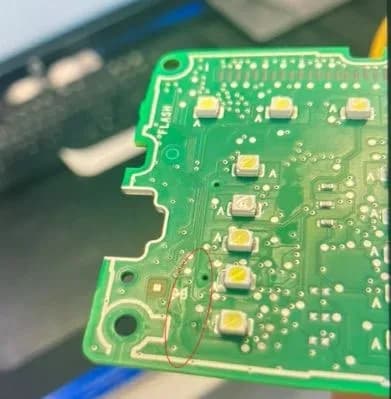
Workshop investigations have consistently reproduced the customer complaint of restricted interior controls. The technical background provided in the bulletin points to a clear cause: moisture on the printed circuit board (PCB) inside the affected components. Figures 1 and 2 in the bulletin visually demonstrate evidence of moisture on these PCBs, indicating that water ingress is directly responsible for the malfunction.
This moisture exposure is often linked to the use of cleaning agents and disinfectants. The electronic components within the front and rear air conditioning controls are particularly susceptible to these substances. Excessive use of such agents during vehicle cleaning can lead to moisture penetrating and damaging the sensitive circuitry.
Critical Warranty Information for Owners
Audi has issued an important warning regarding warranty coverage for this specific issue. Owners should be aware that if defective air conditioning controls or any type of switch or touch panel show residue of cleaning agents or disinfectants in the component, the warranty claim will be rejected. This is because the damage is considered to be due to outside influence and is not covered by any Audi Warranty.
This policy highlights the importance of careful cleaning practices to avoid incurring repair costs that will not be covered by the manufacturer. Understanding this warranty exclusion is crucial for all Audi owners.
Preventing Damage to Your Audi's Interior Controls
To prevent the Audi interior control functions restricted problem and avoid warranty claim rejections, it is essential to exercise caution when cleaning your vehicle's interior. Avoid excessive use of cleaning agents and disinfectants, especially near electronic components and control surfaces. These chemicals can easily seep into sensitive areas and cause moisture damage to the printed circuit boards.
When using professional cleaning equipment, such as a Tornador® cleaner (illustrated in Figure 3 of the bulletin), it is highly recommended to seek the expertise of professional cleaning companies. These specialists are equipped to clean vehicles thoroughly while minimizing the risk of damage to delicate electronic systems. By following these best practices, you can help protect your Audi's interior controls and maintain their functionality.
Source: NHTSA ID: 11012501
Gallery
3 images
Frequently Asked Questions
- What causes restricted interior control functions in 2015-2026 Audi vehicles?
- Restricted interior control functions in 2015-2026 Audi vehicles are often caused by moisture on the printed circuit boards of control components, resulting from the excessive use of cleaning agents and disinfectants.
- Will Audi warranty cover repairs for restricted interior control functions caused by cleaning agents?
- No, Audi will reject warranty claims for defective interior controls if residue from cleaning agents or disinfectants is found. This damage is considered outside influence and is not covered by Audi Warranty, as stated in TSB 87 24 93 2076287/1.
- How can I prevent damage to my Audi's interior controls?
- To prevent damage, avoid excessive use of cleaning agents and disinfectants on interior electronic components. If using professional cleaning equipment like a Tornador cleaner, it's best to consult professional cleaning companies to ensure proper technique and prevent moisture ingress.
- What specific interior controls can be affected by the 'Audi interior control functions restricted' issue?
- The issue can affect the front and rear air conditioning consoles, switches in the center console and dash panel, multifunction buttons on the steering wheel, light switches, the roof module, the rear lid release button, and mirror adjustment buttons.
Related Articles
2023 Audi e-tron Problems: Recalls, Complaints & TSBs
The 2023 Audi e-tron has faced several significant safety concerns, including recalls for potential charging cable overheating and brake pedal detachment. Owners have also reported serious issues like sudden unintended acceleration and electrical system malfunctions. This profile details these…
2023 Audi e-tron Brake Pedal Recall
Audi has issued a recall (NHTSA ID: 26V240000, Audi Recall 46P7) for certain 2019-2024 E-Tron and 2020-2024 E-Tron Sportback vehicles, including the 2023 Audi e-tron. The recall addresses a potential issue where the brake pedal may detach from the brake booster, leading to a loss of brake function.
2015-2027 Audi Noise Diagnosis with Frequency Analysis App TSB
Audi has released Technical Service Bulletin 2051095/11 detailing the Audi Frequency Analysis app. This app helps technicians diagnose noise complaints more precisely across 2015-2027 Audi models. Learn how the app works, where to download it, and its features for effective vehicle noise analysis.
2023 Audi e-tron AC/DC Charging Not Possible TSB
This manufacturer communication (NHTSA ID 11031035) provides critical information for 2023 Audi e-tron owners facing issues with AC/DC charging. It specifically highlights problems linked to software version 00C6: 0093/3119, which can prevent the vehicle from charging.
2023-2025 Audi Rear Seat Reminder Message TSB 2074943/2
Audi Technical Service Bulletin 2074943/2 explains the instrument cluster message 'Please check rear seats and be aware of door safelock' in various 2023-2025 Audi models. This informational TSB details the rear occupant detection system designed to prevent children and pets from being left in…
Leave a comment
Comments are moderated and may take a moment to appear. Only your first name and the initial of your last name are shown publicly.
Comments
Be the first to comment.