2023-2026 Audi Ceramic Brake Inserts Loose TSB
Audi has issued Technical Service Bulletin (TSB) 46 24 59 2069078/2 regarding zirconium inserts in ceramic brake pistons that may become loose. This TSB applies to various Audi models from 2023-2026 equipped with ceramic brakes.
 David Chen2023 Audi e-tron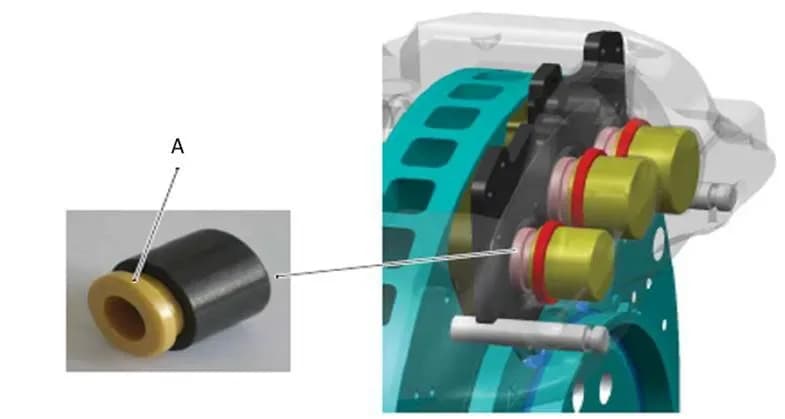
También aplica a
- Audi A3
- 2022–2025
- Audi A4
- 2021–2025
- Audi A4 allroad
- 2021–2025
- Audi A5
- 2021–2025
- Audi A6
- 2021–2025
- Audi A6 allroad
- 2021–2025
- Audi A7
- 2021–2025
- Audi A7 e
- 2021–2022
- Audi A8 L e
- 2021
- Audi e-tron
- 2021–2022
- Audi e-tron GT
- 2022–2025
- Audi e-tron Sportback
- 2021–2022
- Audi Q3
- 2021–2025
- Audi Q5
- 2021–2025
- Audi Q5 e
- 2021, 2023, 2024, 2025
- Audi Q7
- 2021–2025
- Audi Q8
- 2021–2025
- Audi R8
- 2021–2023
- Audi RS 3
- 2022–2025
- Audi RS 5
- 2021–2025
- Audi RS 6 Avant
- 2021–2025
- Audi RS 7
- 2021–2025
- Audi RS e-tron GT
- 2022–2024
- Audi RS Q8
- 2021–2025
- Audi S e-tron GT
- 2026
- Audi S3
- 2022–2025
- Audi S4
- 2021–2025
- Audi S5
- 2021–2025
- Audi S6
- 2021–2025
- Audi S7
- 2021–2025
- Audi S8
- 2021–2025
- Audi SQ5
- 2021–2025
- Audi SQ7
- 2021–2025
- Audi SQ8
- 2021–2025
- Audi TT
- 2021–2023
- Audi TT RS
- 2021–2022
- Audi TTS
- 2021–2023
▸ Mostrar 31 más▾ Mostrar menos
What are Zirconium Inserts?
Zirconium inserts are crucial components within the ceramic brake system of Audi vehicles. Their primary function is to act as insulators, preventing the high temperatures generated by the brake pads from transferring directly to the brake piston, seals, and brake fluid. This thermal protection helps maintain the integrity and performance of the braking system, especially under demanding conditions.
Symptoms of Loose Zirconium Inserts
Audi Technical Service Bulletin 46 24 59 2069078/2 addresses a condition where these zirconium inserts may become loose. The TSB notes that this issue is typically not reported by customers as a direct concern but is instead discovered during diagnostic work or routine maintenance. Specifically, technicians may observe that the "zirconium inserts are loose (can be turned/moved)" when working on the brake calipers, such as during brake pad replacement.
While the TSB states that the brake system's functions are not affected by loose inserts, addressing this condition ensures the long-term thermal protection intended by the design.
Diagnosis
This condition is usually identified by a technician during service, particularly when performing maintenance on the brake calipers or replacing brake pads. The process involves a visual and tactile inspection of the zirconium inserts within the brake piston. If the inserts are found to be loose or can be easily moved, they require attention.
Important Warnings for Owners
Audi TSB 46 24 59 2069078/2 provides a critical clarification for technicians and owners: "It is neither necessary nor justified to replace the brake caliper." This means that the presence of loose zirconium inserts does not necessitate the replacement of the entire brake caliper assembly, which can be a costly part. The focus should be on correctly seating the inserts.
It is also important to note that this TSB is informational only and is not applicable to any Audi Warranty. This implies that any inspection or repair related to this condition may not be covered under standard warranty terms.
Repair Procedure
The repair procedure for loose zirconium inserts is straightforward, as detailed in Audi TSB 46 24 59 2069078/2. Technicians are instructed to simply "Fit zirconium insert back into brake piston." This involves carefully repositioning and securing the loose inserts within their designated place in the brake caliper piston. No special tools or replacement parts are typically required for this specific correction.
What Audi Owners Should Do
If you own a 2023-2026 Audi vehicle equipped with ceramic brakes, you should be aware of this potential condition. While the issue of Audi ceramic brake inserts loose is generally discovered during routine service rather than causing noticeable symptoms, it's a good practice to ensure your technician is aware of TSB 46 24 59 2069078/2 during any brake-related maintenance, especially when brake pads are being replaced. Since this is an informational bulletin and not a recall, Audi is not actively notifying owners. Discussing this TSB with your service center can help ensure proper inspection and correction if needed.
NHTSA ID: 11009356
Frequently Asked Questions
- What is Audi TSB 46 24 59 2069078/2 about?
- Audi Technical Service Bulletin 46 24 59 2069078/2 addresses the issue of zirconium inserts becoming loose in the brake pistons of ceramic brake systems on various Audi models from 2023-2026.
- What are the symptoms of loose zirconium inserts in Audi ceramic brakes?
- The TSB indicates that loose zirconium inserts typically do not present noticeable symptoms to the driver. Instead, the condition, where "zirconium inserts are loose (can be turned/moved)", is usually discovered by technicians during diagnostic work or when replacing brake pads.
- Is it necessary to replace the entire brake caliper if the zirconium inserts are loose?
- No, according to Audi TSB 46 24 59 2069078/2, "It is neither necessary nor justified to replace the brake caliper." The recommended repair is to simply refit the zirconium insert back into the brake piston.
- Does this TSB apply to all Audi vehicles?
- This TSB specifically applies to Audi vehicles from model years 2023-2026 that are equipped with ceramic brakes. It does not apply to vehicles with standard braking systems.
- Is the repair for loose Audi ceramic brake inserts covered under warranty?
- Audi TSB 46 24 59 2069078/2 states that it is informational only and not applicable to any Audi Warranty. This means that any inspection or repair related to this condition may not be covered under your vehicle's standard warranty.
Related Articles
Should 2023 Audi e-tron Owners Worry? Recall & TSB Roundup
The 2023 Audi e-tron faces significant safety concerns, including recalls for potential brake pedal detachment and charging cable overheating. Owners have also reported serious issues like unintended acceleration and electrical system malfunctions. This guide covers all known problems and solutions.
2023 Audi e-tron Brake Pedal Recall
Audi has issued a recall (NHTSA ID: 26V240000, Audi Recall 46P7) for certain 2019-2024 E-Tron and 2020-2024 E-Tron Sportback vehicles, including the 2023 Audi e-tron. The recall addresses a potential issue where the brake pedal may detach from the brake booster, leading to a loss of brake function.
2015-2027 Audi Noise Diagnosis with Frequency Analysis App TSB
Audi has released Technical Service Bulletin 2051095/11 detailing the Audi Frequency Analysis app. This app helps technicians diagnose noise complaints more precisely across 2015-2027 Audi models. Learn how the app works, where to download it, and its features for effective vehicle noise analysis.
2023 Audi e-tron AC/DC Charging Not Possible TSB
This manufacturer communication (NHTSA ID 11031035) provides critical information for 2023 Audi e-tron owners facing issues with AC/DC charging. It specifically highlights problems linked to software version 00C6: 0093/3119, which can prevent the vehicle from charging.
2023-2025 Audi Rear Seat Reminder Message TSB 2074943/2
Audi Technical Service Bulletin 2074943/2 explains the instrument cluster message 'Please check rear seats and be aware of door safelock' in various 2023-2025 Audi models. This informational TSB details the rear occupant detection system designed to prevent children and pets from being left in…
Leave a comment
Comments are moderated and may take a moment to appear. Only your first name and the initial of your last name are shown publicly.
Comments
Be the first to comment.