2000-2026 Audi Vehicle Vibration TSB 2074846/1
If your Audi experiences vibrations in the seat, floor, pedals, or steering wheel between 35 and 70 mph, Technical Service Bulletin 2074846/1 provides diagnostic and repair procedures. It covers issues like tire radial force variation and flat spots.
 Sarah Mitchell2023 Audi e-tron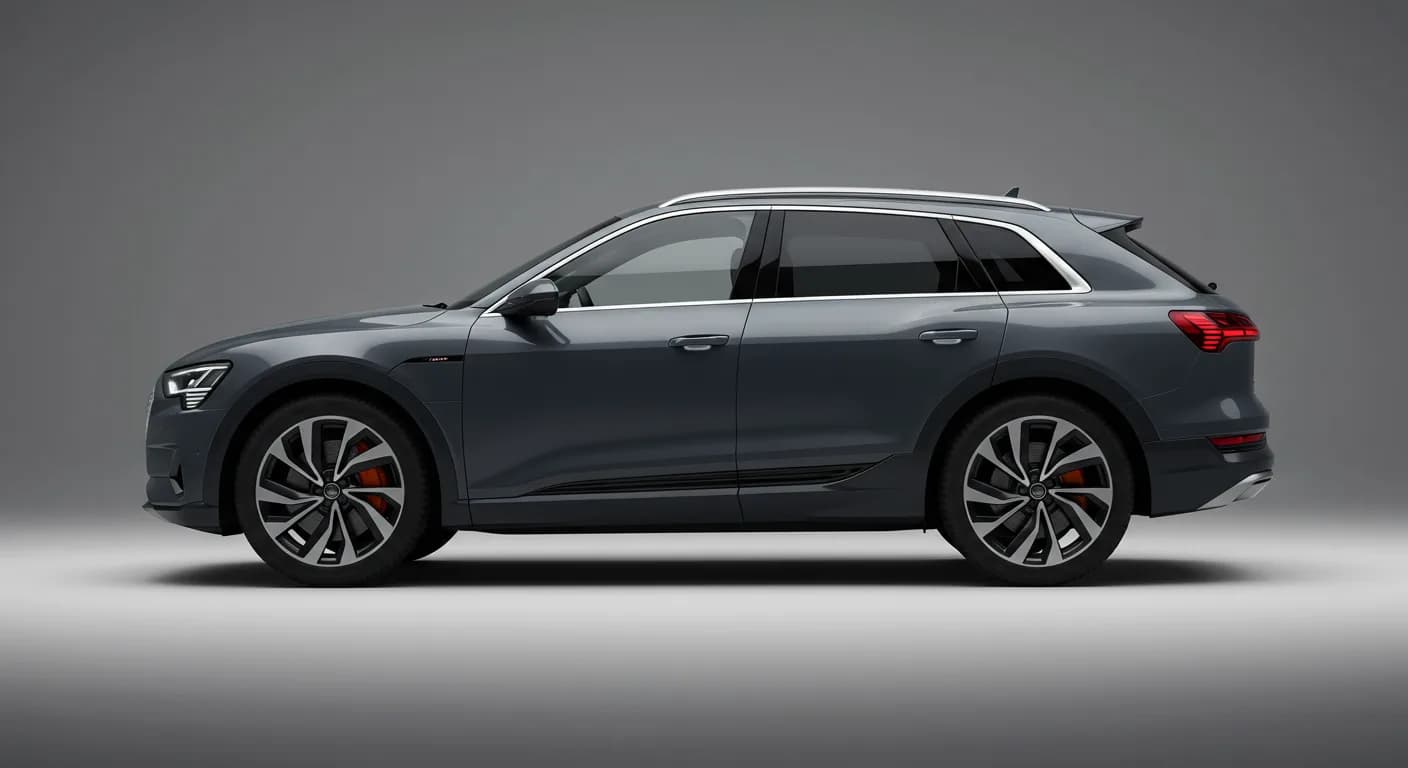
Also applies to
- Audi A3
- 2022–2025
- Audi A4
- 2021–2025
- Audi A4 allroad
- 2021–2025
- Audi A5
- 2021–2025
- Audi A6
- 2021–2025
- Audi A6 allroad
- 2021–2025
- Audi A7
- 2021–2025
- Audi A7 e
- 2021–2022
- Audi A8 L e
- 2021
- Audi e-tron
- 2021–2022
- Audi e-tron GT
- 2022–2025
- Audi e-tron Sportback
- 2021–2022
- Audi Q3
- 2021–2025
- Audi Q5
- 2021–2025
- Audi Q5 e
- 2021, 2023, 2024, 2025
- Audi Q7
- 2021–2025
- Audi Q8
- 2021–2025
- Audi R8
- 2021–2023
- Audi RS 3
- 2022–2025
- Audi RS 5
- 2021–2025
- Audi RS 6 Avant
- 2021–2025
- Audi RS 7
- 2021–2025
- Audi RS e-tron GT
- 2022–2024
- Audi RS Q8
- 2021–2025
- Audi S e-tron GT
- 2026
- Audi S3
- 2022–2025
- Audi S4
- 2021–2025
- Audi S5
- 2021–2025
- Audi S6
- 2021–2025
- Audi S7
- 2021–2025
- Audi S8
- 2021–2025
- Audi SQ5
- 2021–2025
- Audi SQ7
- 2021–2025
- Audi SQ8
- 2021–2025
- Audi TT
- 2021–2023
- Audi TT RS
- 2021–2022
- Audi TTS
- 2021–2023
▸ Show 31 more▾ Show fewer
Owners of 2000-2026 Audi vehicles may experience an Audi vehicle vibration that can be felt throughout the cabin. This issue, detailed in Technical Service Bulletin (TSB) 2074846/1, specifically refers to vibrations and rotational steering wheel vibrations that occur within certain speed ranges.
This bulletin provides comprehensive guidance for technicians to diagnose and resolve these vibrations, ensuring a smoother driving experience for Audi owners.
Symptoms of Audi Vehicle Vibration
If you own a 2000-2026 Audi, you might notice vibrations occurring at speeds between 35 and 70 mph. These vibrations can manifest in several ways, making the driving experience uncomfortable. Vehicle occupants may feel these vibrations in the seat surface, the vehicle floor, the footwell, the pedal cluster, or the steering wheel. The intensity of the vibrations may also vary, sometimes being stronger during braking or acceleration, or only appearing during specific driving phases.
Understanding the Cause: Radial Force Variation and Flat Spots
Audi's TSB 2074846/1 explains two primary technical reasons for these vibrations:
Radial Force Variation
Tires inherently have softer and stiffer areas around their circumference due to their construction and production characteristics. This variation in the tire's compression force as it rotates is known as radial force variation. To measure this, a specialized vibration control system, VAS6230(A), is used to simulate the tire rolling on the road. The difference between the maximum and minimum radial force (peak-to-peak value) should be 120N or less. The first harmonic vibration, which is the most significant contributor to vibrations, must be 80N or less.
Flat Spots Caused by Storage
Even after a short period of being stationary, especially when the warm tire cools down, flat spots can develop. The severity of these flat spots depends on the tire type, dimension, and manufacturer. These flat spots can significantly affect radial force variation measurements and must be addressed before any wheel balancing procedure.
Important Warnings for Owners
Audi emphasizes several key points for owners regarding this Audi vehicle vibration issue:
- Flat spots are normal and not faults covered under warranty. This means that if vibrations are caused solely by flat spots from storage, the repair may not be covered under your vehicle's warranty.
- It is very important to drive them out prior to every wheel balancing procedure. Before any wheel balancing or vibration diagnosis, tires that have developed flat spots should be driven to allow them to round out.
- If the first harmonic vibration of the radial force cannot be brought to the specified limit of 80N by matching, a new tire must be used. In cases where tire matching cannot resolve the radial force variation to acceptable levels, tire replacement is necessary.
- Only repairs on components which were part of the vehicle when it was delivered can be claimed under warranty. This clarifies that warranty coverage applies only to original equipment components.
Repair Procedure Summary
To address the Audi vehicle vibration described in TSB 2074846/1, technicians follow a specific seven-step procedure:
- Test Drive: Perform a test drive of up to 20 miles (up to 65 mph) across various speed ranges to confirm the vibration symptoms.
- Vehicle Preparation: Immediately after the test drive, raise the vehicle so the wheels are off the ground.
- Wheel Mounting: Remove the wheels and mount them on the vibration control system VAS6230(A).
- Measurement and Balancing: Measure, balance, and, if necessary, match the wheels according to the instructions provided by the equipment. The goal is to achieve a peak-to-peak value of 120N or less and a first harmonic vibration of 80N or less.
- Wheel Installation: Fit the wheels back onto the vehicle following Hunter equipment instructions.
- Tire Pressure Adjustment: Restore the vehicle's required tire pressure.
- Final Assessment: Re-assess the vehicle in the speed range where the vibrations were initially reported to confirm the repair's effectiveness.
Required Tools and Labor Operations
Specialized tools are required for accurate diagnosis and repair of the Audi vehicle vibration:
- VAS 6230 (GSP9700): Road Force Measurement System
- VAS 6243: Clamping Plate
Technicians will use specific labor operation codes for warranty claims, including:
- 4405 9300: 1 wheel balanced
- 4405 9351: 1 wheel matched
- 4405 940x: 2/3/4 wheels balanced
- 4405 945x: 2/3/4 wheels matched
- 4440 5550: Replace 1 tire
- 4440 565x: Replace 2/3/4 tires
Diagnostic time codes include 0121 0002 (10 TU) for a road test prior to service and 0121 0004 (10 TU) for a road test after service.
Warranty Information
All warranty claims related to TSB 2074846/1 must adhere to the Audi Warranty Policies and Procedures Manual. Claims are subject to review and audit by Audi Warranty. Only repairs on components that were original to the vehicle at the time of delivery are eligible for warranty claims.
Frequently Asked Questions
- What causes the Audi vehicle vibration at speeds between 35-70 mph?
- According to Audi TSB 2074846/1, these vibrations are primarily caused by tire radial force variation, which refers to inconsistencies in tire stiffness, and flat spots that can develop when a tire sits stationary for a period.
- Are flat spots on tires covered under Audi's warranty?
- No, Audi states in TSB 2074846/1 that flat spots are considered normal and are not covered under warranty. It is crucial to drive the vehicle to warm up the tires and remove flat spots before any wheel balancing or diagnostic procedures.
- What is radial force variation and how is it measured?
- Radial force variation is the change in a tire's compression force around its circumference. It's measured using a vibration control system like VAS6230(A) to determine the peak-to-peak value (ideally 120N or less) and the first harmonic vibration (ideally 80N or less).
- What tools are used to diagnose and fix the Audi vehicle vibration?
- Technicians use specialized tools such as the VAS 6230 (GSP9700) Road Force Measurement System and the VAS 6243 Clamping Plate to accurately measure tire characteristics and perform necessary balancing and matching procedures.
Related Articles
Should 2023 Audi e-tron Owners Worry? Recall & TSB Roundup
The 2023 Audi e-tron faces significant safety concerns, including recalls for potential brake pedal detachment and charging cable overheating. Owners have also reported serious issues like unintended acceleration and electrical system malfunctions. This guide covers all known problems and solutions.
2023 Audi e-tron Brake Pedal Recall
Audi has issued a recall (NHTSA ID: 26V240000, Audi Recall 46P7) for certain 2019-2024 E-Tron and 2020-2024 E-Tron Sportback vehicles, including the 2023 Audi e-tron. The recall addresses a potential issue where the brake pedal may detach from the brake booster, leading to a loss of brake function.
2015-2027 Audi Noise Diagnosis with Frequency Analysis App TSB
Audi has released Technical Service Bulletin 2051095/11 detailing the Audi Frequency Analysis app. This app helps technicians diagnose noise complaints more precisely across 2015-2027 Audi models. Learn how the app works, where to download it, and its features for effective vehicle noise analysis.
2023 Audi e-tron AC/DC Charging Not Possible TSB
This manufacturer communication (NHTSA ID 11031035) provides critical information for 2023 Audi e-tron owners facing issues with AC/DC charging. It specifically highlights problems linked to software version 00C6: 0093/3119, which can prevent the vehicle from charging.
2023-2025 Audi Rear Seat Reminder Message TSB 2074943/2
Audi Technical Service Bulletin 2074943/2 explains the instrument cluster message 'Please check rear seats and be aware of door safelock' in various 2023-2025 Audi models. This informational TSB details the rear occupant detection system designed to prevent children and pets from being left in…
Leave a comment
Comments are moderated and may take a moment to appear. Only your first name and the initial of your last name are shown publicly.
Comments
Be the first to comment.