2021-2026 Audi EV/Hybrid MIL for B200000 Fault Code
Audi has issued a communication regarding a Malfunction Indicator Lamp (MIL) illuminating in the 2024 Audi Q5 Hybrid, triggered by fault code B200000 in the J1050 high voltage charger control module. This typically occurs when charging at 110V with 100% power. Audi recommends alternative charging…
 David Chen2021 Audi e-tron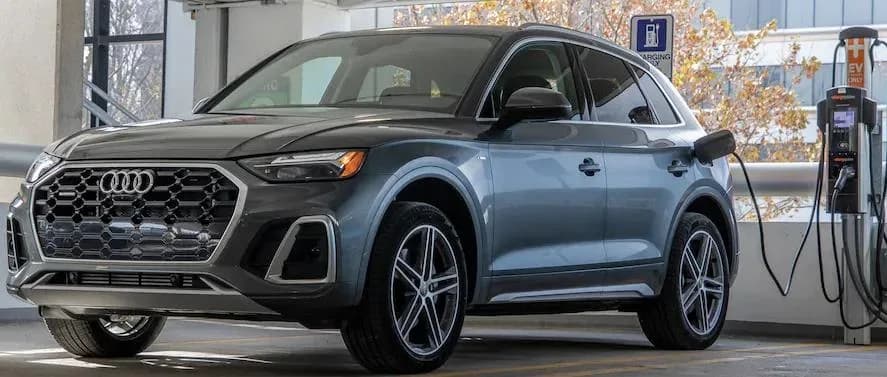
Also applies to
- Audi A3
- 2022–2025
- Audi A4
- 2021–2025
- Audi A4 allroad
- 2021–2025
- Audi A5
- 2021–2025
- Audi A6
- 2021–2025
- Audi A6 allroad
- 2021–2025
- Audi A7
- 2021–2025
- Audi A7 e
- 2021–2022
- Audi A8 L e
- 2021
- Audi e-tron
- 2022–2023
- Audi e-tron GT
- 2022–2025
- Audi e-tron Sportback
- 2021–2022
- Audi Q3
- 2021–2025
- Audi Q5
- 2021–2025
- Audi Q5 e
- 2021, 2023, 2024, 2025
- Audi Q7
- 2021–2025
- Audi Q8
- 2021–2025
- Audi R8
- 2021–2023
- Audi RS 3
- 2022–2025
- Audi RS 5
- 2021–2025
- Audi RS 6 Avant
- 2021–2025
- Audi RS 7
- 2021–2025
- Audi RS e-tron GT
- 2022–2024
- Audi RS Q8
- 2021–2025
- Audi S e-tron GT
- 2026
- Audi S3
- 2022–2025
- Audi S4
- 2021–2025
- Audi S5
- 2021–2025
- Audi S6
- 2021–2025
- Audi S7
- 2021–2025
- Audi S8
- 2021–2025
- Audi SQ5
- 2021–2025
- Audi SQ7
- 2021–2025
- Audi SQ8
- 2021–2025
- Audi TT
- 2021–2023
- Audi TT RS
- 2021–2022
- Audi TTS
- 2021–2023
▸ Show 31 more▾ Show fewer
Audi has released a dealer communication concerning a specific issue affecting the 2024 Audi Q5 Hybrid, which may also be relevant to other Audi EV/Hybrid models from 2021 to 2026 linked by NHTSA. This communication addresses instances where the Malfunction Indicator Lamp (MIL) illuminates, accompanied by a specific fault code related to the high voltage charging system. The root cause of this particular Audi Q5 Hybrid B200000 issue is currently under investigation by Audi AG.
Symptoms
Owners of affected vehicles, particularly the 2024 Audi Q5 Hybrid, may observe the following symptom:
- The Malfunction Indicator Lamp (MIL) illuminates on the dashboard. This typically occurs after charging the hybrid battery at 110V with 100% charging power.
Fault Codes / DTCs
When diagnosing the issue, technicians will find a specific diagnostic trouble code (DTC) stored in the vehicle's systems:
| Code | Description |
|---|---|
| B200000 | Control module faulty stored in J1050 high voltage charger |
This fault code indicates a problem with the J1050 high voltage charger control module.
Trigger Conditions
The primary condition that triggers the Audi Q5 Hybrid B200000 fault code and the MIL illumination is:
- Charging the hybrid battery at 110V using 100% charging power.
Important Owner Warnings and Recommendations
Audi has provided specific guidance for owners and dealers regarding this charging issue. It is crucial for owners to understand these recommendations to avoid triggering the fault and to ensure proper vehicle operation:
- Do not charge the vehicle at 110V with 100% charging power if you wish to avoid the MIL illumination and the Audi Q5 Hybrid B200000 fault code.
- Owners can charge their Audi Q5e (Q5 Hybrid) at 220V with 100% charging power.
- Alternatively, owners can charge their Audi Q5e (Q5 Hybrid) at 110V with 50% charging power.
- Public Level 2 charging infrastructure, which typically operates at 220V, is not affected by this issue and can be used at 100% power.
- If a customer insists on using 110V at 100% power and is not satisfied with the recommended processes, Audi AG is working on a solution. Dealers are advised to ensure customers understand the situation and that they should not use 110V at 100% power.
- If a customer refuses to take delivery of a vehicle due to this issue until a final solution is implemented, dealers should contact their Area After Sales Manager (AASM).
Manufacturer's Response and Upcoming Solution
Audi AG is actively investigating the root cause of the B200000 fault code. A technical service bulletin (TSB) with the identifier ETA CW26 is expected to be released on Monday, June 24. This TSB will provide more detailed information and a definitive solution. Dealers are instructed to enter the vehicle's VIN into the PSS system for tracking and customer follow-up once the solution is released. Audi of America (AoA) will communicate any further updates as they become available.
What Owners Should Do
If you own a 2024 Audi Q5 Hybrid and experience the MIL illumination or the Audi Q5 Hybrid B200000 fault code, or if you wish to prevent it:
- Adjust your charging habits: Prioritize charging at 220V at 100% power or 110V at 50% charging power.
- Contact your Audi dealer: If you have concerns, or if the MIL is illuminated, schedule a service appointment. Your dealer can track your vehicle's VIN in the PSS system and inform you when the official TSB (ETA CW26) and a permanent solution become available.
- Stay informed: Audi will communicate updates as needed, and more information will be provided in the upcoming TSB.
Source: NHTSA ID: 11003020
Frequently Asked Questions
- What does the fault code B200000 mean for my Audi Q5 Hybrid?
- The fault code B200000 indicates a 'control module faulty' condition stored in the J1050 high voltage charger of your Audi Q5 Hybrid. This typically triggers the Malfunction Indicator Lamp (MIL) on your dashboard.
- Why does my 2024 Audi Q5 Hybrid get the B200000 fault code when charging?
- The B200000 fault code and MIL illumination in your 2024 Audi Q5 Hybrid are primarily triggered when the vehicle is charged at 110V with 100% charging power. Audi is currently investigating the root cause of this specific condition.
- Can I still charge my Audi Q5 Hybrid safely with the B200000 issue?
- Yes, you can still charge your Audi Q5 Hybrid safely. Audi recommends charging at 220V with 100% charging power, or at 110V with 50% charging power, to avoid triggering the B200000 fault code and MIL. Public Level 2 (220V) charging is also approved for 100% power.
- Is there a permanent fix for the Audi Q5 Hybrid B200000 charging issue?
- Audi AG is actively investigating the root cause of the B200000 fault code. A technical service bulletin (TSB) identified as ETA CW26 is expected to be released soon, which will provide a permanent solution. Contact your dealer for updates.
Other revisions of this TSB
- 2021-2025 Audi Emergency Call System Fault TSBB200000
- 2022-2025 Audi e-tron Emergency Call System Fault TSBB200000
- 2023-2026 Audi Emergency Call System Fault B200000 TSBB200000
- 2020-2026 Audi Emergency Call Fault B200000B200000
- 2022-2026 Audi Emergency Call System Fault TSBB200000
- 2021-2026 Audi Emergency Call System Fault TSB 2059528/14B200000
- 2021-2026 Audi Emergency Call System Fault B200000B200000
- 2024-2025 Audi A5 Steering Warning Lamp TSBB200000
Related Articles
2021 Audi e-tron Electrical Malfunction and Power Loss
A 2021 Audi e-tron owner reported a severe 'Electrical Malfunction' resulting in complete loss of power on the highway. The issue has persisted despite dealer attempts to fix it over five months, posing significant safety risks.
2021-2026 Audi UTR Troubleshooting & FAQs TSB 2081409/1
This Audi Technical Service Bulletin (TSB 2081409/1) provides comprehensive answers to frequently asked questions and troubleshooting steps for the Audi Universal Traffic Recorder (UTR) accessory, covering topics like SD card compatibility, video playback, Wi-Fi issues, and more.
2021-2025 Audi Emergency Call System Fault TSB
Audi has released Technical Service Bulletin 2059528/18 to address an "Emergency call function: malfunction! Function unavailable. Please contact service" warning, often accompanied by a red SOS LED and DTC B200000. This issue affects various 2021-2025 Audi models and is due to a software problem…
2021-2026 Audi Adaptive Light System Fault C12B3FA TSB
Audi has released Technical Service Bulletin 2054202/7 to address an intermittent 'Audi adaptive light: system fault' message and DTC C12B3FA in various 2021-2026 models. This TSB outlines diagnosis and resolution for driver assistance system malfunctions.
2021-2026 Audi Parking Aid False Warnings TSB 2024323/12
This Technical Service Bulletin (TSB 2024323/12) details diagnostic and repair procedures for 2021-2026 Audi vehicles experiencing false parking aid warnings. Learn about environmental factors, sensor checks, and proper installation to resolve issues like 'Parking aid does not work / warning is…
Leave a comment
Comments are moderated and may take a moment to appear. Only your first name and the initial of your last name are shown publicly.
Comments
Be the first to comment.