2023-2026 Audi Taillight Damage: Aggressive Substances or Force?
Audi has issued TSB 94 24 82 2074347/1 addressing optical concerns with taillights, including cracks and damage. This bulletin helps differentiate between damage caused by aggressive cleaning agents or external force, which impacts warranty coverage for your 2023-2026 Audi.
 Marcus Weber2023 Audi e-tron
Also applies to
- Audi A3
- 2022–2025
- Audi A4
- 2021–2025
- Audi A4 allroad
- 2021–2025
- Audi A5
- 2021–2025
- Audi A6
- 2021–2025
- Audi A6 allroad
- 2021–2025
- Audi A7
- 2021–2025
- Audi A7 e
- 2021–2022
- Audi A8 L e
- 2021
- Audi e-tron
- 2021–2022
- Audi e-tron GT
- 2022–2025
- Audi e-tron Sportback
- 2021–2022
- Audi Q3
- 2021–2025
- Audi Q5
- 2021–2025
- Audi Q5 e
- 2021, 2023, 2024, 2025
- Audi Q7
- 2021–2025
- Audi Q8
- 2021–2025
- Audi R8
- 2021–2023
- Audi RS 3
- 2022–2025
- Audi RS 5
- 2021–2025
- Audi RS 6 Avant
- 2021–2025
- Audi RS 7
- 2021–2025
- Audi RS e-tron GT
- 2022–2024
- Audi RS Q8
- 2021–2025
- Audi S e-tron GT
- 2026
- Audi S3
- 2022–2025
- Audi S4
- 2021–2025
- Audi S5
- 2021–2025
- Audi S6
- 2021–2025
- Audi S7
- 2021–2025
- Audi S8
- 2021–2025
- Audi SQ5
- 2021–2025
- Audi SQ7
- 2021–2025
- Audi SQ8
- 2021–2025
- Audi TT
- 2021–2023
- Audi TT RS
- 2021–2022
- Audi TTS
- 2021–2023
▸ Show 31 more▾ Show fewer
Audi Technical Service Bulletin (TSB) 94 24 82 2074347/1 addresses common optical concerns with taillights across various Audi models, including the 2023-2026 Audi e-tron. This TSB, issued on June 28, 2024, helps technicians and owners understand the different causes of taillight damage and their implications for warranty coverage. The bulletin details two primary causes: damage from aggressive substances and damage from external application of force.
Symptoms of Taillight Damage
Owners may observe various forms of damage to their Audi's taillights. These can include visual damage, cracks in the side panel, rear lid, or bumper-mounted taillights. In severe cases, the lens might appear broken or show signs of water ingress.
Specific symptoms reported by owners include:
- Visual damage and/or cracks in taillights, sometimes severe.
- Cracks in the taillight lens, often concentrated in the center.
- A broken lens or cracks on the outside of the lens.
- Leakage or water accumulation within the taillight assembly.
Diagnosis and Trigger Conditions
This TSB provides guidance for workshops to determine the root cause of the taillight damage, which is crucial for warranty assessment. The diagnosis differentiates between damage caused by chemical exposure and physical impact.
Damage from Aggressive Substances
Aggressive substances can penetrate the plastic lens, leading to cracks. The severity of the damage depends on the substance's components, concentration, exposure time, and temperature. Indicators that aggressive substances are the cause include:
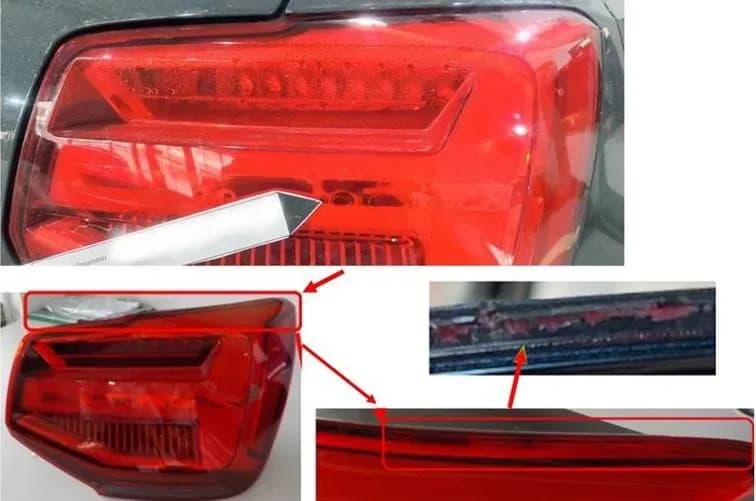
- Cracks that are identical or similar to those shown in the TSB's figures, often affecting multiple taillights on a single vehicle.
- Presence of residual polish on the taillights and vehicle body.
- White discoloration on the black light housing near a crack on the lens, indicating a chemical reaction.
Examples of substances that can cause this type of damage include:
- Washer fluid with an increased proportion of anti-freeze additive, especially in vehicles with a rear window wiper.
- Undiluted washer fluid or anti-freeze additive.
- Window de-icer products.
- Aggressive or highly concentrated cleaning agents used in car washes.
- Aggressive general care products, such as polish and other cleaning agents.
Damage from External Application of Force
Damage resulting from external force typically involves an impact to the lens or a collision. This can cause cracks in the taillight lens or break the welded joints between the lens and the headlight housing, leading to water entry. Indications of external force damage include:
- Cracks that are identical or similar to those shown in the TSB's figures.
- Evidence of general damage or paintwork damage on the vehicle body or bumper cover, particularly near the taillight cut-out or the underbody of the bumper cover if it makes contact with the light.
- Paintwork damage on the taillight lens if the welded joint between the lens and housing is broken.
Cracks caused by tension, such as component deformation, typically start at the outer edge of the lens and move inward. In contrast, cracks in the center of the lens usually suggest that tension is not the primary cause.
Important Warnings
Audi advises owners and technicians about specific practices to prevent taillight damage and clarifies warranty coverage:
- Do not polish taillights: The taillights are not designed for polishing, as this can damage the outer layer of the lenses, allowing aggressive substances to penetrate the plastic more easily.
- Avoid aggressive cleaning agents: Cleaning agents with a high proportion of alcohol should not be used, as they can facilitate crack formation, especially under high temperatures or sunlight exposure.
- Washer fluid concentration: Ensure the proportion of anti-freeze additive in the windshield washer system is appropriate for operating conditions. Excessive anti-freeze can damage taillights upon contact. Audi recommends using Audi Genuine washer fluid and, ideally, a non-anti-freeze washer fluid in warmer temperatures according to specified dosages.
General information regarding the use of cleaning and care products can be found in your Audi Owner's Manual.
What Owners Should Know About Warranty
This TSB, 94 24 82 2074347/1, is for informational purposes only and does not apply to any Audi Warranty. Claims for part replacements outlined within this TSB will not be reimbursed by Audi. For other claims, photo documentation is required for review. Technicians are instructed to take photos of the customer concern and upload them into DOC-IT with the repair order, following guidelines in TSB 2061922 94, which details how to properly document optical concerns for headlights and taillights.
Owner Action
If you observe Audi e-tron taillight damage or similar issues on your 2023-2026 Audi, it is recommended to consult with an authorized Audi service center. They can properly diagnose the cause of the damage based on the guidelines provided in TSB 94 24 82 2074347/1 and advise on potential repair costs and warranty eligibility. Be prepared to discuss any cleaning products or substances used on your vehicle.
NHTSA ID: 11002957
Gallery
3 images
Frequently Asked Questions
- What are the common causes of Audi taillight damage?
- According to Audi TSB 94 24 82 2074347/1, taillight damage can be caused by aggressive substances like certain washer fluids or cleaning agents, or by external physical force such as impacts or collisions.
- Will my Audi taillight damage be covered under warranty?
- Audi TSB 94 24 82 2074347/1 states that this bulletin is informational only and does not guarantee warranty coverage. Damage caused by aggressive substances or external force is typically not covered. Claims for part replacements related to these issues will not be reimbursed.
- What should I avoid using to clean my Audi's taillights?
- You should avoid polishing your taillights and using aggressive cleaning agents, especially those with a high alcohol content. Also, ensure your windshield washer fluid does not have an excessive proportion of anti-freeze additive, as these can all contribute to taillight damage.
- How can I tell if my Audi e-tron taillight damage is from chemicals or force?
- Damage from aggressive substances often appears as cracks on multiple taillights, residual polish, or white discoloration near cracks. Damage from external force usually involves localized cracks, broken lenses, or paintwork damage on the vehicle body or bumper cover near the taillight.
Related Articles
2023 Audi e-tron Problems: Recalls, Complaints & TSBs
The 2023 Audi e-tron has faced several significant safety concerns, including recalls for potential charging cable overheating and brake pedal detachment. Owners have also reported serious issues like sudden unintended acceleration and electrical system malfunctions. This profile details these…
2023 Audi e-tron Brake Pedal Recall
Audi has issued a recall (NHTSA ID: 26V240000, Audi Recall 46P7) for certain 2019-2024 E-Tron and 2020-2024 E-Tron Sportback vehicles, including the 2023 Audi e-tron. The recall addresses a potential issue where the brake pedal may detach from the brake booster, leading to a loss of brake function.
2015-2027 Audi Noise Diagnosis with Frequency Analysis App TSB
Audi has released Technical Service Bulletin 2051095/11 detailing the Audi Frequency Analysis app. This app helps technicians diagnose noise complaints more precisely across 2015-2027 Audi models. Learn how the app works, where to download it, and its features for effective vehicle noise analysis.
2023 Audi e-tron AC/DC Charging Not Possible TSB
This manufacturer communication (NHTSA ID 11031035) provides critical information for 2023 Audi e-tron owners facing issues with AC/DC charging. It specifically highlights problems linked to software version 00C6: 0093/3119, which can prevent the vehicle from charging.
2023-2025 Audi Rear Seat Reminder Message TSB 2074943/2
Audi Technical Service Bulletin 2074943/2 explains the instrument cluster message 'Please check rear seats and be aware of door safelock' in various 2023-2025 Audi models. This informational TSB details the rear occupant detection system designed to prevent children and pets from being left in…
Leave a comment
Comments are moderated and may take a moment to appear. Only your first name and the initial of your last name are shown publicly.
Comments
Be the first to comment.