2015-2026 Audi Instrument Cluster Scratches, Film, or Particles TSB
Audi has released Technical Service Bulletin 2073747/2 to address common issues like scratches, coating/film, or particles appearing inside the instrument cluster housing. This TSB covers various Audi models from 2015 to 2026 and provides diagnostic and repair guidance.
 Marcus Weber2023 Audi e-tron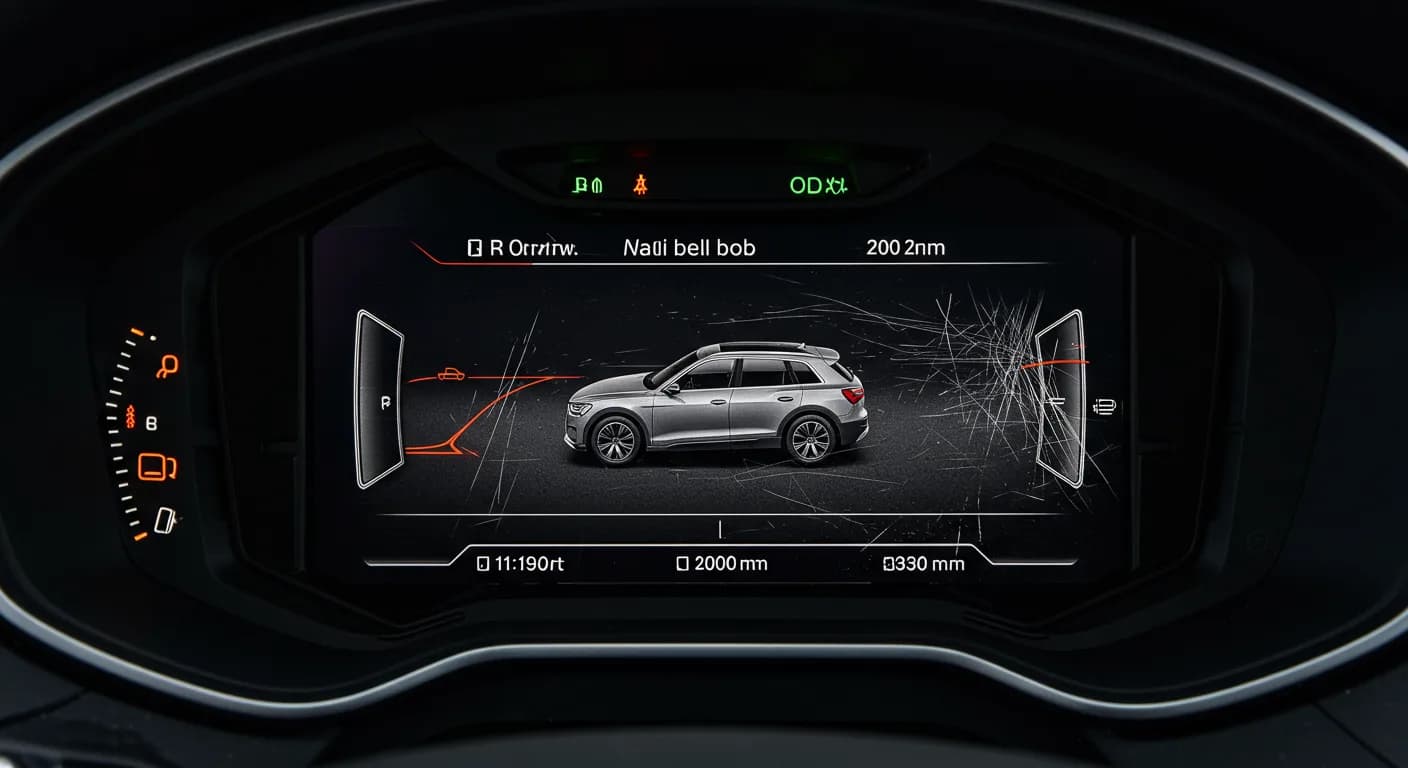
Also applies to
- Audi A3
- 2022–2025
- Audi A4
- 2021–2025
- Audi A4 allroad
- 2021–2025
- Audi A5
- 2021–2025
- Audi A6
- 2021–2025
- Audi A6 allroad
- 2021–2025
- Audi A7
- 2021–2025
- Audi A7 e
- 2021–2022
- Audi A8 L e
- 2021
- Audi e-tron
- 2021–2022
- Audi e-tron GT
- 2022–2025
- Audi e-tron Sportback
- 2021–2022
- Audi Q3
- 2021–2025
- Audi Q5
- 2021–2025
- Audi Q5 e
- 2021, 2023, 2024
- Audi Q7
- 2021–2025
- Audi Q8
- 2021–2025
- Audi R8
- 2021–2023
- Audi RS 3
- 2022–2025
- Audi RS 5
- 2021–2025
- Audi RS 6 Avant
- 2021–2024
- Audi RS 7
- 2021–2025
- Audi RS e-tron GT
- 2022–2024
- Audi RS Q8
- 2021–2025
- Audi S e-tron GT
- 2026
- Audi S3
- 2022–2025
- Audi S4
- 2021–2025
- Audi S5
- 2021–2025
- Audi S6
- 2021–2025
- Audi S7
- 2021–2025
- Audi S8
- 2021–2025
- Audi SQ5
- 2021–2025
- Audi SQ7
- 2021–2025
- Audi SQ8
- 2021–2025
- Audi TT
- 2021–2023
- Audi TT RS
- 2021–2022
- Audi TTS
- 2021–2023
▸ Show 31 more▾ Show fewer
Audi has issued Technical Service Bulletin (TSB) 90 24 87 2073747/2 to address common concerns regarding the instrument cluster display. This bulletin, which supersedes TSB 24-85 dated April 22, 2024, provides guidance for diagnosing and resolving issues such as scratches, coating/film, or particles appearing inside the instrument cluster housing.
This TSB is relevant for all Audi vehicles manufactured between 2015 and 2026 that exhibit these display anomalies. Understanding the information in this bulletin can help owners of affected models, including the 2023 Audi e-tron, address the problem effectively.
Symptoms
Owners may observe several visual issues with their instrument cluster display. These include:
- Scratches on cover of instrument cluster: Fine lines or marks visible on the display lens.
- Coating/film on cover of instrument cluster: A grey haze or film that appears to be on the inside of the display lens, particularly noticeable under certain lighting conditions.
- Particles inside instrument cluster housing: Dust, dirt, or other small debris visible behind the display lens.
These visual disturbances can affect the clarity and readability of the instrument cluster, potentially impacting the driving experience.
Technical Background
Audi has identified several reasons for these instrument cluster issues:
Scratches
Despite careful handling during production and assembly, the display lens for the instrument cluster may occasionally develop scratches.
Coating/Film
During the manufacturing process, a protective film is applied to the display lens. Vapors from the materials used can cause a coating, described as a "grey haze," to form on the display lens before vehicle handover. This coating can appear to be on the inside of the display.
Particles
The instrument cluster is not hermetically sealed. It has ventilation openings for heat dissipation and passages for controls. These openings can allow small particles, such as dust or dirt, to enter the housing, especially in dusty environments or during cleaning with compressed air.
Important Warnings for Owners
Owners should be aware of specific conditions that may affect warranty coverage for these instrument cluster issues:
- Warranty claims for instrument clusters with scratches will only be accepted if the vehicle has less than 621 miles on the odometer. This must be proven with a photo that also includes the scratches. Instrument clusters replaced for scratches on vehicles with higher mileage will be charged back to the customer.
- If an instrument cluster is replaced due to a coating or film on the cover glass, and it's later determined the coating could have been cleaned, the replacement cost may be charged back. The TSB specifies cleaning with water and household detergent as the recommended solution for coating/film.
- Warranty claims for instrument clusters with production residue (e.g., plastic particles, not insects) require photographic proof. Similar to scratches, clusters replaced with over 621 miles will be charged back.
Repair Procedure Summary
The repair approach depends on the specific issue affecting the Audi instrument cluster scratches, film, or particles:
For Scratches and Particles
If scratches are found on the display cover during the vehicle handover inspection, or if particles are found behind the cover, the instrument cluster must be replaced. Particles cannot be removed in the field as opening the cluster would invalidate the warranty.
For Coating/Film
If a coating or grey haze is present, it should be removed by cleaning. The display cover should be sprayed with a mixture of water and regular household detergent while installed, then carefully wiped with a soft, clean cloth. It is crucial to avoid scratching the surface during this process. The TSB explicitly states that cleaning products containing alcohol, isopropanol, or similar substances are not suitable and must not be used.
Warranty Information
This TSB outlines specific details for warranty claims related to instrument cluster issues. The Service Number for these claims is 9025, and the Damage Code is 0030.
Applicable claim types include:
- 110: For vehicles up to 48 months/50,000 miles.
- G10: For Certified Pre-Owned (CPO) vehicles, subject to owner verification.
If the vehicle is outside of any warranty, this Technical Service Bulletin is for informational purposes only.
Relevant labor operations and their associated times include:
- Remove and install/replace instrument cluster: Labor operations 9025 19XX and 9025 55XX.
- Clean instrument cluster (if coating/grey haze formed): Labor operation 9025 2999, allotted 20 Technical Units (TU).
- Diagnostic Time: GFF 0150 0060, with a maximum of 100 TU.
- Charge Battery: Labor operation 2706 8950.
All warranty claims must adhere to the Audi Warranty Policies and Procedures Manual, as referenced by TSB 2073747/1.
Owner Action
If you notice any Audi instrument cluster scratches, coating/film, or particles inside your instrument cluster, it is recommended to contact your authorized Audi dealer. Be prepared to describe the symptoms and mention Technical Service Bulletin 90 24 87 2073747/2. Discuss the warranty conditions, especially the mileage limitations for scratches and particles, to understand potential costs.
Source: NHTSA ID: 11002149
Frequently Asked Questions
- What issues does Audi TSB 90 24 87 2073747/2 address?
- Audi Technical Service Bulletin 90 24 87 2073747/2 addresses visual problems with the instrument cluster, specifically 'scratches on cover of instrument cluster', 'coating/film on cover of instrument cluster', and 'particles inside instrument cluster housing' for 2015-2026 Audi vehicles.
- Can I clean the instrument cluster myself if I see a film or grey haze?
- If you observe a coating or 'grey haze' on your instrument cluster, the TSB recommends cleaning it with a mixture of water and regular household detergent. It is crucial to avoid cleaning products containing alcohol, isopropanol, or similar substances, as these are not suitable.
- Are there mileage restrictions for warranty claims related to Audi instrument cluster scratches?
- Yes, warranty claims for instrument clusters with scratches will only be accepted if the vehicle has less than 621 miles, and photographic proof is required. If the vehicle has higher mileage, the replacement cost will be charged back to the owner.
- Why are there particles inside my Audi's instrument cluster housing?
- The TSB explains that the instrument cluster is not hermetically sealed and has ventilation openings for heat dissipation and controls. These openings can allow small particles like dust or dirt to enter the housing, especially in dusty environments or during cleaning with compressed air.
Related Articles
Should 2023 Audi e-tron Owners Worry? Recall & TSB Roundup
The 2023 Audi e-tron faces significant safety concerns, including recalls for potential brake pedal detachment and charging cable overheating. Owners have also reported serious issues like unintended acceleration and electrical system malfunctions. This guide covers all known problems and solutions.
2023 Audi e-tron Brake Pedal Recall
Audi has issued a recall (NHTSA ID: 26V240000, Audi Recall 46P7) for certain 2019-2024 E-Tron and 2020-2024 E-Tron Sportback vehicles, including the 2023 Audi e-tron. The recall addresses a potential issue where the brake pedal may detach from the brake booster, leading to a loss of brake function.
2015-2027 Audi Noise Diagnosis with Frequency Analysis App TSB
Audi has released Technical Service Bulletin 2051095/11 detailing the Audi Frequency Analysis app. This app helps technicians diagnose noise complaints more precisely across 2015-2027 Audi models. Learn how the app works, where to download it, and its features for effective vehicle noise analysis.
2023 Audi e-tron AC/DC Charging Not Possible TSB
This manufacturer communication (NHTSA ID 11031035) provides critical information for 2023 Audi e-tron owners facing issues with AC/DC charging. It specifically highlights problems linked to software version 00C6: 0093/3119, which can prevent the vehicle from charging.
2023-2025 Audi Rear Seat Reminder Message TSB 2074943/2
Audi Technical Service Bulletin 2074943/2 explains the instrument cluster message 'Please check rear seats and be aware of door safelock' in various 2023-2025 Audi models. This informational TSB details the rear occupant detection system designed to prevent children and pets from being left in…
Leave a comment
Comments are moderated and may take a moment to appear. Only your first name and the initial of your last name are shown publicly.
Comments
Be the first to comment.