2016-2024 Audi Exterior Light Moisture Accumulation TSB
Audi Technical Service Bulletin 2012749/16 addresses moisture accumulation in exterior lights for 2016-2024 models, clarifying what is considered normal condensation and what might indicate a defect.
 David Chen2023 Audi e-tron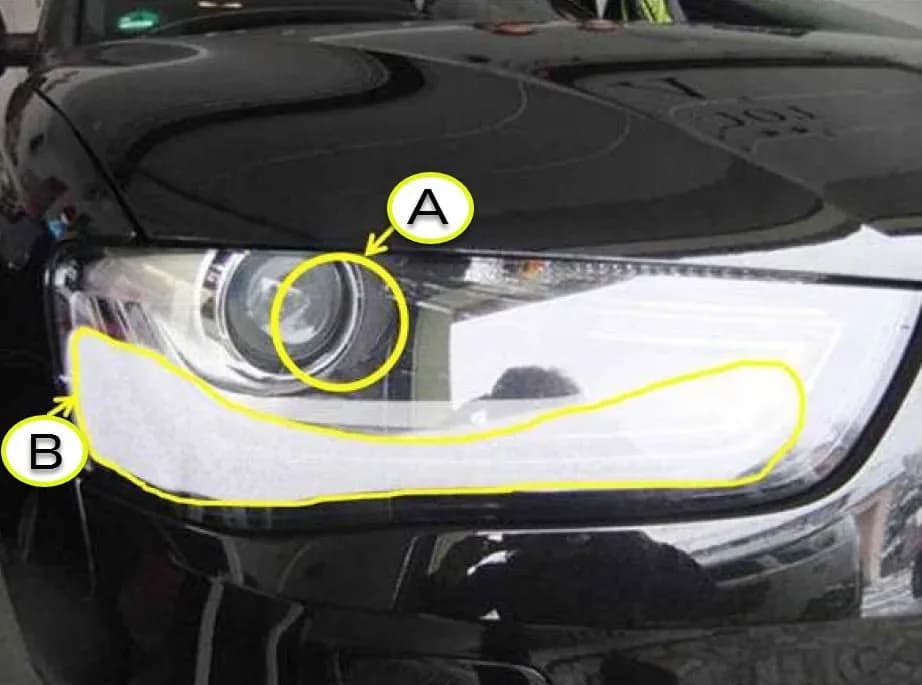
Also applies to
- Audi A3
- 2022–2024
- Audi A4
- 2021–2024
- Audi A4 allroad
- 2021–2022
- Audi A5
- 2021–2024
- Audi A6
- 2021–2024
- Audi A6 allroad
- 2021–2023
- Audi A7
- 2021–2024
- Audi A7 e
- 2021–2022
- Audi A8 L e
- 2021
- Audi e-tron
- 2021–2022
- Audi e-tron GT
- 2022–2024
- Audi e-tron Sportback
- 2022
- Audi Q3
- 2021–2024
- Audi Q5
- 2021–2024
- Audi Q5 e
- 2024
- Audi Q7
- 2021–2024
- Audi Q8
- 2021–2024
- Audi R8
- 2021–2023
- Audi RS 3
- 2022–2024
- Audi RS 5
- 2021–2024
- Audi RS 6 Avant
- 2021–2024
- Audi RS 7
- 2021–2024
- Audi RS e-tron GT
- 2022–2024
- Audi RS Q8
- 2021–2024
- Audi S3
- 2022–2024
- Audi S4
- 2021–2024
- Audi S5
- 2021–2024
- Audi S6
- 2021–2024
- Audi S7
- 2021–2024
- Audi S8
- 2021–2024
- Audi SQ5
- 2021–2024
- Audi SQ7
- 2021–2024
- Audi SQ8
- 2021–2024
- Audi TT
- 2021–2023
- Audi TT RS
- 2021–2022
- Audi TTS
- 2021–2023
▸ Show 30 more▾ Show fewer
Audi Technical Service Bulletin (TSB) 2012749/16, last revised on May 9, 2023, addresses concerns regarding moisture accumulation in the exterior lights of various Audi models from 2016 through 2024. This TSB provides crucial information for owners and technicians to differentiate between normal, expected condensation and actual defects. Understanding the conditions that lead to Audi exterior light moisture can prevent unnecessary repairs and clarify warranty coverage.
Symptoms of Exterior Light Moisture
Owners may observe the following symptoms related to Audi exterior light moisture:
- Condensation visible on the inside of the headlight lens.
- Moisture present inside the taillight, fog light, side marker light, or front turn signal lenses.
- Condensation within the daytime running lights or the third brake light lens.
Technical Background: Why Condensation Occurs
Exterior lights in Audi vehicles are designed as "open systems," meaning air from the outside circulates through the component. This design is essential for pressure equalization, preventing damage from changes in air pressure.
Condensation typically forms in winter or wet weather when there is high humidity. When the vehicle is parked after use, residual heat from the engine warms the back of the headlight, while the lens cools from the outside air. This temperature difference causes humidity in the air to condense on the inside of the lens.
Driving through a car wash or using a steam cleaner can amplify this phenomenon by increasing humidity within the light component. LED headlights and taillights, which do not produce infrared heat, rely solely on airflow from driving to clear condensation.
Important Warnings for Owners
- The normal presence of moisture/condensation is NOT a condition covered under warranty. Parts replacement will not correct normal condensation, and the customer will likely still experience the same issue.
- Leaving a vehicle stationary with lamps on is NOT sufficient for clearing moisture.
- If a warranty claim is submitted for abnormal moisture, photos must be uploaded to DOC-IT for review. Claims submitted without photos may be charged back.
Differentiating Normal from Abnormal Moisture
Normal amounts of moisture/condensation:
- Does not affect the performance of the headlight or taillight.
- Does not cause corrosion inside the component.
- Can occur on any lamp and may vary depending on environmental conditions and driving habits.
- The light emission surface (Figure 2A) of the main beam should clear after driving for approximately 10 minutes with the main beam on, at speeds consistently over 45 mph. Residual condensation (Figure 2B) may still be present on other internal surfaces, which is considered normal.
Abnormal amounts of moisture:
- Water drops or condensation remain on the light emission surface (Figure 2A) even after performing the prescribed test drive (10 minutes, >45 mph, main beam on).
- Examples of excessive moisture still present after a thorough test drive are shown in Figure 3 (headlamp) and Figure 4 (tail lamps).
Diagnosis and Inspection
To determine if the Audi exterior light moisture is normal or abnormal, perform the following test:
- Drive the vehicle for approximately 10 minutes with the main beam on.
- Maintain driving speeds consistently over 45 mph to ensure proper ventilation of the light assembly.
After this test, if water drops or condensation are still present on the light emission surface (Figure 2A), inspect the headlamp assembly for the following root causes:
- Missing cover.
- Damaged seal.
- Clogged drain.
- Outside influence.
- Vent tube disconnected from the headlamp.
Technicians are advised to take photos before and after this diagnostic step for visual comparison and to retain them for at least one month after claim submission. Proper documentation of optical concerns for headlights and tail lights should follow the instructions in TSB 2061922.
Warranty Information
This Technical Service Bulletin (TSB 2012749/16) is informational only and is not applicable to any Audi warranty. As stated, normal moisture accumulation is not a warrantable condition. Warranty coverage would only apply if an abnormal condition is identified and linked to a specific defect covered under the vehicle's warranty.
Revision History
This TSB, 94 23 64 2012749/16, was issued on May 9, 2023. It supersedes Technical Service Bulletin Group 94 number 21-34, dated February 17, 2021. Previous revisions include:
- Revision 16 (May 9, 2023): Revised header (Added MY 23,24).
- Revision 15 (February 17, 2021): Revised header (Added MY22, models, and attachment), Revised Service (Added reference to TSB 2061922).
- Revision 14 (December 6, 2019): Revised header (Added MY20 and MY21).
All part and service references provided in this TSB (2012749) are subject to change and/or removal. Always check with your Parts Department and/or ETKA for the latest information and parts bulletins.
NHTSA ID: 10237731
Gallery
3 images
Frequently Asked Questions
- Is moisture in my Audi's headlights normal?
- Yes, according to Audi TSB 2012749/16, normal amounts of condensation or moisture accumulation in exterior lights, including headlights, are common. This is due to temperature differences and humidity, as the lights are open systems designed for pressure equalization. This normal moisture does not affect performance or cause corrosion and is not covered under warranty.
- What should I do if I see moisture in my Audi exterior lights?
- First, drive your vehicle for at least 10 minutes with the main beam on, at speeds consistently over 45 mph, to allow for proper ventilation. If the light emission surface clears, the moisture is likely normal. If water drops or condensation remain on the light emission surface after this test, it may indicate an abnormal condition requiring dealer inspection for issues like a missing cover or damaged seal.
- Will Audi cover moisture in my lights under warranty?
- Audi Technical Service Bulletin 2012749/16 explicitly states that the normal presence of moisture or condensation is NOT a condition covered under warranty. Parts replacement will not resolve normal condensation, and the issue will likely recur. Warranty coverage may only apply if abnormal moisture is linked to a specific defect like a missing cover, damaged seal, or clogged drain, which would be identified after a diagnostic test.
- What's the difference between normal and abnormal Audi exterior light moisture?
- Normal moisture typically clears from the light emission surface after driving for about 10 minutes at speeds over 45 mph, though residual condensation may remain on other internal surfaces. Abnormal moisture, as described in TSB 2012749/16, involves water drops or condensation remaining on the light emission surface even after a thorough test drive, potentially indicating a defect that needs professional inspection.
- What are the common causes of abnormal Audi exterior light moisture?
- If moisture persists on the light emission surface after a proper test drive, it could be due to a missing cover, a damaged seal, a clogged drain, outside influence, or a vent tube disconnected from the headlamp. These issues would require inspection and potential repair by a qualified technician.
Related Articles
Should 2023 Audi e-tron Owners Worry? Recall & TSB Roundup
The 2023 Audi e-tron faces significant safety concerns, including recalls for potential brake pedal detachment and charging cable overheating. Owners have also reported serious issues like unintended acceleration and electrical system malfunctions. This guide covers all known problems and solutions.
2023 Audi e-tron Brake Pedal Recall
Audi has issued a recall (NHTSA ID: 26V240000, Audi Recall 46P7) for certain 2019-2024 E-Tron and 2020-2024 E-Tron Sportback vehicles, including the 2023 Audi e-tron. The recall addresses a potential issue where the brake pedal may detach from the brake booster, leading to a loss of brake function.
2015-2027 Audi Noise Diagnosis with Frequency Analysis App TSB
Audi has released Technical Service Bulletin 2051095/11 detailing the Audi Frequency Analysis app. This app helps technicians diagnose noise complaints more precisely across 2015-2027 Audi models. Learn how the app works, where to download it, and its features for effective vehicle noise analysis.
2023 Audi e-tron AC/DC Charging Not Possible TSB
This manufacturer communication (NHTSA ID 11031035) provides critical information for 2023 Audi e-tron owners facing issues with AC/DC charging. It specifically highlights problems linked to software version 00C6: 0093/3119, which can prevent the vehicle from charging.
2023-2025 Audi Rear Seat Reminder Message TSB 2074943/2
Audi Technical Service Bulletin 2074943/2 explains the instrument cluster message 'Please check rear seats and be aware of door safelock' in various 2023-2025 Audi models. This informational TSB details the rear occupant detection system designed to prevent children and pets from being left in…
Leave a comment
Comments are moderated and may take a moment to appear. Only your first name and the initial of your last name are shown publicly.
Comments
Be the first to comment.