2021-2023 Audi Brake Pulsation Diagnostic Guidelines TSB
This Audi Technical Service Bulletin (TSB) provides comprehensive diagnostic guidelines for brake pulsation affecting 2021-2023 Audi models. It covers various root causes, from disc thickness variation to suspension components.
 Sarah Mitchell2021 Audi e-tron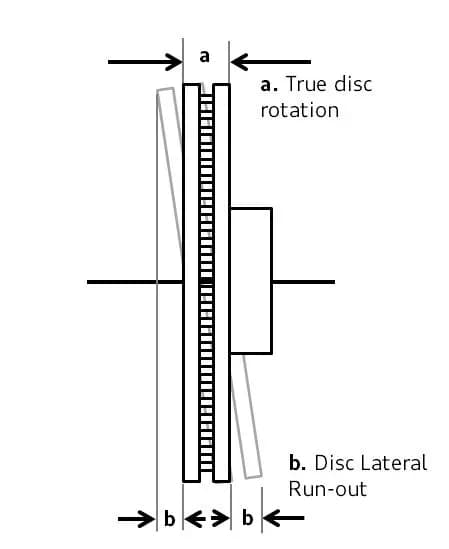
S'applique également à
- Audi A3
- 2022–2023
- Audi A4
- 2021–2023
- Audi A4 allroad
- 2021
- Audi A5
- 2021–2023
- Audi A6
- 2021–2023
- Audi A6 allroad
- 2021
- Audi A7
- 2021–2023
- Audi e-tron
- 2022–2023
- Audi Q3
- 2021–2023
- Audi Q5
- 2021
- Audi Q7
- 2021–2023
- Audi Q8
- 2021–2023
- Audi R8
- 2021–2023
- Audi RS 3
- 2022
- Audi RS 5
- 2021–2023
- Audi RS 7
- 2021–2023
- Audi RS Q8
- 2021–2023
- Audi S3
- 2022–2023
- Audi S4
- 2021–2023
- Audi S5
- 2021–2023
- Audi S6
- 2021–2023
- Audi S7
- 2021–2023
- Audi S8
- 2021–2023
- Audi SQ5
- 2021–2023
- Audi SQ7
- 2021–2023
- Audi SQ8
- 2021–2023
- Audi TT
- 2021–2023
- Audi TT RS
- 2021–2022
- Audi TTS
- 2021–2023
▸ Afficher 23 de plus▾ Afficher moins
Important Warnings for Owners
Audi has issued specific warnings regarding this technical service bulletin:
- Do Not Use This TSB If Another Applies: "DO NOT use this TSB if there is another TSB for the same concern applicable to the VIN." Always ensure the correct TSB is being followed for your specific vehicle.
- Diagnostic Purposes Only: "This TSB is only intended for diagnostic purposes and does not serve as a guideline for determining warrantable conditions." This means the TSB helps identify the problem but does not guarantee warranty coverage for the repair.
- ABS Stops with New Components: "Do not perform ABS stops if brand new pads and/or discs are installed." This is crucial to prevent damage to newly installed brake components.
Symptoms of Brake Pulsation
Owners experiencing this issue typically report:
- "The steering wheel vibrates or pulsates when the brakes are applied."
This sensation indicates an uneven braking force, often originating from the brake system.
Understanding Audi Brake Pulsation
Brake-related vibrations and pulsation, including the sensation of an Audi e-tron brake pulsation, can stem from various factors. These include driving style, environmental conditions, and the vehicle's service history. As brake pads and discs wear, their ability to dampen vibrations naturally decreases.
A common culprit is Disc Thickness Variation (DTV). DTV occurs when the two braking surfaces of the brake disc are no longer parallel, leading to uneven contact with the brake pads and causing pulsation. This condition is often difficult to measure with standard workshop tools.
Common Causes and Solutions
Several conditions can lead to DTV and other forms of brake pulsation:
Overheated Brake Components: Prolonged or aggressive braking can overheat brake components, causing permanent damage to the brake discs and pads. If this is the case, the damaged discs and pads will need to be replaced.
Brake Pad Material Smear: Aggressive driving with frequent sharp braking without adequate cooling periods can cause brake pad material to smear onto the brake disc (Figure 2). This condition creates DTV. The solution is to replace both the brake discs and pads.
Blue-Tempered or Overheated Brake Discs: Discs that appear blue-tempered or show heat marks (Figure 3) indicate overheating, often due to aggressive driving or a faulty component causing constant brake application. Replacing the brake discs and pads is necessary.
Corrosion/Rust Build-up: Exposure to road salt, high humidity, or prolonged periods of inactivity can lead to corrosion or rust build-up on brake discs (Figure 4). A gentle driving style might not be enough to remove this build-up. Technicians may attempt 2-3 ABS stops from speeds above 50 mph, allowing for cooling periods between stops. If this does not resolve the issue, the brake discs and pads must be replaced. Remember, "Do not perform ABS stops if brand new pads and/or discs are installed."
Pad Material Transfer or Corrosion Marks: Similar to corrosion, pad marks (Figure 5) can appear if the vehicle is not driven for extended periods or if brakes are exposed to high humidity. The same ABS stop procedure and replacement recommendation apply.
Excessive Brake Disc or Wheel Hub Run-out: Run-out refers to the deviation from perfect rotation (Figure 6). Common causes include:
- Over-torqued or Improperly-torqued Wheels: Incorrect wheel torque can distort the brake disc and hub. Refer to Audi's Elsa system for proper torque values.
- Non-Audi Approved Wheels: Wheels not approved by Audi may have incorrect contact surfaces or center bore dimensions, leading to distortion.
- External Impact or Rust Build-up: Damage or rust between the brake disc and hub can cause run-out. If measurements exceed specified maximum values, the brake disc(s) and/or hub(s) must be replaced.
Worn Brake Pads: As brake pads reach their wear limit (Figure 7), their dampening characteristics are reduced, contributing to pulsation. Worn brake pads and discs should be replaced.
Faulty Suspension Components: Damaged or aftermarket suspension components like ball joints, links, tie rods, or bushings (Figure 8 and Figure 9) can amplify vibrations or cause body vibrations noticeable during braking. These components require diagnosis and repair.
Wheel/Tire Imbalance: An unbalanced wheel or tire (Figure 10) or radial run-out can significantly amplify brake pulsation or lead to body vibrations when braking. These components should be inspected and diagnosed accordingly.
Diagnosing Brake Run-out
To accurately measure brake run-out, specific conditions must be met:
- All measurement surfaces must be free of rust, corrosion, or pad material transfer.
- A specialized measurement tool, such as the VAS6079/1 (Figure 11), must be securely attached to a solid suspension component on the vehicle.
- The brake disc must be secured to the hub with 5 bolts.
- The axle bolt/nut must be installed and properly torqued.
- Run-out measurements should be taken with all parts installed on the vehicle.
Maximum Run-out Values (Figure 12):
- Disc braking surface (point 1): Maximum run-out: 0.06 mm (0.002 inches).
- Disc hub (center of the brake disc, point 2): Maximum run-out: 0.03 mm (0.0012 inches).
- Wheel hub (without the disc installed, point 3): Maximum run-out: 0.02 mm (0.0008 inches).
Warranty Information
This Technical Service Bulletin (TSB 46 22 26 2022584/11) is for informational purposes only and does not apply to any Audi warranty. This means that any repairs identified through these guidelines may not be covered under your vehicle's warranty.
Additional Information
All parts and service references in this TSB (2022584) are subject to change. Always consult your parts department or ETKA for the latest information. Ensure to check the Repair Manual for specific fasteners, bolts, nuts, and screws that require replacement during any repair.
NHTSA ID: 10207210
Galerie
7 images
Frequently Asked Questions
- What causes Audi brake pulsation?
- Audi brake pulsation, including the Audi e-tron brake pulsation, can be caused by disc thickness variation (DTV), overheated brake components, corrosion, worn brake pads, excessive brake disc or wheel hub run-out, faulty suspension parts, or wheel/tire imbalance.
- How is brake run-out measured on an Audi?
- Brake run-out is measured using a tool like the VAS6079/1, with the brake disc secured and axle bolt torqued. Measurements are taken on the disc braking surface, disc hub, and wheel hub, with specific maximum run-out values (e.g., 0.06 mm for the disc braking surface).
- Is the Audi brake pulsation TSB covered under warranty?
- No, Technical Service Bulletin 46 22 26 2022584/11 is for diagnostic information only and is not applicable to any Audi warranty. Repairs identified by this TSB may not be covered.
- What does 'The steering wheel vibrates or pulsates when the brakes are applied' mean?
- This verbatim message describes the primary symptom of brake pulsation, indicating an uneven braking force that causes vibrations to be felt through the steering wheel when the brakes are engaged.
Related Articles
2021 Audi e-tron Electrical Malfunction and Power Loss
A 2021 Audi e-tron owner reported a severe 'Electrical Malfunction' resulting in complete loss of power on the highway. The issue has persisted despite dealer attempts to fix it over five months, posing significant safety risks.
2021-2026 Audi UTR Troubleshooting & FAQs TSB 2081409/1
This Audi Technical Service Bulletin (TSB 2081409/1) provides comprehensive answers to frequently asked questions and troubleshooting steps for the Audi Universal Traffic Recorder (UTR) accessory, covering topics like SD card compatibility, video playback, Wi-Fi issues, and more.
2021-2025 Audi Emergency Call System Fault TSB
Audi has released Technical Service Bulletin 2059528/18 to address an "Emergency call function: malfunction! Function unavailable. Please contact service" warning, often accompanied by a red SOS LED and DTC B200000. This issue affects various 2021-2025 Audi models and is due to a software problem…
2021-2026 Audi Adaptive Light System Fault C12B3FA TSB
Audi has released Technical Service Bulletin 2054202/7 to address an intermittent 'Audi adaptive light: system fault' message and DTC C12B3FA in various 2021-2026 models. This TSB outlines diagnosis and resolution for driver assistance system malfunctions.
2021-2026 Audi Parking Aid False Warnings TSB 2024323/12
This Technical Service Bulletin (TSB 2024323/12) details diagnostic and repair procedures for 2021-2026 Audi vehicles experiencing false parking aid warnings. Learn about environmental factors, sensor checks, and proper installation to resolve issues like 'Parking aid does not work / warning is…
Leave a comment
Comments are moderated and may take a moment to appear. Only your first name and the initial of your last name are shown publicly.
Comments
Be the first to comment.