2021-2022 Audi e-tron Ghost DTCs in HV Battery Charger
Audi Technical Service Bulletin 2062631 addresses various 'ghost' DTCs that may appear in the high-voltage battery charger control module (J1050) of 2021-2022 Audi e-tron vehicles. These codes, including B200000, P0CA400, and U15BF00, are erroneous and should be ignored if no actual charging…
 Sarah Mitchell2021 Audi e-tron
S'applique également à
- Audi e-tron
- 2022
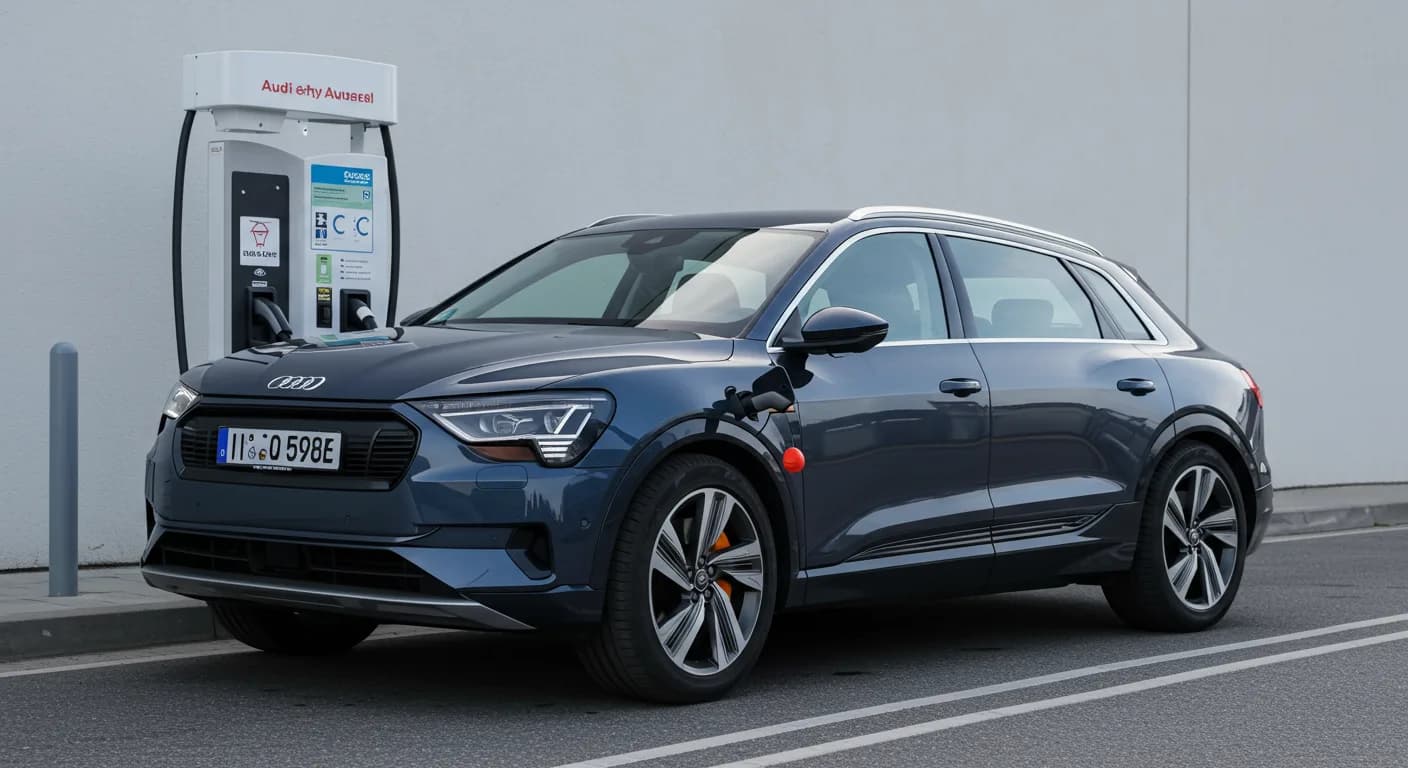
Audi has issued Technical Service Bulletin (TSB) 2062631 to address various diagnostic trouble codes (DTCs) that may appear in the high-voltage battery charger control module (J1050) of 2021-2022 Audi e-tron vehicles. These codes are referred to as "ghost DTCs" because they are stored erroneously and do not indicate an actual problem with the vehicle's charging system. This TSB provides crucial guidance for technicians and owners regarding these specific codes, ensuring that unnecessary repairs are avoided.
This TSB applies to 2021-2022 Audi e-tron quattro and Audi e-tron Sportback models. The primary message is that if these Audi e-tron ghost DTCs are present without any corresponding customer complaint related to charging, they should be disregarded.
Symptoms
Owners of affected vehicles will typically not experience any noticeable symptoms or issues related to these ghost DTCs. The TSB explicitly states, "No customer concerns, it is found during PDI or any other diagnostic work." This means that these codes are usually discovered during routine diagnostic scans, such as during a Pre-Delivery Inspection (PDI) or other workshop diagnostic procedures, rather than in response to a driver's complaint. The presence of these Audi e-tron ghost DTCs does not mean your vehicle is malfunctioning or that there is an actual fault with the charging system.
Fault Codes / DTCs
The following DTCs, along with their designations and symptom codes, may be erroneously stored in the high-voltage battery charger control module, J1050 (address word 00C6). These are the Audi e-tron ghost DTCs that the TSB advises to ignore under specific conditions:
| Diagnostic address | DTC | Designation | Symptom Code |
|---|---|---|---|
| 00C6 | B1A8AF0 | Charge door 1 LIN actuator, path of movement fault | 3211268 |
| 00C6 | B194B13 | Charge flap 2 search illumination – open circuit | 3211295 |
| 00C6 | B200000 | Control module faulty | 1049088 |
| 00C6 | P0CA400 | Hybrid/High voltage battery load voltage too high | 14745862 |
| 00C6 | P1A1500 | Charging unit 2 function restriction | 14746766 |
| 00C6 | P31D100 | Charge socket A temperature sensor electrical error | 14750742 |
| 00C6 | P33E300 | Charge socket A, communication error | 2097664 |
| 00C6 | P178E00 | Function restriction due to excessive temperature | 14750734 |
| 00C6 | U15AC00 | Signal damping log malfunction | 3280913 |
| 00C6 | U15B500 | Quick battery charging (DC) - Charging station not active | 2097301 |
| 00C6 | U15BF00 | Intelligent charging function – faulty communication | 3276840 |
| 00C6 | U15C900 | Safety module (FuSi) function intervention | 13709330 |
| 00C6 | U112100 | Data bus missing message | 13705477, 13705501, 13705524, 13705553, 13706243 |
Technical Background
These ghost DTCs are a result of a diagnostic issue within software version 0079 of the high-voltage battery charger control module, J1050. This specific software bug causes the control module to erroneously store these codes without any actual underlying fault or malfunction in the charging system. Audi indicates that a revised software version is currently under development. Once this new software is implemented, it is expected to prevent these DTCs from being stored without cause, resolving the issue at its source.
Important Warnings for Owners and Technicians
Audi has provided specific instructions to prevent unnecessary repairs and ensure proper diagnosis. It is crucial for both owners and service technicians to understand these directives:
- Do not perform any repairs: The TSB explicitly states, "Do not perform any repairs. Any repairs or part replacements for this concern may be denied." This means that if these ghost DTCs are the only issue found and there are no actual charging problems, no action should be taken.
- Condition is normal: Audi clarifies that "This condition is normal." The presence of these codes alone does not indicate a defect or malfunction requiring service.
- Actual charging concerns: If a customer does have a concern regarding charging, then "this TSB does not apply, and the vehicle must be repaired following Guided Fault Finding." In such cases, the vehicle should be diagnosed as usual to identify and resolve the actual charging problem.
Warranty Information
This Technical Service Bulletin (TSB) is informational only. It is not applicable to any Audi Warranty claims for repairs related to these ghost DTCs. Since the condition is considered normal and no repair is required, warranty claims for attempting to fix these non-existent faults would be denied.
NHTSA ID: 10190768
Frequently Asked Questions
- What are 'ghost DTCs' in my Audi e-tron?
- Ghost DTCs are diagnostic trouble codes that are erroneously stored in a vehicle's control module due to a software issue, rather than an actual component failure. For the 2021-2022 Audi e-tron, TSB 2062631 identifies several such codes in the high-voltage battery charger control module (J1050).
- Should I be concerned if my 2021-2022 Audi e-tron shows DTC B200000 or P0CA400?
- According to Audi TSB 2062631, if your 2021-2022 Audi e-tron displays DTCs like B200000 ('Control module faulty') or P0CA400 ('Hybrid/High voltage battery load voltage too high') without any actual charging problems or other symptoms, these are considered 'ghost DTCs' and should be ignored. No repair is needed for these codes alone.
- What should I do if my Audi e-tron has actual charging problems?
- If you experience genuine charging issues with your 2021-2022 Audi e-tron, even if these ghost DTCs are present, the TSB advises that the vehicle must be diagnosed and repaired following standard Guided Fault Finding procedures. The TSB's instruction to ignore ghost DTCs only applies when no customer concern exists.
- Does Audi TSB 2062631 mean my car needs a repair?
- No, TSB 2062631 is an informational bulletin that specifically states that no repairs or part replacements should be performed for the listed ghost DTCs if there are no actual charging concerns. This condition is considered normal, and any unnecessary repairs may be denied warranty coverage.
Autres révisions de ce TSB
- 2021-2025 Audi Emergency Call System Fault TSBB200000
- 2025-2026 Audi A5, S5, A6 Door Handle Release TSBU112100
- 2022-2025 Audi e-tron Emergency Call System Fault TSBB200000
- 2023-2026 Audi Emergency Call System Fault B200000 TSBB200000
- 2025 Audi Q5 Software Update for Electrical System WarningsU112100
- 2025 Audi Q5 / SQ5 Software Update for Various Error MessagesU112100
- 2022-2024 Audi A3, S3, RS 3 Exterior Lighting Warning TSBU112100
- 2025 Audi A5 / A6 e-tron Exterior Door Handle Ejection TSBU112100
Related Articles
2021 Audi e-tron Electrical Malfunction and Power Loss
A 2021 Audi e-tron owner reported a severe 'Electrical Malfunction' resulting in complete loss of power on the highway. The issue has persisted despite dealer attempts to fix it over five months, posing significant safety risks.
2021-2026 Audi UTR Troubleshooting & FAQs TSB 2081409/1
This Audi Technical Service Bulletin (TSB 2081409/1) provides comprehensive answers to frequently asked questions and troubleshooting steps for the Audi Universal Traffic Recorder (UTR) accessory, covering topics like SD card compatibility, video playback, Wi-Fi issues, and more.
2021-2025 Audi Emergency Call System Fault TSB
Audi has released Technical Service Bulletin 2059528/18 to address an "Emergency call function: malfunction! Function unavailable. Please contact service" warning, often accompanied by a red SOS LED and DTC B200000. This issue affects various 2021-2025 Audi models and is due to a software problem…
2021-2026 Audi Adaptive Light System Fault C12B3FA TSB
Audi has released Technical Service Bulletin 2054202/7 to address an intermittent 'Audi adaptive light: system fault' message and DTC C12B3FA in various 2021-2026 models. This TSB outlines diagnosis and resolution for driver assistance system malfunctions.
2021-2026 Audi Parking Aid False Warnings TSB 2024323/12
This Technical Service Bulletin (TSB 2024323/12) details diagnostic and repair procedures for 2021-2026 Audi vehicles experiencing false parking aid warnings. Learn about environmental factors, sensor checks, and proper installation to resolve issues like 'Parking aid does not work / warning is…
Leave a comment
Comments are moderated and may take a moment to appear. Only your first name and the initial of your last name are shown publicly.
Comments
Be the first to comment.