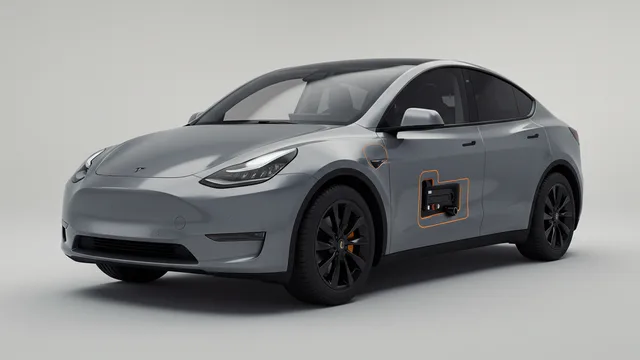
The 2024 Tesla Model Y has faced four safety recalls, including issues with front seat welds, hood latches, rearview camera loss, and warning light font size. Additionally, three service bulletins address camera transparency, HVIL alerts, and owner's manual access. No owner complaints or federal…
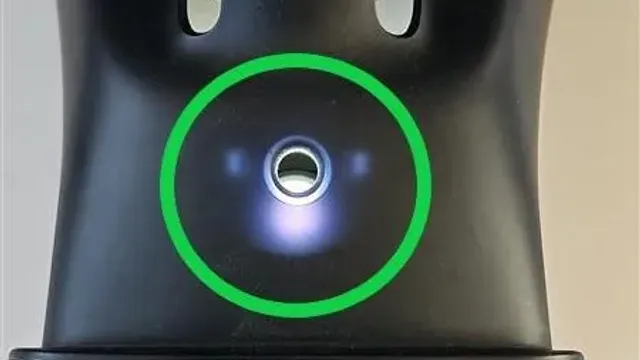
Tesla Service Bulletin SB-26-15-001 addresses a condition in some 2024 Model Y vehicles where the rear view mirror upper camera cover may not be sufficiently transparent, leading to increased vehicle occupancy warnings in low-light conditions. This bulletin outlines inspection and replacement…
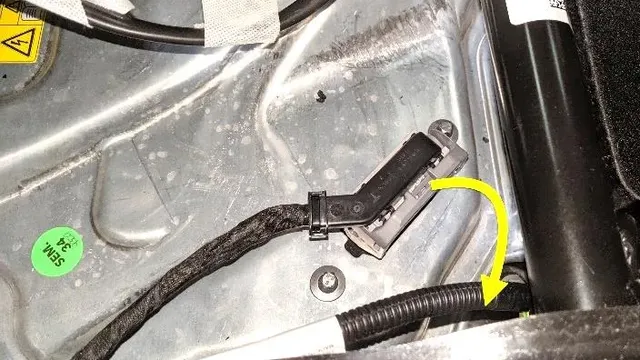
Tesla Service Bulletin SB-25-17-005 addresses High Voltage Interlock Loop (HVIL) alerts like 'HVP_w026_HvilFault' and 'BMS_a036_SW_HvpHvilFault' in 2023-2024 Model Y vehicles. These alerts are caused by interference from the center high mounted stop light.
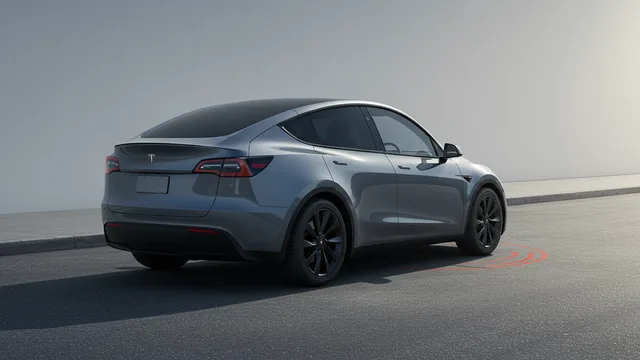
Tesla has issued recall 25V002000 for certain 2023-2025 Model 3, S, X, and Y vehicles due to a potential short in the computer circuit board, which can lead to a "loss of the rearview camera image." This condition reduces driver visibility and increases crash risk. The remedy is an over-the-air…
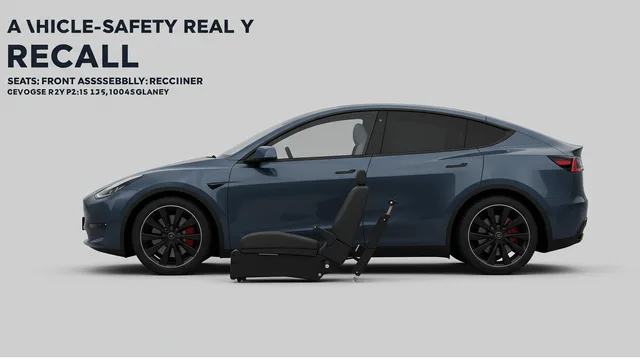
Tesla has issued a recall for certain 2024 Model Y vehicles because the weld attaching the seat recliner mechanism to the front seat backs may fail. This defect, identified under NHTSA recall 24V886000, could prevent the seat back from properly restraining an occupant during a crash, increasing…
Tesla has issued a recall (24V554000) for certain 2021-2024 Model Y, Model 3, Model S, and Model X vehicles due to a hood latch assembly that may fail to detect an unlatched condition. This can lead to the hood opening while driving, obstructing the driver's view and increasing crash risk. A free…
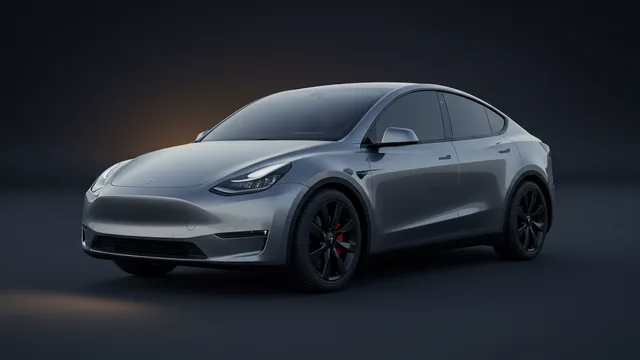
Tesla provides the owner's manual for the 2024 Model Y digitally, integrated into the vehicle's software and accessible via the touchscreen. Content is tailored to your specific vehicle configuration.
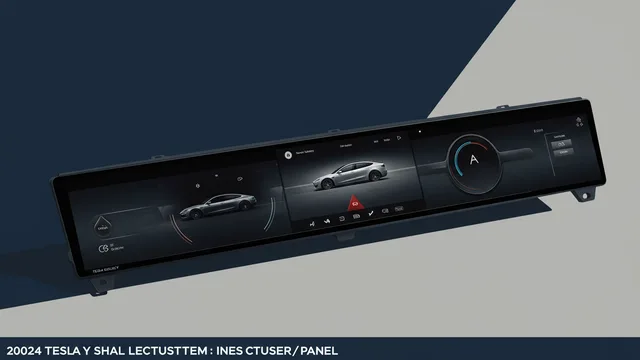
Tesla has issued a recall (NHTSA ID 24V051000) for various 2021-2024 models, including Model Y, S, X, 3, and Cybertruck, due to an incorrect font size for critical warning lights like Brake, Park, and ABS. This can make them difficult to read, increasing crash risk. A free over-the-air software…
Tesla, Inc. (Tesla) is recalling certain 2024-2025 Model 3, Model S, 2023-2025 Model X, and Model Y vehicles. The computer circuit board may short, resulting in the loss of the rearview camera image. As such, these vehicles fail to comply with the requirements of Federal Motor Vehicle Safety Standard (FMVSS) number 111, "Rear Visibility."
Tesla, Inc. (Tesla) is recalling certain 2024 Cybertruck, 2017-2025 Model 3, and 2020-2025 Model Y vehicles. The tire pressure monitoring system (TPMS) warning light may not remain illuminated between drive cycles, failing to warn the driver of low tire pressure. As such, these vehicles fail to comply with the requirements of Federal Motor Vehicle Safety Standard number 138, "Tire Pressure Monitoring Systems."
Tesla, Inc. (Tesla) is recalling certain 2024 Model Y vehicles. The weld attaching the seat recliner mechanism to the front seat backs may fail.
Tesla, Inc. (Tesla) is recalling certain 2021-2024 Model 3, Model S, Model X, and 2020-2024 Model Y vehicles. The hood latch assembly may fail to detect an unlatched hood condition after the hood has been opened.
Tesla, Inc. (Tesla) is recalling certain 2012-2023 Model S, 2016-2024 Model X, 2017-2023 Model 3, 2019-2024 Model Y, and 2024 Cybertruck vehicles. An incorrect font size is displayed on the instrument panel for the Brake, Park, and Antilock Brake System (ABS) warning lights. As such, these vehicles fail to comply with the requirements of Federal Motor Vehicle Safety Standard number 105, "Hydraulic and Electric Brake Systems" and 135, "Light Vehicle Brake Systems."
SEVERE DEFECT: Unprompted autonomous steering overrides manual driving. When Autopilot is OFF, Emergency Lane Departure Avoidance (ELDA) violently yanks the steering wheel, steering TOWARD hazards like oncoming traffic on the left or a mountain/rock wall past the curb on the right. This creates a severe collision risk, overriding safe manual input.DOCUMENTED PROOF: Provided Tesla Service (Palo Alto) over 12 timestamps and several dashcam footage. Technicians physically verified NO internal/external camera obstructions across TWO separate visits. Moving a transponder failed to resolve it.TESLA REFUSAL: Service Center has canceled TWO other service requests without fixing the defect, claiming it the 'system is working as intended.' Crucially, the Manager Jay explicitly admitted this dangerous steering override is a 'known issue for vehicles without FSD' operating on an older, separate software stack prone to these errors. To resolve this critical safety hazard, he explicitly suggested I purchase Tesla's premium Full Self-Driving (FSD) upgrade, claiming the FSD stack fixes it. Tesla is fully aware their base active safety software stack is defective and steers into hazards, yet demands a paid consumer upgrade to resolve it rather than issuing a safety patch or recall.
No injuries · No fire · No crash
While exiting a drive-thru, I pressed the accelerator and the vehicle unexpectedly accelerated at a high rate of speed on its own. I attempted to brake, but the brakes did not respond. The vehicle struck a concrete median. Police report on file: East Hanover Township PD, Case #2026-12503.
On XXX at approximately 7:23 a.m., a 2024 Tesla Model Y was traveling westbound on [XXX] in [XXX] in the middle lane at approximately 71 mph with Full Self-Driving (FSD) engaged. While traveling in traffic, the vehicle suddenly initiated a lane change toward the right lane without providing a warning or sufficient opportunity for the driver to respond. While the Tesla was executing the lane change, a vehicle traveling behind it collided with the left side of the Tesla. Following the impact, the driver manually took control and brought the Tesla to a complete stop on the right side of the highway. The system suspected of malfunctioning is Tesla’s FSD driver-assistance system, particularly its automated lane-selection and lane-change functions. The exact cause has not been determined. The vehicle and its electronic data were preserved. Currently, non-inspection was done. The unexpected maneuver placed the Tesla and surrounding motorists at risk because it occurred without warning at highway speed in active traffic and resulted in a collision. The driver had to intervene manually after the impact to control and stop the vehicle safely. At the time of this report, the suspected malfunction has not been reproduced or independently confirmed by a Tesla service center or independent repair facility. No technical determination of the cause has been received. A police officer arrived immediatly after the accident. An inspection was performed by Insurance company over a video. Before the unexpected lane change, there were no warning lamps, messages, audible alerts, or other symptoms indicating that he vehicle was about to initiate the maneuver or malfunction. The lane change occurred suddenly while FSD was engaged. INFORMATION REDACTED PURSUANT TO THE FREEDOM OF INFORMATION ACT (FOIA), 5 U.S.C. 552(B)(6)
During a software update, the vehicle was parked and no key was present inside the car. The car went into neutral and forward through my gate onto oncoming traffic. The car hit a parked car and then came to a stop. The software update proceeded and I was unable to move the car until it finished.
I was using the Tesla FSD in stop and go traffic. At the moment I was moving with traffic at about 30 mph and then traffic started slowing down. The vehicle in front of me came to a complete stop. The FSD on my car started slowing down, but not fast enough. It rear-ended the vehicle at about 18 mph.